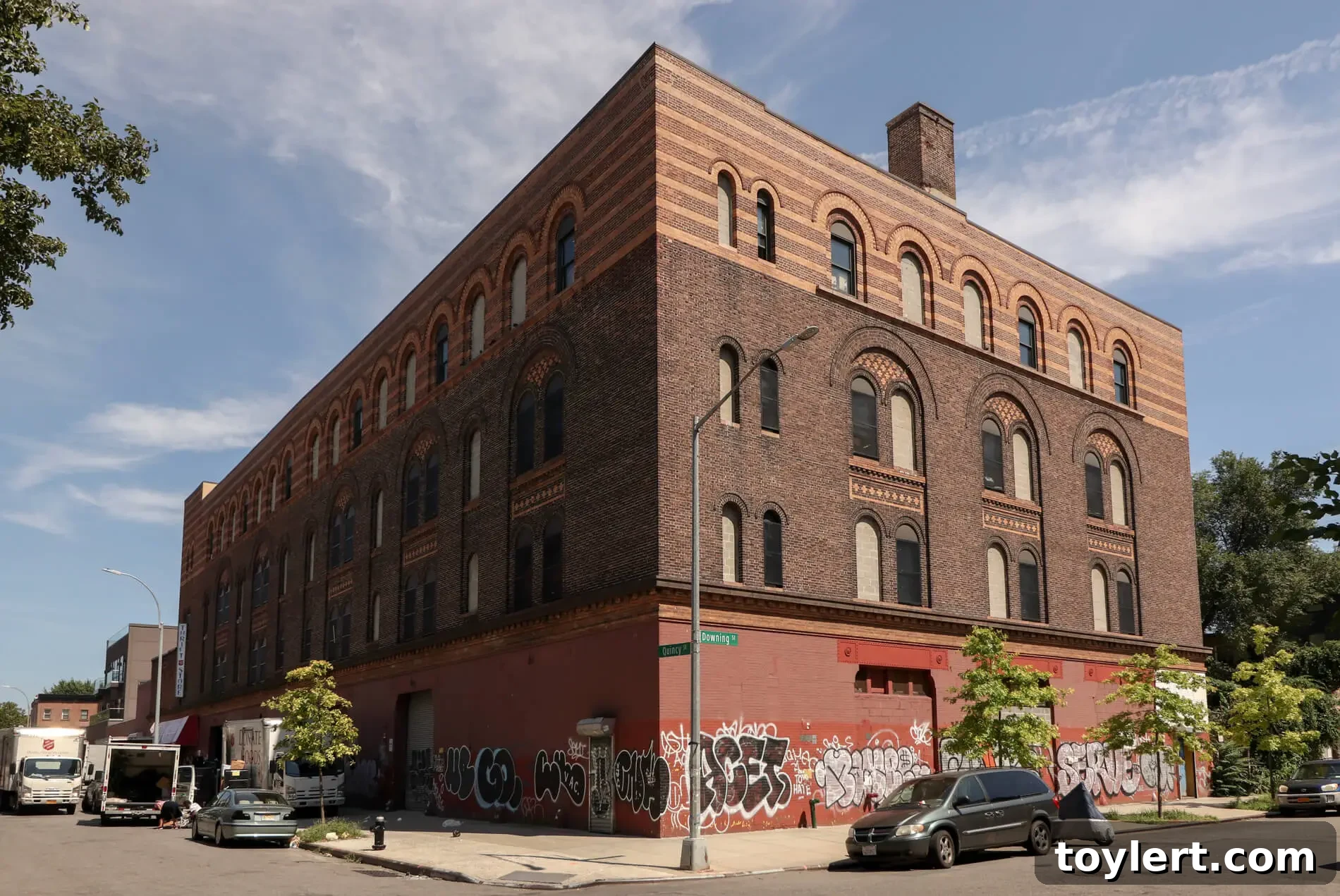
Historic Clinton Hill Gem: Francis Kimball’s 22 Quincy Street Finds New Hope for Preservation Amidst Development Plans
A saga years in the making culminates in a dramatic twist for a truly distinctive and architecturally significant building in the heart of Brooklyn’s Clinton Hill. Long-rumored for sale and facing an uncertain future, the striking 1899 Venetian-style warehouse at 22 Quincy Street, a masterpiece by celebrated 19th-century architect Francis Kimball, has finally changed hands. While initial Department of Buildings (DOB) filings cast a shadow of doubt over the structure’s survival, suggesting its likely demolition to make way for new apartment developments, recent information from the project’s lender offers a glimmer of hope: the building may, against earlier expectations, be preserved. This potential outcome represents fantastic news for the vibrant Clinton Hill neighborhood and a significant victory for architectural heritage across Brooklyn.
The Architectural Legacy of Francis Kimball and 22 Quincy Street
Francis H. Kimball (1845-1919) was an architect of considerable renown, known for his diverse and often elaborate designs across New York City. His prolific career spanned the late 19th and early 20th centuries, contributing significantly to the city’s architectural fabric, particularly through his work on theaters, office buildings, and churches. The 1899 warehouse at 22 Quincy Street stands as a unique testament to his versatility and his ability to infuse utilitarian structures with artistic grandeur. Eschewing the typical utilitarianism of industrial buildings, Kimball designed a Venetian-style edifice that commands attention, making it an obscure yet striking landmark within its surroundings.
The choice of Venetian style for a warehouse is particularly noteworthy. Characterized by intricate brickwork, elegant arches, and often terracotta detailing, this architectural style evokes the romanticism and grandeur of Venice, Italy. For 22 Quincy Street, Kimball likely employed these elements to elevate what might otherwise have been a mundane structure, creating a building with a strong visual identity that has captivated residents and preservationists for decades. Its robust construction and distinctive aesthetic make it a truly irreplaceable piece of Clinton Hill’s historical tapestry, representing an era when even commercial buildings were often imbued with artistic ambition and fine craftsmanship. Preserving such a building is not merely about saving bricks and mortar; it’s about retaining a tangible link to Brooklyn’s industrial and architectural past.
A Landmark Transaction: The $28.5 Million Sale
The whispers surrounding the sale of 22 Quincy Street had persisted for years, creating a palpable sense of anticipation and concern within the community. These rumors solidified into reality when the sale officially closed in December, fetching a substantial sum of $28.5 million. This significant figure underscores the enduring value of prime real estate in Brooklyn, particularly properties with a unique history and development potential in desirable neighborhoods like Clinton Hill.
For over 80 years, since 1941, the property was owned by The Salvation Army. This long tenure meant the building had become an established part of the local landscape, and its disposition was watched closely. The Salvation Army, a globally recognized charitable organization, has often managed extensive property portfolios to support its philanthropic missions. The decision to sell such a long-held asset likely reflects evolving strategic priorities or the undeniable financial appeal of the current real estate market, where demand for well-located development sites remains exceptionally high. The sale marks the end of an era for the charitable organization at this particular address and ushers in a new chapter for the historic building under new stewardship.
New Ownership and Key Players in Brooklyn Development
The new owners of 22 Quincy Street operate under the entity Quincy Street Investors LLC. Interestingly, this LLC shares a Coney Island address with the reputable developer Loketch Group, signaling their likely involvement in the acquisition and subsequent development plans. The Loketch Group has a considerable footprint in New York City real estate, known for a diverse portfolio that often includes residential and mixed-use projects. Their track record suggests a capacity for large-scale developments that reshape urban landscapes.
Further insights from filings at the Department of Buildings indicate the involvement of another well-known and influential developer, Slate Property Group. Slate Property Group has carved out a strong reputation for developing residential properties, often focusing on luxury condominiums and rental buildings across Brooklyn and Manhattan. Their expertise in navigating complex urban development projects and their strategic approach to property acquisition make their involvement particularly noteworthy. While the company declined to comment on the matter in March, their presence in the regulatory filings strongly suggests a collaborative effort between these prominent development firms. The combined experience and resources of the Loketch Group and Slate Property Group undoubtedly position them to undertake a significant project at 22 Quincy Street, transforming it into a vital new component of the Clinton Hill community, whether through new construction, adaptive reuse, or a combination of both.
From Demolition Fears to Preservation Hopes: A Community’s Relief
The initial outlook for Francis Kimball’s warehouse was grim, based on early indications from DOB records that pointed towards demolition. Such news is often met with dismay by local residents and preservation advocates who cherish the unique character and history embodied by such structures. Clinton Hill, known for its historic brownstones, tree-lined streets, and architectural diversity, values its heritage deeply. The potential loss of a building like 22 Quincy Street would have represented a significant blow to the neighborhood’s distinctive identity.
However, the narrative has taken a positive turn. New information emanating directly from the project’s lender suggests that preservation is now a strong possibility. This shift could be attributed to several factors: increased public pressure, the economic viability of adaptive reuse, or perhaps a strategic decision by the developers to embrace the building’s historical value. Adaptive reuse, the process of converting an old building for a new purpose while largely retaining its historical features, has become an increasingly popular and sustainable approach in urban development. It not only conserves architectural heritage but also often yields unique, character-filled spaces that appeal to a discerning market. For 22 Quincy Street, this could mean retaining its striking Venetian facade and perhaps incorporating elements of its robust internal structure into modern residential units, thereby blending history with contemporary living.
The news of potential preservation is indeed fantastic for Clinton Hill. It signifies a potential victory for the balance between progress and heritage, demonstrating that new development doesn’t always necessitate the erasure of the past. Instead, it can mean integrating historic elements into modern urban landscapes, creating spaces that are rich in story and unique in design. The community will undoubtedly welcome an outcome that respects Kimball’s original vision while bringing new life and purpose to this architectural marvel, ensuring it continues to contribute to the neighborhood’s charm for generations to come.
Clinton Hill’s Evolving Landscape: The Significance of 22 Quincy Street
Clinton Hill remains one of Brooklyn’s most desirable neighborhoods, celebrated for its cohesive architectural style, rich history, and vibrant community spirit. It’s a place where grand 19th-century mansions, elegant brownstones, and tree-lined blocks tell a story of Brooklyn’s past, while a burgeoning array of cafes, boutiques, and cultural institutions point to its dynamic present. In such a context, the fate of a building like 22 Quincy Street is not merely an isolated real estate transaction; it’s a barometer for the neighborhood’s commitment to its identity amidst ongoing development pressures.
The preservation of Francis Kimball’s warehouse would set a powerful precedent, illustrating that thoughtful development can coexist with the protection of irreplaceable historical assets. It reinforces the idea that unique architectural contributions enhance a neighborhood’s value, attracting residents who appreciate character and history, rather than merely maximizing buildable square footage at all costs. This approach not only safeguards the aesthetic appeal of Clinton Hill but also contributes to its economic sustainability by maintaining the very qualities that make it so attractive.
Looking ahead, the successful adaptive reuse of 22 Quincy Street could become a model for future projects in Brooklyn and beyond. It highlights the growing recognition among developers, lenders, and urban planners of the inherent value in preserving and repurposing existing structures. Such projects often foster a stronger sense of community pride and provide a more sustainable alternative to new construction, reducing waste and honoring the embodied energy of historical buildings. The unfolding story of 22 Quincy Street is therefore more than just a local real estate update; it’s a significant indicator of evolving development philosophies in one of America’s most dynamic urban environments.
Conclusion: A New Dawn for a Historic Brooklyn Icon
The journey of 22 Quincy Street, from a long-speculated sale to the brink of demolition and now to the promising prospect of preservation, encapsulates the ongoing dialogue between urban development and historical conservation in rapidly growing cities like Brooklyn. Francis Kimball’s 1899 Venetian-style warehouse is an architectural marvel, a piece of Clinton Hill’s soul that, thankfully, seems poised to endure.
The involvement of prominent developers like Loketch Group and Slate Property Group, coupled with the crucial intervention from the project’s lender, signifies a potential shift towards more conscious and community-aligned development practices. The $28.5 million transaction, the departure of The Salvation Army after decades, and the emerging blueprint for adaptive reuse collectively paint a picture of a historic building being granted a new lease on life. This outcome not only secures a future for a celebrated piece of architecture but also enriches the unique character of Clinton Hill, reaffirming the neighborhood’s commitment to its past while confidently stepping into its future. The saga of 22 Quincy Street is a testament to the power of advocacy and the evolving understanding of value in urban heritage, offering a beacon of hope for preservationists across Brooklyn and beyond.