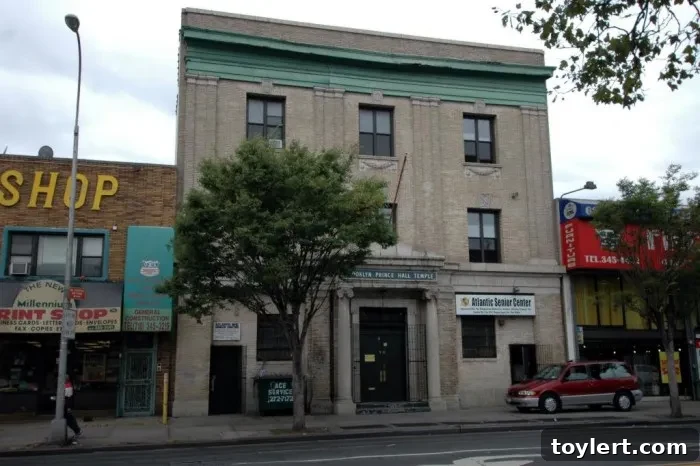
68 Pennsylvania Avenue: A Beacon of Community and History in East New York, Brooklyn
Nestled in the vibrant heart of East New York, Brooklyn, the distinguished building at 68 Pennsylvania Avenue stands as a living testament to the borough’s rich and evolving social fabric. More than just a structure of bricks and mortar, this edifice has served as a cornerstone for various communities throughout its long history, adapting its purpose while retaining an enduring sense of grandeur. From its origins as a revered Masonic Lodge to its current vital role as a senior center, 68 Pennsylvania Avenue exemplifies Brooklyn’s spirit of resilience, community, and continuous transformation.
Exploring the storied past of this address reveals layers of Brooklyn’s architectural and cultural heritage. Each incarnation of the building has left an indelible mark, reflecting the changing needs and aspirations of the residents it served. Today, as the Atlantic Senior Center, it continues its legacy of fostering community and support, demonstrating how historic buildings can be thoughtfully repurposed to meet contemporary demands.
The Grand Genesis: Tyrian Masonic Lodge
The story of 68 Pennsylvania Avenue begins in the early 20th century, a period of significant growth and development for Brooklyn. Constructed around 1910, the building was originally commissioned as the home for the Tyrian Masonic Lodge. This was a time when fraternal organizations played a pivotal role in the social and civic life of American cities, providing mutual aid, networking opportunities, and a platform for charitable endeavors. The Tyrian Masonic Lodge was no exception, quickly establishing itself as a prominent institution within the then-burgeoning East New York neighborhood.
The architects of the Tyrian Masonic Lodge envisioned a structure that would convey dignity, strength, and a sense of enduring purpose. They opted for a robust Neoclassical Revival style, characterized by its imposing symmetrical façade, stately columns, and refined classical ornamentation. The exterior features meticulously carved stone details, including intricate cornices, decorative pilasters, and perhaps even symbolic Masonic emblems subtly integrated into the design. Large, arched windows allowed natural light to flood the interior, while a grand entranceway beckoned members and visitors alike, signifying the importance of the activities conducted within its walls.
Inside, the lodge likely housed a variety of spaces tailored to the needs of its members: a grand assembly hall for ceremonies and meetings, smaller private chambers for committees, and perhaps a stately dining room or social lounge. For decades, the Tyrian Masonic Lodge served as a hub for community leaders, businessmen, and residents, contributing significantly to the moral and social fabric of East New York. It was a place where bonds were forged, traditions upheld, and charitable acts initiated, deeply embedding itself in the local identity.
A New Chapter: Prince Hall Masonic Lodge
As the mid-20th century progressed and the demographics of East New York began to shift, the building at 68 Pennsylvania Avenue embarked on a new, equally significant chapter in its history. At some point, the torch was passed, and the edifice became the proud home of a Prince Hall Masonic Lodge. This transition marked a profound cultural shift, as Prince Hall Masonry represents a vital branch of African American Freemasonry, with a rich history rooted in the struggle for civil rights and community empowerment.
Prince Hall Lodges have historically served as crucial centers for African American communities, particularly during times of segregation and systemic inequality. They provided spaces for leadership development, social gathering, and mutual support when other institutions were often inaccessible. For the East New York community, the presence of a Prince Hall Lodge at 68 Pennsylvania Avenue would have been a beacon of hope and solidarity. It offered a venue for important discussions, community organizing, and the celebration of cultural heritage, fostering a strong sense of identity and collective action among its members and the wider African American population.
While the architectural shell remained the same, the spirit within these walls undoubtedly resonated with the aspirations and challenges of its new occupants. The building continued its legacy of community service, albeit with a focus that reflected the evolving needs of the neighborhood’s diverse residents. It’s easy to imagine the solemn rituals, vibrant social events, and crucial community planning meetings that took place here, all contributing to the resilience and advancement of East New York.
Embracing the Present: Atlantic Senior Center
The journey of 68 Pennsylvania Avenue continues into the 21st century, demonstrating its remarkable adaptability and enduring relevance. In a testament to its flexibility and the perpetual need for community spaces, the building was eventually repurposed and transformed into the Atlantic Senior Center. This latest incarnation reflects a contemporary understanding of community well-being, focusing on the needs of the borough’s growing senior population.
The Atlantic Senior Center provides an invaluable resource for the elderly residents of East New York and surrounding areas. It serves as much more than just a meeting place; it is a vibrant hub offering a wide array of services and activities designed to enhance the quality of life for seniors. These programs often include:
- Nutritional Services: Providing hot meals and ensuring food security for seniors.
- Health and Wellness Programs: Offering fitness classes, health screenings, and educational workshops on topics like managing chronic conditions, nutrition, and mental well-being.
- Social and Recreational Activities: Organizing cultural outings, games, arts and crafts, and social events that combat isolation and promote engagement.
- Educational Opportunities: Hosting classes on various subjects, from computer literacy to current events, fostering lifelong learning.
- Case Management and Support Services: Assisting seniors with navigating benefits, housing, legal aid, and other essential services.
The transformation into a senior center required careful consideration of accessibility and functionality while respecting the building’s historic character. Ramps and elevators would have been installed to ensure easy access, and interior spaces reimagined to accommodate group activities, quiet reading areas, and administrative offices. The grandeur of the original Masonic Lodge now lends a dignified and welcoming atmosphere to the seniors who gather there, providing a comfortable and enriching environment for their daily lives.
Architectural Grandeur and Enduring Legacy
The architecture of 68 Pennsylvania Avenue remains a crucial element of its identity and appeal. Its early 20th-century Neoclassical Revival design commands attention, standing out amidst the more residential and commercial structures of East New York. The robust stone façade, often adorned with finely crafted details, speaks to a bygone era of craftsmanship and civic pride. Such architectural styles were chosen not merely for aesthetics but to convey the stability, importance, and public-facing nature of the institutions they housed.
The transition through different community-focused uses – from fraternal lodge to senior center – highlights a sustainable model for urban development: preserving historical structures by adapting them to modern needs. This approach not only conserves architectural heritage but also imbues new functions with a sense of continuity and tradition. The building at 68 Pennsylvania Avenue beautifully illustrates how a single structure can serve multiple generations and diverse populations, acting as a constant anchor in an ever-changing urban landscape.
Its enduring presence contributes significantly to the visual character and historical narrative of East New York. For architects, historians, and local residents alike, 68 Pennsylvania Avenue is a powerful reminder of the borough’s layered past and its vibrant present. It stands as a symbol of community resilience, demonstrating that buildings, like the communities they serve, can adapt, evolve, and continue to thrive.
East New York: A Community’s Enduring Spirit
To truly appreciate the significance of 68 Pennsylvania Avenue, one must understand the context of East New York. This Brooklyn neighborhood has a rich and complex history, marked by waves of immigration, socio-economic challenges, and ongoing revitalization efforts. Originally a predominantly working-class community, it has been home to various ethnic groups throughout its existence, each contributing to its unique cultural tapestry.
From the early industrial growth that attracted German and Irish immigrants in the 19th century to the significant influx of African American and Caribbean populations in the 20th century, East New York has always been a dynamic and diverse place. Buildings like 68 Pennsylvania Avenue, with their deep roots in community service, have been vital anchors during periods of both prosperity and hardship. They represent the unwavering commitment of residents and organizations to build and sustain a strong local identity.
Today, East New York continues its journey of development, with new investments in housing, infrastructure, and community resources. Amidst these changes, historic buildings like the Atlantic Senior Center serve as important reminders of the past, connecting contemporary residents with the legacy of those who came before them. They stand as physical manifestations of the community’s enduring spirit, resilience, and capacity for renewal.
A Landmark of Continuous Service
In conclusion, 68 Pennsylvania Avenue is far more than just an address in Brooklyn. It is a landmark of continuous community service, a vessel that has held the aspirations, traditions, and care of generations. From its inception as the dignified Tyrian Masonic Lodge, through its pivotal role as a Prince Hall Masonic Lodge, to its current embrace as the Atlantic Senior Center, this building has consistently adapted to meet the evolving needs of its community.
Its architectural presence anchors a corner of East New York, silently narrating tales of fraternal brotherhood, civil rights advocacy, and compassionate elder care. As Brooklyn continues to grow and redefine itself, structures like 68 Pennsylvania Avenue underscore the importance of preserving history while fostering modern community engagement. It stands as a proud example of how thoughtful adaptation can extend the life and relevance of historic buildings, ensuring they remain vibrant, essential components of their urban environment for many years to come.