Bushwick Artists Unite: Pioneering New Models for Sustainable Studio Space Amidst Rising Rents
In the heart of Brooklyn, New York, a collective of approximately 75 dedicated artists in Bushwick is embarking on an ambitious journey to redefine the narrative of gentrification. Faced with escalating rents and the relentless pressure of urban development, these artists are actively exploring groundbreaking strategies to secure and maintain affordable workspace within their cherished neighborhood. This pivotal movement not only highlights the economic struggles inherent in booming urban art scenes but also showcases the resilience and innovative spirit of creative communities determined to preserve their cultural roots. The initiative, sparked by a prominent figure within the art world, represents a significant push against the conventional displacement often experienced by artists in rapidly developing areas.
The Genesis of an Artistic Movement: Responding to Bushwick’s Transformation
Bushwick has long been celebrated as a vibrant crucible of artistic innovation, drawing creatives from across the globe with its industrial architecture, ample space, and a unique, gritty charm. For decades, its relatively low rents provided fertile ground for artists to establish studios, collaborate, and foster a distinctive cultural ecosystem. However, recent years have witnessed a dramatic transformation. A proliferation of upscale bars, restaurants, and businesses catering to a new demographic of young professionals, particularly recent college graduates, has driven property values and rental costs skyward. This rapid gentrification, while bringing new amenities, simultaneously threatens the very artists who helped establish Bushwick’s cultural cachet.
It was against this backdrop that painter Jules de Balincourt, an artist of considerable renown with exhibitions at prestigious venues like the Whitney Biennial, ignited the current collective effort. In June, Balincourt, who has himself owned a building on Starr Street since 2006, leveraged the power of social media with a compelling Facebook post. His suggestion was simple yet profound: what if artists pooled their resources to collectively secure studio space? The idea resonated deeply within the community, quickly attracting dozens of artists grappling with similar anxieties about their future in Bushwick. This initial outreach quickly materialized into a formal group, holding its inaugural meeting with two more subsequent sessions scheduled within the month, signaling a serious commitment to finding viable solutions.
Exploring Innovative Ownership Models for Artist Sustainability
The collective of 75 artists is currently deliberating on two primary, innovative scenarios aimed at counteracting the forces of gentrification and securing long-term affordable workspaces. Both options represent a significant departure from traditional rental agreements, moving towards models of shared or collective ownership that prioritize stability and community benefit over speculative profit.
1. The Art Trust Model: Leveraging Investor Support for Collective Ownership
The first scenario involves the ambitious creation of a dedicated trust fund, capitalized through donations primarily from investors with a vested interest in the arts. Ideally, this would include influential art collectors and gallery owners who recognize the intrinsic value of supporting artist communities. The vision is for this trust to acquire a substantial loft building in Bushwick, which would then be managed to provide numerous artist studios at genuinely affordable rates. This model offers several compelling advantages:
- Scalability: A large trust can potentially acquire more significant properties, housing a greater number of artists and fostering a substantial creative hub.
- Long-Term Stability: Properties held by a trust, especially one with a non-profit mission, can be protected from market fluctuations and speculative resale, ensuring permanent affordability.
- Broader Impact: Engaging art collectors and gallery owners not only provides crucial funding but also reinforces the ecosystem of support for artists, bridging the gap between creators and patrons.
- Reduced Individual Burden: Artists would benefit from affordable rent without the direct financial burden and risks associated with property ownership.
However, this model also presents challenges, including the significant capital required to establish such a trust, the complexities of its governance, and the need to align the interests of diverse stakeholders, from donors to artist tenants.
2. Artist-Led Cooperative Buying: Empowering Small Groups Through Shared Investment
The second option empowers the artists themselves to take direct ownership, albeit in smaller, more manageable groups. In this scenario, artists would pool their individual capital to form down payments on buildings, effectively creating artist-owned cooperatives. A concrete example illustrates the feasibility: ten artists could each contribute $40,000, accumulating a $400,000 down payment for a $2,000,000 loft building. This substantial property could then be renovated and subdivided to accommodate ten individual studios, providing each contributing artist with a dedicated, secure workspace.
The advantages of this artist-led cooperative model include:
- Direct Ownership and Control: Artists have a direct stake in their workspace and decision-making power over their shared property.
- Community Building: Fosters a strong sense of community and collaboration among the co-owning artists.
- Equity Building: While affordability is key, artists also gain a tangible asset and potentially build equity over time.
- Flexibility: Smaller groups may find it easier to coordinate and make decisions compared to a large trust.
This approach, however, also introduces a critical “sticking point” identified by the Wall Street Journal report: how to ensure the long-term affordability of these spaces and whether artists would be permitted or able to sell their shares at a profit. If units can be sold at market rates, the very cycle of gentrification the artists are trying to escape could eventually be perpetuated within their own cooperative. Striking a balance between individual artist’s financial well-being and the collective goal of preserving affordable creative spaces for future generations remains a complex challenge that will require careful legal and communal structuring.
Navigating the Future: Live/Work Spaces and Long-Term Viability
A crucial detail that remains unspecified in early discussions is whether the artists are primarily seeking live/work spaces, which combine residential and studio functions, or strictly work-only studio environments. This distinction carries significant implications for zoning regulations, financing options, and the overall scope of the project. Live/work spaces offer comprehensive solutions for artists, integrating their professional and personal lives, but often come with stricter regulations and higher costs. Work-only studios, while perhaps simpler to secure, mean artists would still need to contend with rising residential rents elsewhere.
The broader implications of this Bushwick initiative extend beyond the neighborhood. It serves as a microcosm of a widespread challenge faced by artists in global cities like New York, London, Berlin, and Los Angeles. As urban centers become increasingly desirable and expensive, the artists who infuse these areas with cultural vibrancy are often the first to be displaced. The success of the Bushwick collective could provide a powerful blueprint for other art communities striving to resist displacement and carve out sustainable futures.
The current schedule of meetings underscores the urgency and dedication of these artists. Their efforts represent a proactive, community-driven response to a systemic issue, demonstrating that artists are not merely passive victims of economic forces but active agents in shaping their own destiny. By exploring these innovative collective ownership models, the Bushwick artists are attempting to rewrite gentrification’s usual story—a story that typically ends with artists being priced out. Instead, they aim to create a new narrative where creativity, community, and economic sustainability can coexist and thrive.
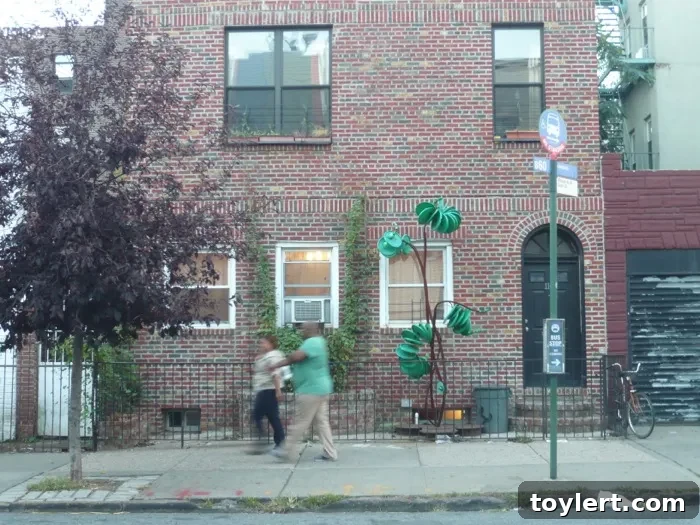
This bold endeavor, documented by The Wall Street Journal, highlights a critical moment for the arts in New York City. The outcome of these discussions and the chosen path will undoubtedly influence the future landscape of Bushwick’s celebrated art scene, potentially securing its cultural legacy for years to come. The image above, a sculpture outside a house on Wilson Avenue, quietly symbolizes the artistic presence that these efforts seek to protect and nurture.