Navigating Urban Mobility: Community Concerns Over Bike-Sharing in Historic Neighborhoods
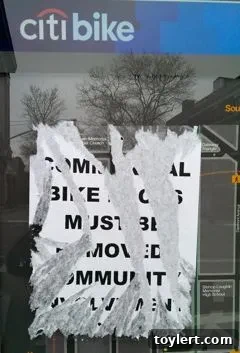
The advent of urban bike-sharing programs marks a significant stride in modern city planning, offering an eco-friendly and convenient alternative for short-distance travel. However, the integration of these innovative mobility solutions into the existing fabric of historic urban landscapes often sparks vigorous community discussions. A recent community meeting, spearheaded by Council Member Tish James, exemplified this delicate balance, shifting its primary focus from initial concerns about corporate branding to the more immediate and tangible issue of bike share station placement within cherished historic neighborhoods.
Initially, the discourse surrounding the nascent bike-sharing initiative centered heavily on the potential visual impact of corporate branding. Residents and preservationists voiced apprehension over the commercialization of public spaces and the potential aesthetic disruption that branded stations might inflict upon areas renowned for their unique architectural heritage and historical charm. Such concerns are deeply rooted in a desire to safeguard the distinct character of neighborhoods, ensuring that modern amenities do not inadvertently dilute the very essence that makes these areas special. Yet, as the discussion evolved under Council Member James’s adept leadership, it became clear that the most pressing issues for attendees were not about logos, but rather the practical implications of where these stations would physically stand.
The Department of Transportation (DOT) representatives present at the meeting clarified a crucial point: the proposed locations for the bike share stations were not immutable. They emphasized that the initial placements were part of an evaluative phase, with the potential for adjustments based on usage data, popularity, and ongoing community feedback. This flexibility offered a degree of reassurance, suggesting a responsive approach to urban planning that could adapt to the real-world experiences and needs of residents.
Among the various proposed sites, the planned station near Willoughby Walk emerged as particularly contentious, drawing significant opposition from a substantial portion of the attendees. This specific location became a microcosm for broader anxieties concerning station placement. Residents expressed a range of objections, from perceived inconvenience and potential obstruction of pedestrian pathways to concerns about the visual clutter near residential entrances. The feedback highlighted a critical aspect of urban development: the need for thorough, localized impact assessments that consider the daily lives and sensitivities of those living immediately adjacent to new infrastructure.
Council Member Tish James, demonstrating her strong commitment to civic discourse, initiated the meeting with a clear call for civility and mutual respect. According to an attendee, her opening remarks underscored her personal support for the bike-sharing program, yet she also acknowledged and validated the legitimate concerns raised by community members. Her leadership throughout the evening was characterized by a firm yet fair approach, consistently reminding participants to maintain decorum and allow others to voice their perspectives without interruption. This commitment to an orderly and constructive dialogue was instrumental in navigating potentially heated debates, ensuring that all voices, though sometimes conflicting, could be heard effectively.
While some initial comments did touch upon the corporate branding and landmarking issues, Council Member James, in her measured assessment, largely redirected the conversation. She posited that while these were understandable considerations, the most pertinent feedback for the DOT revolved around the practicalities of station placement. She emphasized that the Department of Transportation needed to understand community members’ worries about stations being situated near building entrances, particularly for residents who might not be frequent bike share users, or at heavily trafficked intersections like Clint and Myrtle.
The placement of stations near building entrances raised several specific points of contention. Residents argued that such locations could impede easy access for tenants, create visual obstructions, or simply feel out of place in front of residential properties whose occupants were unlikely to utilize the service extensively. This speaks to the challenge of tailoring city-wide programs to the micro-level context of diverse neighborhoods. Furthermore, the selection of busy intersections like Clint and Myrtle, even if offering the “best available” corner from a logistical standpoint, presented serious safety concerns. High-traffic areas introduce greater risks for both cyclists accessing the stations and pedestrians navigating them, requiring careful consideration of sightlines, traffic flow, and overall public safety.
Another significant point of contention, frequently articulated by residents in dense urban environments, was the displacement of valuable parking spaces. Bike share stations, by their nature, require dedicated ground space, which often means sacrificing existing on-street parking. In neighborhoods where parking is already a scarcity, this trade-off can provoke considerable frustration. It pits the perceived benefits of sustainable transit against the immediate convenience and necessity of car ownership for many residents, highlighting the complex socio-economic dynamics at play in urban mobility initiatives. The dialogue at the meeting underscored that for a bike-sharing program to be truly successful and integrated, it must carefully weigh these competing demands and strive for solutions that minimize negative impacts on daily life.
In a parallel development, Streetsblog, a prominent advocate for sustainable urban transport, published a comprehensive story that offered a critical perspective on the objections concerning corporate advertising within historic neighborhoods. The article highlighted that similar successful bike-sharing systems operate seamlessly within the historic districts of major global cities such as London, Boston, and Washington D.C. This broader perspective served as a powerful counter-narrative, suggesting that concerns about branding might be overstated or that effective design and integration could mitigate visual impacts.
The experience of these international and domestic cities provides valuable lessons. In London, for instance, the Santander Cycles scheme, formerly Barclays Cycle Hire, has become an iconic part of the city’s transport network, with stations thoughtfully integrated even around historical landmarks like the Tower of London or Buckingham Palace, demonstrating that modern infrastructure can coexist harmoniously with ancient heritage. Similarly, Boston’s Bluebikes and D.C.’s Capital Bikeshare have successfully navigated the challenges of operating within historically significant areas, proving that a balance between preserving history and embracing contemporary urban mobility is achievable. These examples suggest that careful planning, thoughtful design, and community engagement can lead to solutions that respect aesthetic sensibilities while delivering significant public benefits.
The benefits of bike-sharing programs extend far beyond mere transportation convenience. They contribute significantly to environmental sustainability by reducing reliance on private vehicles, thereby lowering carbon emissions and improving air quality. From a public health perspective, they encourage physical activity, offering a readily accessible form of exercise for city dwellers. Economically, bike-sharing can boost local businesses by making them more accessible to a wider range of customers who might prefer cycling for short trips. Furthermore, they play a crucial role in alleviating urban congestion, especially during peak hours, and provide an excellent “last mile” solution, connecting public transit hubs to final destinations efficiently.
Despite these undeniable advantages, the implementation of bike-sharing systems is not without its challenges. Balancing the need for modern infrastructure with the imperative of historical preservation requires innovative design and sensitive planning. Effective public engagement, as demonstrated by Council Member James’s meeting, is paramount to addressing the diverse needs and concerns of a multi-faceted community. This iterative process of planning, feedback, and adaptation is key to overcoming obstacles. Designing aesthetically pleasing and contextually appropriate stations, rather than one-size-fits-all solutions, can help integrate the infrastructure more smoothly into varied urban landscapes.
In conclusion, the community meeting regarding the bike-sharing program underscored the intricate challenges and opportunities inherent in urban development. While initial anxieties around corporate branding were present, the discussion pivoted to the more practical and resonant concerns of station placement – an issue that directly impacts daily life in historic neighborhoods. Council Member Tish James’s leadership facilitated a critical dialogue, highlighting the importance of community input in shaping urban infrastructure. The DOT’s assurance of flexibility in station locations, coupled with the proven success of bike-sharing in historic cities worldwide, offers a path forward. Ultimately, the successful integration of bike-sharing systems hinges on continued dialogue, adaptable planning, and a commitment to balancing the transformative potential of sustainable urban mobility with the invaluable preservation of local character and community well-being.