Bed-Stuy Building Collapse: A Stark Reminder of Urban Development’s Perils
The vibrant and historic neighborhood of Bed-Stuy, Brooklyn, was recently rocked by a significant structural failure when a shared wall between two residential properties at 95 and 97 Quincy Street collapsed. This catastrophic event has not only led to the forced evacuation of residents but has also left multiple homes facing demolition, underscoring the critical need for enhanced construction safety and rigorous oversight in areas undergoing rapid transformation. The incident serves as a poignant reminder of the delicate balance between urban growth and preserving the safety and structural integrity of existing communities.
The Catastrophic Event at Quincy Street
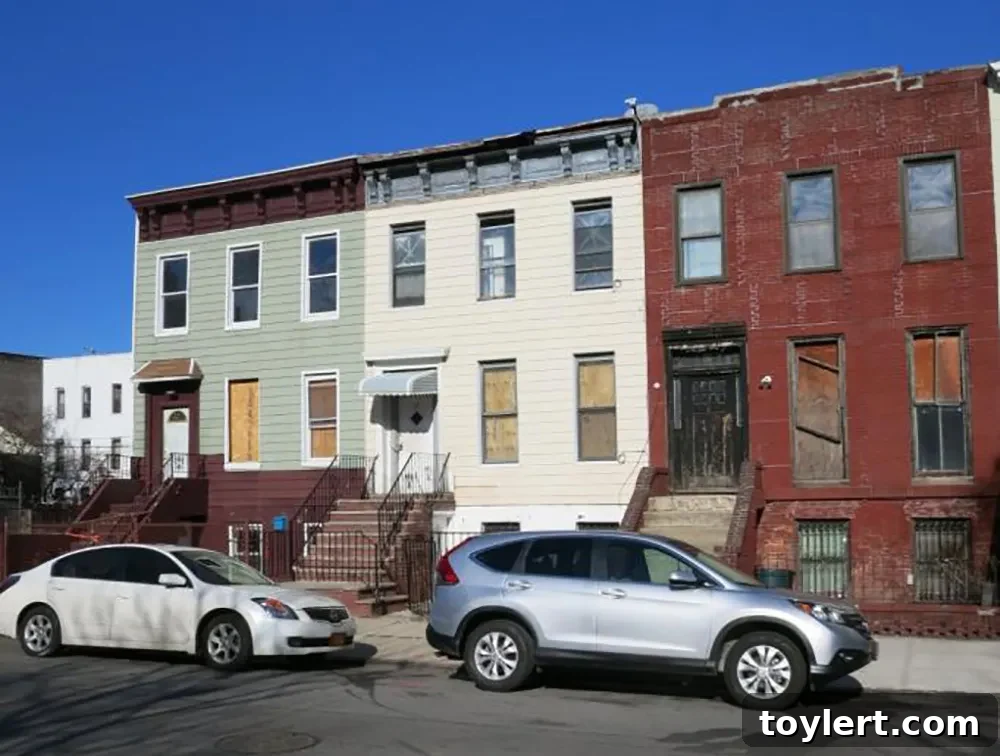
On a seemingly ordinary day, the stability of a quiet block in Bed-Stuy was shattered. A critical wall separating the white building at 95 Quincy Street and the adjacent red building at 97 Quincy Street gave way, creating a scene of immediate danger and distress. The collapse was not merely a cosmetic issue; it compromised the foundational safety of multiple structures, turning what were once homes into precarious hazards. Emergency services swiftly responded, securing the area and initiating the difficult process of assessing the damage and ensuring public safety.
The immediate aftermath saw a rapid deployment of emergency personnel. The Department of Buildings (DOB) quickly red-tagged the affected properties, declaring them unsafe for habitation. Two buildings were actively occupied at the time of the collapse, leading to prompt evacuations. Tragically, one individual sustained minor injuries, a fortunate outcome given the potential for far greater harm. The incident highlights the inherent risks involved when structural integrity is compromised, even with what might appear to be routine construction or renovation work.
The Domino Effect: Demolition and Displacement
The structural damage caused by the collapse was extensive, leading to devastating consequences for the properties involved. Initial assessments determined that two of the Bed-Stuy homes were beyond repair and immediately slated for demolition. This decision, though necessary for public safety, represents a complete loss for the property owners and a permanent alteration to the streetscape. Furthermore, an additional pair of neighboring buildings faces an uncertain future, with experts suggesting they might also require the wrecking ball due to potential collateral damage or compromised structural stability.
Beyond the physical destruction of brick and mortar, the human cost of this incident is profound. Residents from the evacuated buildings found themselves suddenly displaced, grappling with the shock of losing their homes and the uncertainty of their immediate future. For many, a home is not just a dwelling but a repository of memories, a safe haven, and a cornerstone of their lives. The emotional and financial toll of such an unexpected event can be immense, requiring immediate community support and long-term assistance to help those affected rebuild their lives. The neighborhood itself feels the ripple effects, as the visual scar of a collapse and subsequent demolition can disrupt the sense of security and continuity within the community.
Unraveling the Cause: Construction at No. 95 Quincy
Investigations into the Quincy Street collapse have pointed towards ongoing construction work at 95 Quincy Street as the likely primary cause. The nature of the project was an ambitious one: the owners were in the process of adding an extra floor to the existing two-and-a-half-story residential property. This significant alteration was part of a larger plan to convert the building into a multi-family residence, a common practice in rapidly gentrifying areas where property values and rental demand are high. Such extensive modifications require meticulous planning, expert execution, and stringent adherence to building codes to avoid catastrophic failures.
The owners of 95 Quincy Street have been identified as a group of investors based in Long Island. While property investment and development are vital for urban renewal, this incident raises critical questions about the balance between maximizing profit and ensuring the safety and structural integrity of both the developing property and its neighbors. The pursuit of increased density and higher returns must never come at the expense of established safety protocols and a thorough understanding of the existing urban fabric, especially when dealing with older buildings that may not have been designed to withstand significant structural overhauls without proper reinforcement and engineering.
The Perils of Rapid Urban Transformation
The Bed-Stuy building collapse is not an isolated incident but rather a stark illustration of the challenges faced by many historic and rapidly developing neighborhoods across New York City. Areas like Bed-Stuy are experiencing immense pressure for urban transformation, driven by soaring demand for housing and commercial spaces. This leads to a surge in construction projects, often involving the renovation, expansion, or conversion of older buildings. While development is crucial for growth, it also brings inherent risks, particularly when existing infrastructure is old and designs predate modern construction techniques and materials.
New York City’s Department of Buildings (DOB) is tasked with enforcing building codes and ensuring construction safety. Every significant structural alteration, such as adding a floor or converting a property to multi-family use, requires detailed plans, permits, and multiple inspections throughout the project lifecycle. However, the sheer volume of projects, coupled with potential oversights or shortcuts, can sometimes lead to disastrous outcomes. This incident prompts a crucial re-evaluation of how permitting processes are enforced and whether enough resources are allocated to ensure continuous, thorough oversight of construction sites, especially those involving complex structural changes to historic properties.
Ensuring Construction Site Safety: A Call for Vigilance
Preventing future collapses demands a multi-faceted approach, beginning with unwavering adherence to construction site safety protocols. Licensed and reputable contractors, structural engineers, and architects play a paramount role in ensuring the safety of any project. They are responsible for conducting thorough structural assessments before work begins, designing appropriate support systems, and overseeing every stage of construction to prevent foreseeable risks. Any deviation from approved plans or neglect of safety measures can have dire consequences, impacting not only the construction workers but also the surrounding community.
Furthermore, public awareness and vigilance are indispensable tools in maintaining safety. Neighbors are often the first to notice suspicious or potentially unsafe construction practices. Visible signs of concern include: excessively loud or vibrating construction, cracks appearing in adjacent buildings, work being performed without visible permits displayed, or workers engaging in seemingly reckless activities. Reporting such observations to the NYC Department of Buildings immediately can be crucial in preventing accidents. The DOB offers channels for public complaints, and every resident has a right to feel safe in their community, unthreatened by unregulated or unsafe building practices.
The Road Ahead: Investigations, Rebuilding, and Resilience
Following such an incident, a comprehensive investigation by the NYC Department of Buildings and other relevant agencies is initiated. This process involves examining construction permits, reviewing engineering plans, interviewing contractors and workers, and analyzing the structural failure itself. The goal is to determine the precise cause of the collapse, identify any negligence or violations of building codes, and assign culpability. Depending on the findings, legal ramifications could include significant fines, license revocations, and even criminal charges for those responsible. Such investigations are vital not only for accountability but also for informing future policy changes and strengthening regulations to prevent recurrence.
For the affected properties, the road ahead involves complex decisions about demolition, debris removal, and potential rebuilding. The sites at 95 and 97 Quincy Street will likely remain restricted zones for an extended period, undergoing thorough cleanup and stabilization. While the immediate future is bleak for the owners and displaced residents, the resilience of the Bed-Stuy community suggests that these sites will eventually be revitalized. However, any future development will undoubtedly face heightened scrutiny, serving as a constant reminder of the collapse and the importance of prioritizing safety above all else. This incident will likely spark broader conversations within the community and among city officials about sustainable development practices that respect the existing urban fabric and ensure the well-being of all residents.
Conclusion
The building collapse on Quincy Street in Bed-Stuy is a somber reminder of the delicate balance between urban development, economic opportunity, and the fundamental right to safety. While Brooklyn continues to evolve and grow, such incidents underscore the critical need for robust regulatory oversight, responsible construction practices, and an empowered, vigilant community. The lessons learned from this unfortunate event must be translated into stronger building codes, stricter enforcement, and a renewed commitment to ensuring that progress never comes at the cost of lives, homes, or the integrity of our neighborhoods. Bed-Stuy’s journey of transformation continues, but it does so now with a stark reminder of the perils that lie beneath the surface when safety is not paramount.