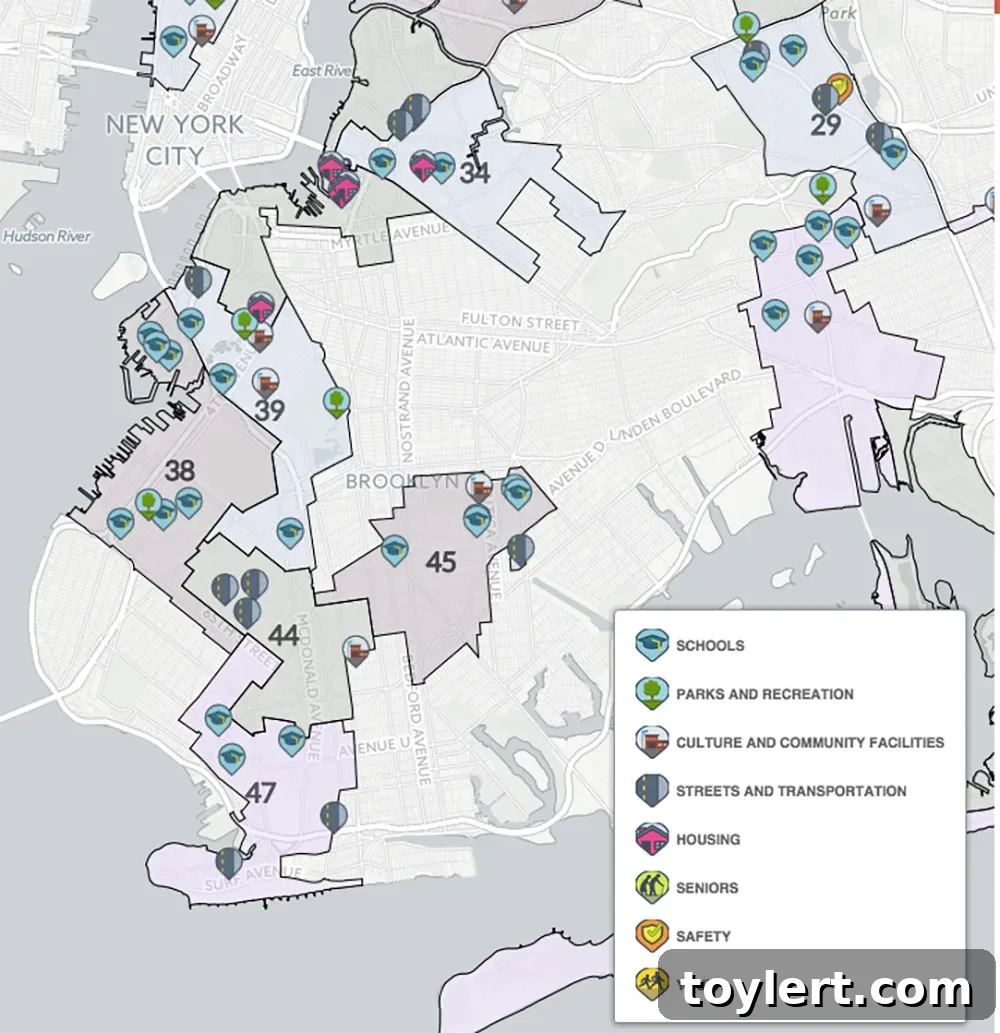
A map of winning projects allocated funding through participatory budgeting for 2015, demonstrating tangible community impact.
Empowering Brooklyn: Your Essential Guide to Participatory Budgeting
Participatory Budgeting (PB) season is once again upon us, igniting a powerful wave of civic engagement across Brooklyn. This innovative democratic process empowers residents to directly decide how a portion of public funds is spent in their neighborhoods, transforming community ideas into tangible realities. It’s a unique opportunity for everyday citizens to have a direct say in local governance, shaping the future of their streets, parks, schools, and public spaces.
For Brooklynites, this means active involvement in identifying pressing community needs, brainstorming solutions, developing proposals, and ultimately voting on which projects receive funding. The first series of crucial events for this year’s participatory budgeting cycle are set to kick off in Brooklyn next week, marking the beginning of an exciting period of community-led development.
What is Participatory Budgeting and Why Does it Matter?
At its core, Participatory Budgeting is a democratic process in which community members directly decide how to spend part of a public budget. It gives residents real power over real money, allowing them to propose, discuss, and vote on projects that address local needs and priorities. This model shifts decision-making from elected officials alone to a collaborative effort that includes the people most affected by these decisions – the residents themselves.
Originating in Porto Alegre, Brazil, in 1989, PB has since spread to thousands of cities worldwide, including a growing number of municipalities across the United States. Its rise reflects a global desire for more transparent, accountable, and inclusive governance. In cities like New York, and particularly in vibrant boroughs like Brooklyn, PB has become a vital mechanism for fostering local democracy and ensuring that public resources are allocated in ways that truly reflect community values and urgent requirements.
The Power of Community Voice in Local Governance
The impact of participatory budgeting extends far beyond just allocating funds. It’s a powerful tool for strengthening communities, increasing civic literacy, and building trust between residents and their government. When people see their ideas take shape through PB, it fosters a sense of ownership and investment in their neighborhoods. It also provides a critical avenue for marginalized voices to be heard, ensuring that projects address the diverse needs of an entire community, not just a select few.
Through PB, residents identify problems ranging from neglected parks and unsafe street crossings to a lack of educational resources or inadequate lighting. They then work collaboratively with city council members and community organizations to refine these ideas into feasible projects, research costs, and prepare them for a public vote. This hands-on process demystifies government operations and educates participants on budgeting constraints, project development, and the political process, creating more informed and engaged citizens.
Participatory Budgeting in Brooklyn: This Season’s Focus
Brooklyn has consistently been a leader in the New York City participatory budgeting initiative, with numerous districts actively participating year after year. This sustained engagement underscores the borough’s commitment to community-driven development and the power of its residents to enact meaningful change. Each year, the collective efforts of thousands of Brooklynites lead to millions of dollars being invested in vital local projects.
Key Participating Districts and New Additions
For the current participatory budgeting season, ten districts in Kings County are opening their doors for resident proposals and votes. These districts represent a wide swath of Brooklyn’s diverse communities, from established participants to exciting new additions. The participating districts include:
- District 33
- District 34
- District 36
- District 38
- District 39
- District 40
- District 44
- District 45
- District 47
In a significant development this year, District 35 is joining the participatory budgeting process for the very first time. This inclusion brings the dynamic neighborhoods of Fort Greene, Clinton Hill, Prospect Heights, and Crown Heights into the fold, offering their residents an unprecedented opportunity to directly influence local spending. The expansion into District 35 means that even more Brooklyn communities will benefit from enhanced public spaces, improved infrastructure, and stronger local services chosen by the people who live there.
Residents in these districts are encouraged to pay close attention to announcements from their local council members and community boards regarding upcoming meetings and opportunities to get involved. Whether you’re a first-timer or a seasoned participant, your voice is crucial in shaping the future of your neighborhood.
Tangible Impact: Projects Funded Through PB in Brooklyn
Over the years, participatory budgeting in Brooklyn has funded a diverse array of projects that have visibly enhanced the quality of life for residents. From upgrading outdated technology in public schools to installing new street lighting for improved safety, and from renovating dilapidated parks to creating new public art installations, the impact is undeniable. These projects, often small in scale but significant in their local effect, directly address everyday challenges faced by community members.
For instance, past cycles have seen funds allocated to things like creating green infrastructure to manage stormwater, purchasing library resources, or funding accessibility ramps for public buildings. The image above, showcasing winning projects allocated funding in 2015, serves as a powerful reminder of the tangible and lasting improvements that stem directly from community decisions. These are not just abstract budgetary figures; they are concrete improvements that residents walk past every day, use with their families, or benefit from in their daily routines.
How to Get Involved: Your Step-by-Step Guide to Participatory Budgeting
Participating in the budgeting process might seem daunting at first, but it is designed to be accessible and welcoming to all residents. Here’s a general overview of how you can contribute to shaping your Brooklyn neighborhood:
Step 1: Idea Generation and Community Meetings
The journey begins with ideas. Residents are invited to attend community meetings, often organized by their local City Council Member’s office or volunteer “budget delegates.” These brainstorming sessions are crucial for identifying the most pressing needs in the district. Do you need more bike racks? Better street lighting? Renovations for a local park? These meetings are the place to voice your concerns and propose initial concepts for projects that could benefit the community. This initial phase is about collecting as many diverse ideas as possible.
Step 2: Volunteer and Project Development
Once ideas are collected, volunteers, known as Budget Delegates, step forward to refine these concepts. Working collaboratively, they research the feasibility and estimated costs of various proposals, often consulting with city agencies and experts. This stage involves transforming raw ideas into concrete, actionable project proposals that can realistically be funded and implemented. Budget Delegates play a vital role in ensuring that proposals are well-defined, meet specific community needs, and are within the financial scope of the PB allocation.
Step 3: The Voting Process
After the projects are fully developed and vetted, they are presented to the community for a vote. Typically, residents aged 11 and older (in some districts, even younger) who live in the participating district are eligible to cast their ballots. Voting often takes place over several days at various locations, including schools, community centers, and even mobile voting sites, making it convenient for everyone to participate. This is where the direct democracy truly shines, as community members make the final decision on which projects receive funding.
Step 4: Project Implementation and Follow-Up
Once the votes are tallied and winning projects are announced, the hard work of implementation begins. The City Council Member’s office works with relevant city agencies to allocate the funds and oversee the execution of the chosen projects. Transparency is key during this phase, with updates often provided to the community on the progress of each project. Residents can continue to stay engaged by following the implementation process and holding officials accountable for ensuring projects are completed efficiently and effectively.
Why Your Participation Matters: Shaping Brooklyn’s Future
Your involvement in participatory budgeting is more than just casting a vote; it’s an act of powerful civic engagement that directly impacts your daily life and the well-being of your entire community. By participating, you become an active agent in local decision-making, ensuring that public funds are used for projects that truly resonate with the needs and aspirations of Brooklyn residents.
Directly Addressing Neighborhood Needs and Priorities
Who better to identify the specific needs of a neighborhood than the people who live, work, and raise families there? Participatory budgeting provides a platform for residents to highlight issues that might otherwise go unnoticed by broader city planning. From improving local parks for children and families to enhancing safety features on busy streets, every successful PB project is a direct response to a community-identified priority. It ensures that funding is not just allocated top-down but also flows bottom-up, addressing granular, localized challenges.
Fostering Stronger Community Bonds and Civic Empowerment
Beyond the tangible projects, PB cultivates a stronger sense of community. It brings neighbors together to discuss common goals, debate solutions, and collaborate towards a shared vision. This process builds social capital, fosters communication, and empowers residents with the knowledge that their collective voice can lead to real change. It’s an invaluable lesson in direct democracy, demonstrating that when communities unite, they can effectively shape their own destinies.
Upcoming Events and Important Dates
The first wave of participatory budgeting events in Brooklyn is scheduled to begin next week. These initial meetings are vital for learning more about the process, proposing ideas, and connecting with other engaged residents. While specific dates and locations vary by district and are announced by individual council members, it is crucial for interested residents to:
- Visit their local City Council Member’s website for district-specific schedules and meeting details.
- Follow local community boards and neighborhood associations on social media for real-time updates.
- Attend informational sessions to understand the rules and timelines for proposal submission and voting.
Don’t miss this chance to make a tangible difference in your Brooklyn neighborhood. Your ideas and your vote are the driving force behind participatory budgeting’s success. Get involved, make your voice heard, and help shape a better Brooklyn for everyone.