Brooklyn’s Canvas of Hope: Stories of Resilience, Gratitude, and Unity on Every Block
In times of unprecedented challenge, the vibrant spirit of Brooklyn has shone brighter than ever. With the usual avenues for social interaction temporarily paused, residents of this iconic borough found innovative and deeply personal ways to connect, uplift, and express their collective hope. Across neighborhoods from Bushwick to Bay Ridge, from Prospect Heights to Park Slope, Brooklynites transformed their stoops, windows, and sidewalks into a public gallery of sentiment, sharing powerful messages of support, unwavering optimism, and profound thanks.
These spontaneous displays became a silent but resounding conversation, a visual symphony of resilience echoing through the streets. Simple yet profound, these gestures served as vital reminders that even when physically apart, the community remained united in spirit. This phenomenon wasn’t just about decoration; it was about communication, about holding onto humanity, and about fostering a sense of shared purpose in the face of adversity. It exemplified Brooklyn’s inimitable character: a blend of creativity, grit, and an unwavering commitment to its people.
The Heart of Brooklyn: A Community United
The very fabric of Brooklyn life is woven with interaction—coffee shop chats, street festival gatherings, and stoop-side conversations. When these everyday rituals were interrupted, the innate need for human connection didn’t disappear; it merely adapted. Residents, unable to reach out in person as freely, discovered that their homes and immediate surroundings could serve as powerful conduits for connection. Each window display, every chalk drawing, and every decorated stoop became a beacon, signaling camaraderie and mutual encouragement.
This widespread movement demonstrated a profound understanding of community. It wasn’t organized from the top down but organically bloomed from the ground up, reflecting the diverse and independent spirit of the borough. It was a testament to how art, even in its most accessible forms, can transcend barriers and foster a sense of belonging. The collective efforts created an invisible safety net, reminding everyone traversing their neighborhood that they were part of something larger, a resilient network of neighbors caring for one another.
Stoops and Windows: A Gallery of Resilience
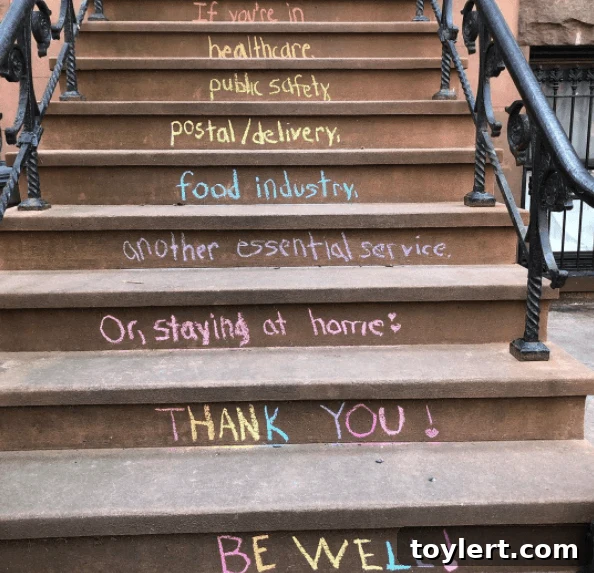
Brooklyn’s architectural landscape, particularly its iconic brownstone stoops, played a central role in this outpouring of community spirit. Historically, stoops have been informal gathering places, stages for neighborhood life. During this period, they took on new significance, becoming front-row seats for public displays of affection and solidarity. From hand-painted signs bearing messages like “We Are One Brooklyn” to elaborate installations of fairy lights and streamers, each stoop told a unique story.
Windows, too, transformed into canvases of hope. Apartment dwellers and homeowners alike adorned their panes with vibrant drawings, cut-outs, and printed messages. These window art pieces, often visible from the street, offered a glimpse into the hearts of their creators. They ranged from simple, child-like scribbles designed to entertain passersby to poignant tributes to essential workers. This transformation of private spaces into public messages created an open-air gallery, turning everyday walks into uplifting journeys of discovery and affirmation.
The Universal Symbol: Rainbows of Hope
Among the most prevalent and powerful symbols to emerge from this period of collective expression were rainbows. What began as a spontaneous gesture in one corner of the world quickly spread, finding a particularly strong foothold in Brooklyn. These colorful arcs popped up everywhere: drawn on construction paper and taped to windows, painted on canvases, or even fashioned from string and fabric. The rainbow, long a universal symbol of hope, peace, and new beginnings, took on an amplified meaning.
Children, in particular, embraced the rainbow initiative with gusto, creating countless artworks that served to brighten countless days. For many, seeing a rainbow in a window became a small but significant moment of joy and reassurance during uncertainty. It was a simple, easily replicable act that allowed everyone, regardless of artistic skill, to contribute to the collective mood of optimism. These vibrant splashes of color not only lifted spirits but also silently acknowledged the dedication of frontline workers, often accompanied by heartfelt “Thank You” notes.
Sidewalk Chalk: Spreading Joy, One Masterpiece at a Time
The humble stick of sidewalk chalk became another unexpected hero in this narrative of community expression. Deployed with enthusiasm by children and adults alike, sidewalks transformed into temporary public art installations. Messages scrawled in colorful chalk declared “Stay Strong,” “You Are Not Alone,” and “Heroes Work Here.” Elaborate murals depicting fantastical creatures, inspirational quotes, and detailed landscapes appeared overnight, only to be washed away by the next rain, making their ephemeral beauty even more poignant.
Sidewalk chalk art offered a low-stakes, high-impact way for individuals to engage. For families, it was an outdoor activity that fostered creativity and provided an outlet for expression during lockdown. For those out for a brief break and fresh air, these vibrant drawings provided moments of unexpected delight and a feeling of shared humanity. They were simple gifts to the community, brightening otherwise quiet streets and proving that even small acts of creativity could make a significant difference in collective morale.
A Symphony of Gratitude: Honoring Our Essential Workers
A central theme woven through all these public displays was an overwhelming sense of gratitude. Brooklynites used their stoops, windows, and sidewalks to honor the countless individuals who continued to work tirelessly, often at great personal risk, to keep the city functioning. Healthcare heroes were singled out with specific messages of thanks, their tireless efforts acknowledged through banners and heartfelt drawings.
But the gratitude extended far beyond hospitals. Essential workers from all sectors received recognition: the grocery store clerks stacking shelves, the delivery drivers traversing busy streets, the sanitation workers keeping the city clean, the transit staff ensuring vital services continued. These visual thank-you notes, whether elaborate or simple, were a powerful demonstration of collective appreciation, creating a bond between the community and those serving on the front lines. They transformed abstract gratitude into tangible, visible support that could be seen and felt on every block.
Beyond the Visuals: The Enduring Spirit of Brooklyn
While the visual expressions on stoops, windows, and sidewalks captured the immediate public imagination, they were just one facet of Brooklyn’s deeper enduring spirit. This period also saw an explosion of mutual aid networks, neighbor-to-neighbor assistance, and localized efforts to support the most vulnerable. The creativity displayed in public art was mirrored in the ingenuity of community organizers and volunteers. These visible signs acted as a powerful reinforcement, a constant visual reminder that collective action and empathy were alive and well.
The borough, known for its fierce independence and strong neighborhood identities, demonstrated that these characteristics could coalesce into a powerful, unified response when needed. The stoop decorations, the window rainbows, and the sidewalk chalk messages were not just fleeting trends; they were symptoms of a deeper cultural commitment to community welfare and a testament to the power of human connection, even in the most challenging of times. They embodied the borough’s resilience and its capacity for kindness.
Looking Ahead: The Legacy of Local Resilience
As Brooklyn navigates future challenges and continues its evolution, the memory of these stoops, windows, and sidewalks adorned with messages of hope and gratitude will endure. They serve as a powerful historical marker, a visual archive of how a community chose to respond to adversity with creativity, compassion, and unwavering solidarity. The lessons learned during this time—the importance of local connection, the power of simple gestures, and the profound impact of collective optimism—will undoubtedly shape the borough’s future.
The silent conversations held through art and signage demonstrated that even when grand gestures are impossible, small, heartfelt expressions can build monumental bridges between people. Brooklyn’s canvas of hope proved that the human spirit, especially when fueled by community, is truly indomitable. The views captured by locals on their brief breaks for fresh air during those challenging times revealed not just art, but the very soul of a borough determined to uplift, to connect, and to thrive.