Choosing the Right Mortar for Repointing Your Historic Basement Brick Wall
For owners of early 20th-century homes, maintaining the unique character and structural integrity of their properties often involves tackling projects like repointing. A common scenario, and one that frequently sparks debate, is the need to repoint sections of an interior brick basement wall. While the project might seem small enough for a confident DIYer, the critical decision of selecting the correct mortar type is paramount. Many homeowners instinctively know not to use a “hard” mortar, yet the sheer volume of conflicting advice can be overwhelming. This comprehensive guide aims to clarify the best approach, offering practical advice for choosing the ideal mortar mix to preserve your historic home.
Understanding Repointing: More Than Just Filling Gaps
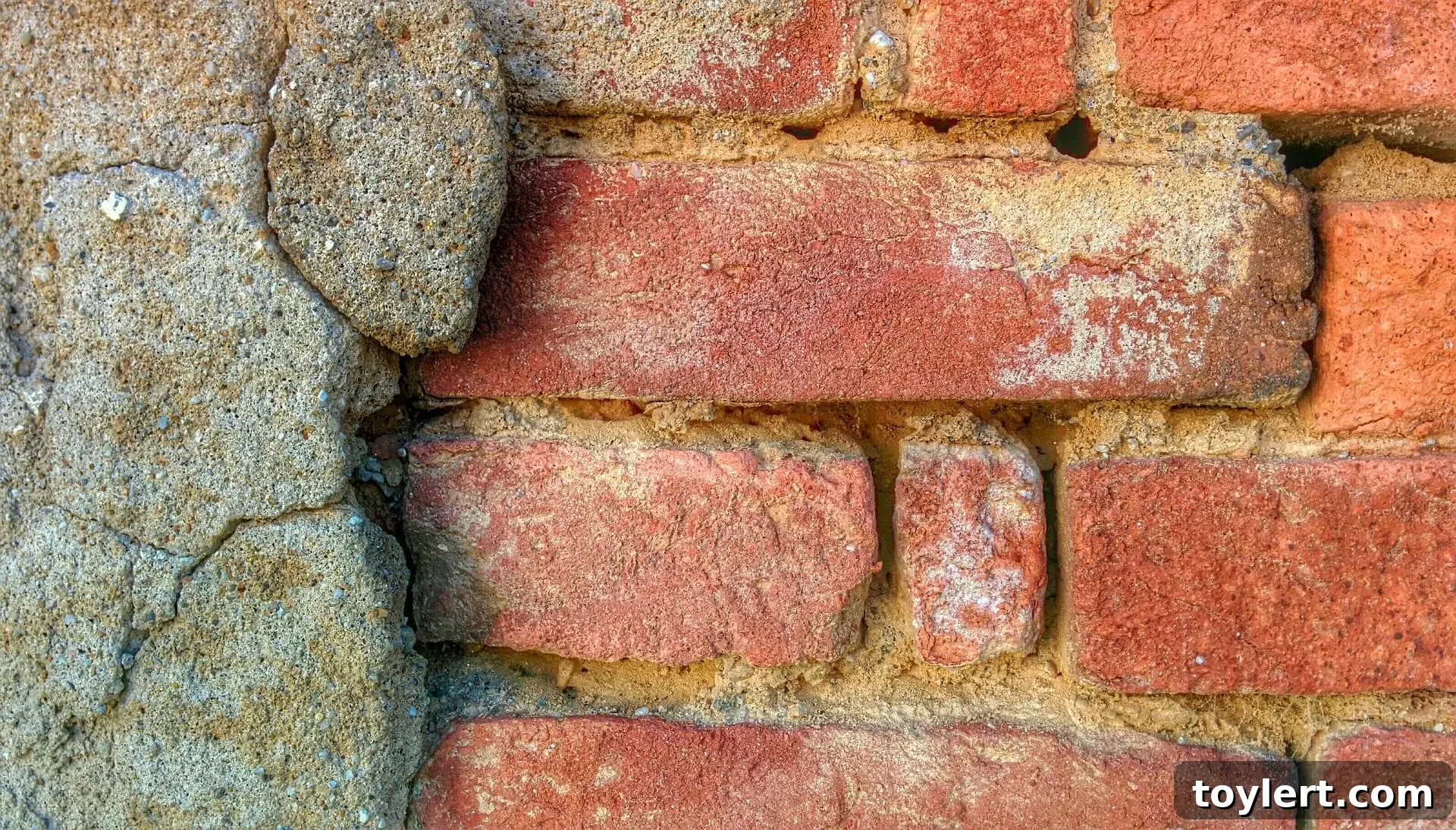
Repointing, also known as tuckpointing, is the process of removing deteriorated mortar from the joints of a masonry wall and replacing it with new mortar. This isn’t merely an aesthetic fix; it’s a vital maintenance task that protects the brickwork and the entire structure from moisture intrusion and further decay. Over time, factors like moisture, freeze-thaw cycles, and general wear and tear cause mortar joints to crack, crumble, and recede. When left unaddressed, these compromised joints allow water to penetrate the wall, leading to significant problems such as efflorescence, spalling (flaking) of bricks, and even structural instability.
For an interior basement wall, especially in an older home, effective repointing is crucial. Basements are inherently more susceptible to moisture issues. Properly repointed joints act as a critical line of defense, guiding moisture movement through the wall in a controlled manner, preventing it from accumulating and causing damage to both the brick and interior finishes.
Why Mortar Choice is Critical for Historic Homes
The single most important principle when repointing any historic masonry is to ensure the new mortar is softer and more permeable than the original brick. This concept is often referred to as using “sacrificial mortar.” Why is this so vital, particularly for homes built in the early 20th century?
Historic bricks, particularly those produced before the mid-20th century, were generally softer and more porous than modern bricks. They were designed to work in conjunction with softer, lime-based mortars, forming a breathable wall system. This system allowed moisture to evaporate freely from the brickwork, preventing it from becoming trapped within the wall. The mortar, being softer, was intended to be the “sacrificial” element, deteriorating before the harder, more valuable brick. This meant that when repairs were needed, only the mortar would be replaced, leaving the bricks largely intact.
Introducing a modern, hard, Portland cement-based mortar into this historic system creates several severe problems:
- Trapped Moisture: Hard mortars are less permeable. They prevent moisture from escaping through the joints, forcing it to exit through the softer brick faces. This leads to accelerated spalling and deterioration of the bricks themselves.
- Structural Stress: Historic buildings are designed with a degree of flexibility. Hard mortars are rigid and do not accommodate the natural movement of older structures, which can lead to cracking in the brickwork rather than in the mortar joints.
- Compromised Breathability: Basements, in particular, rely on the wall’s ability to breathe. A hard, impermeable mortar can trap moisture within the wall cavity, potentially contributing to dampness, mold growth, and a less healthy indoor environment.
Therefore, selecting the correct mortar isn’t just about structural integrity; it’s about preserving the very essence and longevity of your historic home’s masonry.
Deciphering Mortar Types for Your Early 20th-Century Basement
The confusion surrounding mortar types often stems from the prevalence of modern Portland cement-based mixes. While these are appropriate for contemporary construction, they are rarely the best choice for historic preservation. Let’s break down the options relevant to your early 20th-century basement wall.
Portland Cement-Based Mortars (Types M, S, N)
These mortars are classified by their compressive strength and flexibility, with Type M being the hardest and Type N being the least hard of the common modern mixes.
- Type M Mortar: Extremely hard and strong. Absolutely unsuitable for historic brickwork.
- Type S Mortar: Very strong and dense. Also generally too hard for early 20th-century brick.
- Type N Mortar: Often marketed as a “general purpose” mortar. While softer than M or S, it still contains a significant amount of Portland cement. For many early 20th-century bricks, especially softer varieties, Type N can still be too hard and impermeable. It might be considered for harder bricks or specific exterior applications where some strength is needed, but for a basement wall, particularly if the original mortar was very soft, it’s often not the ideal choice.
The Superior Choice: Lime Mortars (Type O or Traditional Lime Mortar)
For historic masonry, especially that from the early 20th century and prior, lime-based mortars are almost always the recommended solution. These mortars are celebrated for their breathability, flexibility, and lower compressive strength, making them perfectly compatible with historic bricks.
- Type O Mortar: This is generally the softest of the commercially available pre-mixed mortars. It contains a higher ratio of lime to cement than Type N, making it more flexible and breathable. For many early 20th-century homes, Type O is an excellent choice for interior basement repointing. It offers a good balance of workability and appropriate strength without being overly hard.
- Traditional Lime Mortar (Non-Hydraulic or Hydraulic Lime): For true historical accuracy and maximum compatibility, many preservationists advocate for traditional lime mortars with minimal or no Portland cement.
- Non-Hydraulic Lime (NHL): This is pure lime putty that cures slowly by carbonation, reacting with CO2 in the air. It is very soft, breathable, and self-healing. While excellent for very old and soft bricks, its slow cure time and specific mixing requirements might be a challenge for a DIYer tackling a small project in a basement, where moisture levels can vary.
- Natural Hydraulic Lime (NHL): Hydraulic lime sets more quickly than non-hydraulic lime because it reacts with water (hydrates) as well as carbon dioxide. NHL is graded by strength (e.g., NHL 2, NHL 3.5, NHL 5). For your early 20th-century basement wall, a softer NHL (like NHL 2 or NHL 3.5) mixed with appropriate sand would be a highly suitable and historically accurate option, offering better workability and a faster set than pure lime putty. This is often the preferred choice by professionals for its balance of traditional properties and practical application.
The Verdict for Your Project: Given your early 20th-century home and the interior basement location, a Type O mortar or a Natural Hydraulic Lime (NHL 2 or NHL 3.5) mortar with appropriate sand would be the most appropriate choices. These options will be sufficiently soft and breathable to protect your historic brickwork, allow the wall to manage moisture effectively, and maintain the flexible characteristics of the original masonry.
Key Considerations Before You Start Repointing
Beyond selecting the correct mortar type, several other factors contribute to a successful repointing project:
- Match the Existing Mortar’s Characteristics:
- Strength: As discussed, the new mortar must be softer than the brick and ideally match the strength of the original mortar.
- Permeability: Ensure it’s breathable to allow moisture to escape.
- Color: The color of the mortar is determined by the sand and any pigments used. Take a sample of your existing mortar to a masonry supply yard to match the sand color and aggregate size. Avoid adding too much pigment, as subtle variations are natural.
- Texture: The size and type of sand particles will dictate the texture. Coarse sand gives a rougher texture, while fine sand results in a smoother finish.
- Analyze Your Brick: Inspect your bricks. Are they very soft and crumbly, or relatively harder? This will further guide your mortar selection. Softer bricks demand softer mortar.
- Basement Environment: Basements can have higher humidity. A breathable mortar is especially critical here to prevent moisture buildup within the wall system. Ensure any underlying moisture issues (e.g., poor exterior drainage, foundation cracks) are addressed first.
DIY Repointing Steps for Your Basement Wall
While the project is small, meticulous preparation and execution are crucial. Here’s a step-by-step guide:
1. Safety First
Working with old mortar can release significant dust containing silica. Always wear:
- Safety Glasses or Goggles: To protect against dust and flying debris.
- Dust Mask/Respirator (N95 or better): Essential to protect your lungs from silica dust.
- Gloves: To protect your hands from mortar and tools.
- Hearing Protection: If using power tools.
2. Gather Your Tools and Materials
- Tools for Mortar Removal: Cold chisel, masonry hammer, joint raker, angle grinder with a diamond blade (for precision, if comfortable and experienced).
- Tools for Application: Masonry hawk, pointing trowel (small), margin trowel, jointing tool (to match existing profile, e.g., concave, V-joint, flush), stiff bristle brush.
- Materials: Chosen mortar mix (Type O or NHL with sand), clean mixing bucket, measuring tools for water, spray bottle or hose for dampening.
3. Remove Old, Deteriorated Mortar
This is the most time-consuming step. The goal is to remove all loose and crumbling mortar to a consistent depth, typically 3/4 to 1 inch, or until you reach sound mortar. Be extremely careful not to damage the surrounding bricks.
- Manual Removal: Use a cold chisel and masonry hammer for precision. Hold the chisel at a low angle and tap gently.
- Mechanical Removal (with caution): An angle grinder with a thin diamond blade can speed up vertical joints, but it requires a steady hand and creates a lot of dust. Never grind into the brick. Avoid this method if you’re not experienced.
4. Clean the Joints Thoroughly
After removal, use a stiff wire brush, a shop vac, or compressed air to remove all dust, debris, and loose particles from the joints. The joints must be impeccably clean for the new mortar to bond properly.
5. Prepare the Mortar
Mix your chosen mortar according to the manufacturer’s instructions, or for traditional lime mortars, follow specific ratios for lime and sand. The consistency should be like peanut butter or thick oatmeal—workable, but not too wet or soupy. Mix in batches you can use within 30-60 minutes, especially with lime mortars, as they can “set up” prematurely if left too long. For Type O or NHL, clean, sharp sand is critical.
6. Dampen the Bricks and Joints
Before applying new mortar, thoroughly dampen the brickwork and the empty joints with a spray bottle or light mist. This prevents the dry bricks from sucking moisture too quickly out of the new mortar, which can lead to poor curing, weak bonds, and shrinkage cracks. The bricks should be damp but not dripping wet.
7. Apply the New Mortar
Load a small amount of mortar onto your hawk. Using your pointing trowel, force the mortar firmly into the joints. Start with the horizontal joints, working from the top down. Then fill the vertical joints. Ensure the mortar is packed tightly and completely fills the joint, avoiding voids. Be careful to minimize smearing mortar on the brick faces.
8. Tool the Joints
Once the mortar has started to “set” (it will be firm to the touch but still workable, often referred to as “thumbprint hard”), use your jointing tool to compress and shape the mortar. Matching the existing joint profile (e.g., concave, V-joint, flush) is important for both aesthetics and water shedding. Tooling compacts the mortar, improving its durability and water resistance.
9. Clean Up Excess Mortar
As you tool, any excess mortar squeezed out should be carefully scraped off with a trowel or brushed away with a stiff brush. Avoid using a wet brush or sponge at this stage, as it can smear the mortar and cause efflorescence.
10. Cure the Mortar
Proper curing is paramount for the strength and longevity of the new mortar. The goal is a slow, controlled drying process, especially for lime-based mortars. For interior basement work, this usually involves misting the newly repointed joints with water 2-3 times a day for several days (3-7 days is common, longer for pure lime). This prevents the mortar from drying out too quickly and becoming brittle or weak. Avoid direct fans or heaters on the freshly repointed areas.
Common Mistakes to Avoid
- Using the Wrong Mortar: As highlighted, this is the biggest and most damaging mistake for historic masonry.
- Poor Joint Preparation: Leaving loose debris or not cleaning properly will result in a weak bond.
- Improper Mortar Consistency: Too wet, and it will shrink and crack; too dry, and it won’t bond well.
- Not Dampening Bricks: Dry bricks will prematurely suck moisture from the mortar, leading to poor cure and weak joints.
- Working in Extreme Temperatures: Avoid repointing in very hot, cold, or windy conditions, as these can affect curing. Basements often offer more stable temperatures, which is an advantage.
- Improper Curing: Rushing the drying process or neglecting to mist the mortar can severely compromise its strength and durability.
- Smearing Mortar on Bricks: Not only is it unsightly, but it can also be difficult to remove and may damage the brick face if harsh cleaning methods are used.
When to Call a Professional
While a small repointing project in your basement can be a rewarding DIY endeavor, there are times when calling a professional mason specializing in historic preservation is the wiser choice:
- Extensive Damage: If large sections of your basement wall are severely deteriorated or show signs of structural movement, a professional assessment is crucial.
- Uncertainty About Mortar Match: If you’re unsure about the original mortar composition or struggling to find a suitable match, a specialist can perform testing or provide expert guidance.
- Structural Concerns: Any cracks extending through bricks or signs of bowing walls indicate deeper structural issues that require a professional engineer and mason.
- Lack of Experience or Time: Repointing is labor-intensive and requires patience and attention to detail. If you lack either, a professional will ensure a quality job.
Conclusion
Repointing your early 20th-century interior brick basement wall is a valuable investment in your home’s longevity and health. The key to a successful project lies in understanding the unique needs of historic masonry and making an informed decision about your mortar. By opting for a softer, more breathable mortar like Type O or a Natural Hydraulic Lime (NHL) mix, you’ll ensure compatibility with your historic bricks, allow the wall to manage moisture effectively, and prevent costly damage down the line. Approach the project with careful preparation, attention to detail, and a commitment to proper curing, and you’ll preserve the timeless character of your home for generations to come.