Unveiling the Enduring Grandeur of 859 St. Marks Avenue: A Crown Heights Limestone Legacy
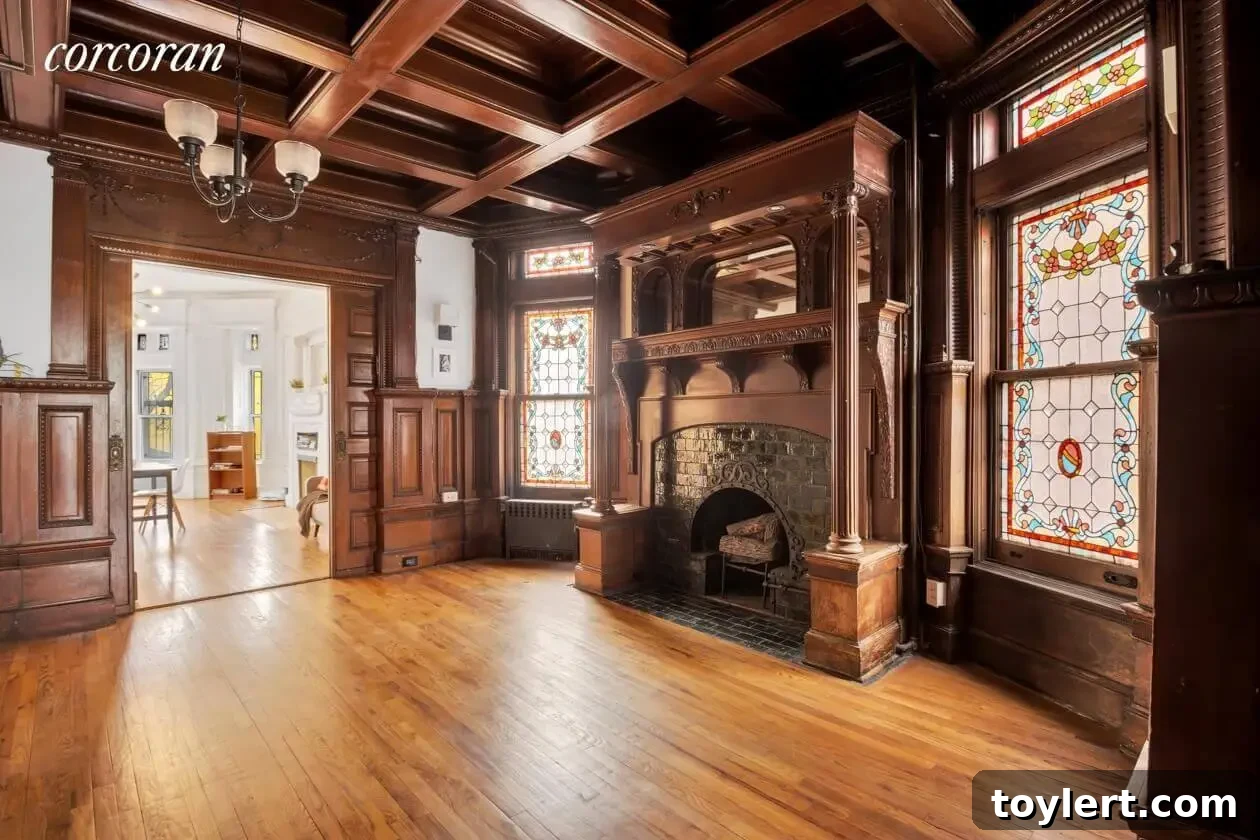
Nestled within the illustrious Crown Heights North Historic District, St. Marks Avenue once served as an opulent canvas for Brooklyn’s wealthiest residents to showcase their architectural aspirations. Each magnificent dwelling along this prestigious thoroughfare was more than just a home; it was a profound statement of wealth, taste, and social standing. Among these distinguished properties, 859 St. Marks Avenue, an exquisite limestone edifice dating back to the 1890s, offers an intriguing glimpse into this vibrant chapter of Brooklyn’s past. Its recent sales listings, adorned with tantalizing images of original mantels, intricate stained glass, elegant wainscoting, elaborate moldings, and majestic coffered ceilings, only hint at the bygone splendor that once permeated its lavish interiors. Yet, this architectural marvel also carries a multifaceted history, having transitioned through various phases, including its tenure as a Single Room Occupancy (SRO) building, before undergoing a more recent, comprehensive renovation.
Architectural Splendor: The Renaissance Revival Legacy of 859 St. Marks Avenue
The exterior of 859 St. Marks Avenue stands as a proud testament to the Renaissance Revival architectural style, a popular choice for grand urban residences during the late 19th century. This style, characterized by its classical balance, symmetry, and decorative elements inspired by Italian Renaissance palaces, is beautifully articulated in the building’s limestone facade. Limestone, renowned for its durability and elegant aesthetic, was a favored material among Brooklyn’s elite, offering a lighter, more refined alternative to the ubiquitous brownstone. Despite its enduring impressiveness, the home’s facade bears a subtle mark of time: a significant alteration in the 1950s involved the removal of its original, massive pitched clay-tile roof, which undoubtedly modified the upper floor’s original design. This change, often referred to as “remuddling” by preservationists, altered the architect’s initial vision for what was originally conceived as a cohesive row of stately homes.
For those keen to envision the building’s pristine, original form, a historic tax photo serves as an invaluable window into the past. It reveals the meticulous details and the architectural harmony that defined this entire row, offering a crucial reference point for understanding the property’s evolution. Inside, the house promised and, in many areas, still delivers a masterclass in Gilded Age luxury. The aforementioned mantels, crafted with exquisite artistry, served as focal points in each room, radiating warmth and sophistication. Stained glass windows, filtering sunlight into a kaleidoscope of colors, added an ethereal beauty, while wainscoting and elaborate moldings provided rich textural depth to the walls. The grandeur culminated in the coffered ceilings, which not only added an imposing sense of height and volume but also showcased intricate craftsmanship, transforming ceilings into works of art. These interior details are more than mere decorative elements; they are narratives of a bygone era, speaking to the lavish lifestyles and artisanal skills that characterized Brooklyn’s historic residences.
St. Marks Avenue: A Tapestry of Urban Development and Architectural Innovation
During the late 19th and early 20th centuries, St. Marks Avenue held a reputation for its detached mansions, freestanding architectural masterpieces that often occupied sprawling lots and commanded significant attention. This context makes the construction of a row of ornate, attached limestone houses, like those including 859 St. Marks Avenue, between Brooklyn and Kingston Avenues, particularly noteworthy. As highlighted in a 1908 article by Brooklyn Life, these attached structures caused a considerable stir upon their completion. The publication specifically noted the exceptional value of real estate on St. Marks Avenue, implying that such a grand, yet attached, development was a bold departure from the prevailing architectural trend of the time.
This architectural choice reflects a fascinating period of urban development in Brooklyn. As the borough rapidly expanded and became a coveted residential destination, builders and developers began to explore new models of housing that could accommodate a burgeoning wealthy class within a more densely planned urban fabric. While detached mansions offered ultimate privacy and expansive grounds, attached row houses, when executed with the same level of luxury and architectural detail, could provide elegant, status-affirming residences on a more efficient footprint. The fact that these particular attached houses were built with such ornate limestone facades and exceptional interior detailing underscores an attempt to merge the prestige of a mansion with the practicality of a row house, appealing to a sophisticated market eager for grand homes even within a more communal setting. This blending of styles and building types contributed to the diverse architectural tapestry that makes Crown Heights so distinctive today, reflecting the dynamic economic and social forces shaping Brooklyn at the turn of the century.
The Visionaries Behind the Limestone Facade: Henry B. Moore and Herbert R. Brewster
While the Crown Heights North Historic District designation report, a crucial document for understanding the historical context of local properties, might not explicitly detail the origins of every structure, diligent historical research often unearths fascinating insights. Such an investigation into 859 St. Marks Avenue and its immediate neighbors led to the discovery of an 1894 filing. This pivotal document confirms the construction of five magnificent four-story limestone dwellings on St. Marks Avenue, identifying Henry B. Moore as both the builder and the owner. Moore’s dual role suggests a speculative development, a common practice during the era where entrepreneurs invested in constructing high-quality homes anticipating a strong market demand from the borough’s prospering middle and upper classes. His vision was to create a row of residences that would stand out, even on an avenue already known for its architectural grandeur.
Equally significant is the identification of the architect for this ambitious project: Herbert R. Brewster. A native of Brooklyn, Brewster was a respected figure in the architectural circles of his time. While he later relocated to Pasadena, California, in the 1920s, his formative years and early career were dedicated to shaping the built environment of his home borough. His portfolio in Brooklyn was diverse, encompassing both religious and residential structures, demonstrating a versatile talent and a deep understanding of various architectural styles prevalent in the late 19th and early 20th centuries. Brewster’s design for 859 St. Marks Avenue and its adjacent properties reflects his skill in adapting the grand tenets of Renaissance Revival to the urban row house typology, creating homes that were both stately and practical. Understanding the contributions of individuals like Moore and Brewster is vital for appreciating the craftsmanship, design philosophy, and historical context embedded within these preserved structures. Their work continues to influence the aesthetic character and heritage value of the Crown Heights neighborhood, reminding us of the skilled hands and keen minds that shaped Brooklyn’s architectural identity.
A Journey Through Time: Evolution, Adaptation, and Modern Renovation
The life of a historic building is rarely linear, and 859 St. Marks Avenue is no exception. Its journey through time is marked by periods of both grandeur and transformation, reflecting the broader socioeconomic shifts that have impacted Crown Heights and Brooklyn as a whole. While initially conceived as a luxurious single-family residence for the affluent, the property, like many of its contemporaries, eventually underwent a significant change in use. Its transformation into a Single Room Occupancy (SRO) building speaks volumes about a period in the 20th century when economic downturns, changing demographics, and evolving housing needs led to the subdivision of grand homes into smaller, more affordable living units. This era, while necessary for providing housing, often resulted in the neglect of original architectural details and the degradation of the building’s overall condition.
However, the narrative of 859 St. Marks Avenue does not end with its SRO phase. The current resurgence of Crown Heights, driven by renewed interest in its historic housing stock and vibrant community, has ushered in a new chapter for properties like this. The “more recent reno” alluded to in the original listing represents a monumental effort to restore much of the home’s original splendor while simultaneously adapting it for contemporary living. Such renovations are complex undertakings, demanding a delicate balance between preserving historical integrity and incorporating modern amenities and functionalities. Restoring intricate moldings, repairing stained glass, rejuvenating coffered ceilings, and re-establishing the grandeur of the mantels requires specialized craftsmanship and a deep respect for historical materials and techniques. Simultaneously, updating plumbing, electrical systems, and integrating energy-efficient solutions ensures the building’s longevity and comfort for future residents. This careful restoration process transforms 859 St. Marks Avenue from a mere relic into a living piece of history, ready to serve as a luxurious and functional home in the 21st century, embodying the enduring appeal of Brooklyn’s historic architecture.
The Enduring Legacy of Crown Heights’ Historic District
The very existence of the Crown Heights North Historic District is a testament to the community’s dedication to preserving its unique architectural heritage. Designated areas like this provide crucial protections against demolition and insensitive alterations, ensuring that the distinctive character of neighborhoods is maintained for generations to come. Properties like 859 St. Marks Avenue are not just individual homes; they are vital components of this collective history, each telling a part of Brooklyn’s expansive story. Investing in a home within a historic district means becoming a steward of this heritage, contributing to the ongoing narrative of architectural preservation and urban renewal.
The allure of these homes extends beyond their historical value; they offer a distinctive lifestyle that blends classic elegance with modern convenience in a vibrant urban setting. Buyers are increasingly drawn to the charm, craftsmanship, and unique character that cannot be replicated in contemporary constructions. The restoration and continued maintenance of these properties contribute significantly to the cultural richness and economic vitality of Crown Heights. They attract residents who value history, design, and community, further solidifying the neighborhood’s status as one of Brooklyn’s most desirable and historically significant residential areas. 859 St. Marks Avenue, with its storied past and meticulously restored interiors, stands as a prime example of why Crown Heights continues to captivate those seeking a home with profound historical roots and undeniable architectural beauty.
859 St. Marks Avenue: A Timeless Brooklyn Treasure Reimagined
From its origins as a grand statement of Gilded Age prosperity to its nuanced journey through different eras, 859 St. Marks Avenue remains a captivating piece of Brooklyn’s architectural tapestry. It encapsulates the ambition of late 19th-century builders, the artistry of skilled craftsmen, and the evolving social dynamics of one of New York City’s most storied boroughs. Its Renaissance Revival facade, though subtly altered over time, continues to command respect, while its meticulously restored interiors whisper tales of past lavishness, now seamlessly blended with modern comforts. As a key fixture in the Crown Heights North Historic District, this limestone gem is more than just a house; it is a historical artifact, a testament to enduring design, and a vibrant participant in Brooklyn’s ongoing narrative of preservation and renewal. 859 St. Marks Avenue truly represents a timeless treasure, offering a unique opportunity to own a significant piece of Brooklyn history while enjoying the very best of contemporary urban living.