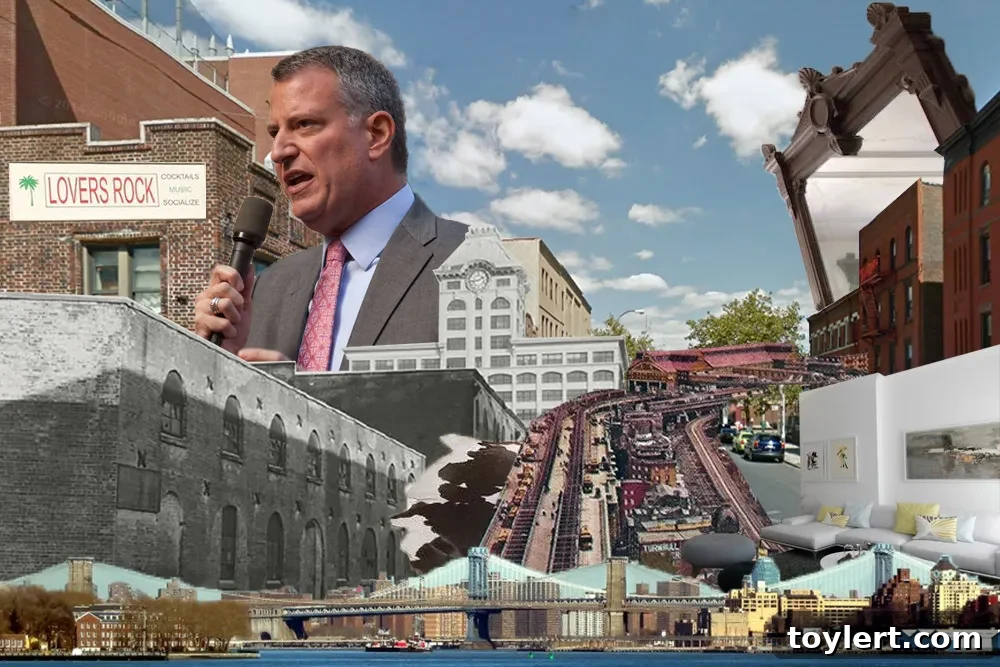
Exploring Brooklyn’s Rich Tapestry: Real Estate, History, and Urban Debates
Brooklyn, a borough renowned for its distinctive charm, historical depth, and dynamic evolution, consistently offers a wealth of captivating stories. From the intricate dance of its real estate market to the echoes of its storied past and the pressing debates shaping its future, the narratives emerging from Brooklyn are as diverse as its vibrant communities. This week, we delve into a collection of compelling features that highlight the borough’s multifaceted identity, touching upon stunning home transformations, significant historical milestones, and critical urban planning discussions that resonate throughout New York City.
Our journey begins with an exploration of Brooklyn’s ever-fascinating real estate landscape, where history and modernity frequently intertwine. We then pivot to uncover intriguing historical accounts that explain how Brooklyn came to be what it is today, revealing the origins of beloved landmarks and even its very name. Finally, we confront contemporary urban challenges, examining ongoing discussions about infrastructure, public housing, and community development. Together, these stories paint a comprehensive picture of Brooklyn, a place continuously reinventing itself while steadfastly honoring its profound heritage.
Brooklyn’s Dynamic Real Estate Scene: Flips, Renovations, and Architectural Wonders
The allure of Brooklyn’s homes remains undiminished, drawing both aspiring residents and seasoned investors alike. This past week, several properties garnered significant attention, showcasing the breadth and vitality of the borough’s housing market. Among the standout features was a particularly impressive home flip in Bed-Stuy (Bedford-Stuyvesant), a neighborhood that continues to experience a remarkable renaissance. This renovation exemplified how thoughtful design and strategic upgrades can transform a property, breathing new life into older structures while preserving their inherent character. Such projects often serve as catalysts for neighborhood revitalization, enhancing local property values and attracting new residents eager to experience Bed-Stuy’s unique blend of historical architecture and burgeoning cultural scene.
Beyond the completed transformations, we also explored a “pre-construction” building that promised to blend modern amenities with meticulously preserved original details. This delicate balance between contemporary living standards and historical integrity is a hallmark of Brooklyn’s architectural philosophy. Developers and homeowners in areas like Brooklyn Heights, Park Slope, and Carroll Gardens often strive to retain the intricate moldings, classic facades, and period craftsmanship that define these historic districts, even as they introduce modern layouts and technologies. These developments speak to a sophisticated demand for homes that offer both the charm of yesteryear and the convenience of today, creating unique living spaces that are deeply rooted in their historical context yet forward-looking in their design.
However, not all stories from Brooklyn’s real estate market are tales of pristine preservation and seamless renovation. Our spotlight also turned to a more sobering discovery: arguably the most dilapidated and depressing home in Brooklyn Heights. This feature served as a stark reminder of the challenges inherent in urban property ownership, particularly in areas where historical significance often clashes with the financial and logistical demands of maintenance and restoration. Such properties often spark local debate about property rights, historical preservation mandates, and the potential for blight in even the most affluent neighborhoods. The juxtaposition of this crumbling structure against the backdrop of Brooklyn Heights’ generally magnificent brownstones underscored the complex realities of urban renewal and the persistent efforts required to maintain the borough’s architectural splendor.
These diverse real estate narratives collectively illustrate the intricate dance between preservation, innovation, and economic forces that shape Brooklyn’s housing market. From the meticulously flipped brownstones of Bed-Stuy to the ambitious pre-construction projects and the challenging cases of neglected historical properties, Brooklyn’s homes are not just structures; they are living testaments to the borough’s ongoing evolution and enduring appeal. They reflect the aspirations of its residents, the vision of its developers, and the historical layers that make each block and building a unique part of the urban fabric.
Unearthing Brooklyn’s Rich History: From “Great Mistakes” to Nautical Naming Conventions
Brooklyn’s identity is deeply intertwined with its past, a tapestry woven with significant historical events, pivotal decisions, and fascinating local lore. This week, we delved into several history-themed posts that captivated readers, shedding light on the origins and impacts of some of Brooklyn’s most enduring stories. Understanding these historical threads is crucial for appreciating the borough’s unique character and its place within the larger narrative of New York City.
Brooklyn’s “Great Mistake”: The Consolidation of a City
One of the most profound historical events discussed was Brooklyn’s “Great Mistake,” a term often used to refer to the consolidation of the City of Brooklyn with New York City in 1898. At the time of consolidation, Brooklyn was the fourth-largest city in the United States, boasting its own distinct identity, burgeoning industries, and vibrant cultural institutions. Many Brooklynites fiercely opposed the merger, fearing a loss of autonomy and a dilution of their civic pride under the shadow of Manhattan. The arguments against consolidation ranged from concerns about increased taxes to a perceived sacrifice of Brooklyn’s independent spirit for the sake of greater metropolitan unity.
Despite the strong opposition, the consolidation ultimately went through, leading to the creation of Greater New York City. While it provided practical benefits, such as unified infrastructure development and increased political clout, the emotional scar of the “Great Mistake” lingered for generations. This historical event profoundly shaped Brooklyn’s subsequent development, influencing its infrastructure, economy, and unique sense of identity that persists to this day. Even now, over a century later, a distinct “Brooklyn pride” often reflects a subtle, lingering sentiment from this pivotal moment, underscoring the borough’s enduring sense of self despite its integration into a larger metropolis.
The Enduring Saga of Empire Stores: A Waterfront Transformation
Another captivating historical narrative explored the “saga of Empire Stores,” a magnificent complex of 19th-century coffee warehouses located along the Dumbo waterfront. For decades, these imposing brick structures stood largely derelict, silent witnesses to Brooklyn’s industrial past. Built between the 1870s and 1880s, Empire Stores played a crucial role in New York’s maritime trade, storing goods transported across the globe. However, as shipping practices evolved and industry shifted away from the waterfront, these grand buildings fell into disuse, becoming a dramatic, if crumbling, feature of the Brooklyn skyline.
The story of Empire Stores is one of remarkable revitalization. After years of abandonment and various redevelopment proposals, the complex underwent a stunning transformation in the 21st century. It was meticulously redeveloped into a vibrant mixed-use complex, housing offices, retail spaces, restaurants, and cultural institutions, while carefully preserving its historic exterior and many interior architectural elements. This monumental project stands as a testament to adaptive reuse, demonstrating how historical industrial architecture can be reimagined to serve contemporary urban needs, contributing significantly to Dumbo’s emergence as a thriving creative and commercial hub. The saga of Empire Stores is a powerful symbol of Brooklyn’s ability to honor its past while boldly embracing its future.
How Buttermilk Channel Got Its Name: A Slice of Nautical History
Beyond grand narratives and monumental structures, Brooklyn’s history also enriches its everyday nomenclature, as seen in the charming tale of “how Buttermilk Channel got its name.” This narrow tidal strait, located between Brooklyn and Governors Island, is not named for a dairy product factory, as some might assume, but rather from a more whimsical and practical nautical observation. Legend has it that the channel’s name originates from the foamy, milky-white appearance of the water during strong tidal currents.
Sailors and local inhabitants observed that the churning water, particularly when strong currents flowed against the tide or wind, resembled the frothy consistency of buttermilk. This vivid description stuck, becoming the official name for the waterway. Historically, Buttermilk Channel was a vital passage for ships navigating New York Harbor, connecting the East River to the Upper Bay. Its name serves as a delightful reminder of the intimate relationship between Brooklyn’s early residents, their maritime environment, and the evocative language they used to describe their world. It’s a small detail that adds rich flavor to the borough’s vast historical tapestry, illustrating how local observations can become ingrained in the very geography of a place.
These historical explorations, ranging from defining political decisions to the rebirth of industrial landmarks and the poetic naming of waterways, underscore the deep and complex layers that constitute Brooklyn’s heritage. Each story adds another dimension to our understanding of this iconic borough, revealing the forces that have shaped its landscape, its communities, and its enduring spirit.
Navigating Urban Challenges and Development Debates in Brooklyn
Brooklyn, while celebrated for its historical charm and vibrant communities, is also a borough that constantly grapples with the complexities of urban development, infrastructure needs, and pressing social issues. This week’s discussions prominently featured current debates that underscore the ongoing efforts to balance progress with preservation, and public good with private interests. From the perennial struggle for adequate bike infrastructure to the weighty questions surrounding public housing development, these topics reflect Brooklyn’s continuous evolution and the diverse voices shaping its future.
The Persistent Quest for Bike Lanes: Kingston and Brooklyn Avenues
Among the most pressing urban planning discussions was the question of why Kingston and Brooklyn Avenues *still* don’t have bike lanes. In an era where sustainable transportation and urban mobility are increasingly prioritized, the absence of dedicated cycling infrastructure on significant thoroughfares like these is a point of concern for many residents and advocacy groups. Bike lanes are not merely a convenience for cyclists; they are vital components of a comprehensive urban transportation network, promoting healthier lifestyles, reducing traffic congestion, and enhancing road safety for all users.
The challenges in implementing new bike lanes in densely populated areas like Brooklyn are multifaceted. They often involve complex negotiations over road space, parking availability, and potential impacts on local businesses. For Kingston and Brooklyn Avenues, specific considerations might include traffic patterns, existing infrastructure limitations, and community input that may present varying perspectives on the best use of public space. The continued push for these lanes highlights a broader city-wide conversation about equitable access to safe transportation options and the ongoing commitment required from municipal authorities to fulfill promises of a greener, more bike-friendly urban environment. The question itself underscores the persistent advocacy from the cycling community and residents who envision a more accessible and sustainable Brooklyn.
The NYCHA Land Lease Controversy: Public Sites and Private Developers
Another significant debate explored the controversial proposition: “should NYCHA lease land on public sites to private developers?” This question delves into the heart of public housing policy, urban economics, and social equity in New York City. The New York City Housing Authority (NYCHA) is the largest public housing authority in North America, providing homes for hundreds of thousands of residents. However, NYCHA has long faced severe financial challenges, with many of its buildings in dire need of costly repairs and upgrades.
The proposal to lease underutilized NYCHA land to private developers for new residential construction often comes with the promise of generating much-needed revenue for repairs and maintenance, as well as potentially creating new mixed-income housing units. Proponents argue that such partnerships can unlock development potential, bring vital funding to struggling public housing estates, and foster more diverse communities. They suggest that carefully structured agreements can ensure a portion of the new housing remains affordable and that existing residents benefit from improved facilities and services.
However, this approach also sparks considerable opposition and concern. Critics worry about the potential for displacement, gentrification, and the privatization of valuable public assets. There are fears that leasing public land to private entities could lead to a loss of control over these sites, diminish the availability of deeply affordable housing, and negatively impact existing NYCHA residents through construction disruption or changes in neighborhood character. The debate often involves intense discussions about transparency, community input, and ensuring that any development prioritizes the needs and rights of current residents. The question of NYCHA land leases is not just about real estate; it’s about the future of public housing, social justice, and the fundamental right to affordable, quality housing in one of the world’s most expensive cities.
These discussions, whether focusing on urban mobility or the future of public housing, collectively highlight the complex interplay of history, policy, and community activism that continuously shapes Brooklyn. They demonstrate that while Brooklyn is a place of undeniable beauty and historical richness, it is also a borough actively engaged in addressing its challenges, striving to build a future that is both progressive and equitable for all its inhabitants. These ongoing debates are central to understanding the dynamic character of Brooklyn, a place forever in flux, yet deeply rooted in its distinct identity and shared aspirations.
From the allure of its transformed homes to the echoes of its past and the pressing questions of its urban future, Brooklyn continues to be a borough of endless fascination. Its stories are a testament to a community constantly evolving, balancing its deep-rooted history with the demands of modern life. Whether through impressive real estate ventures, insightful historical explorations, or crucial civic debates, Brooklyn offers a vivid microcosm of urban life, inviting continuous engagement and thoughtful reflection on what it means to live in a place so richly layered with meaning and memory.