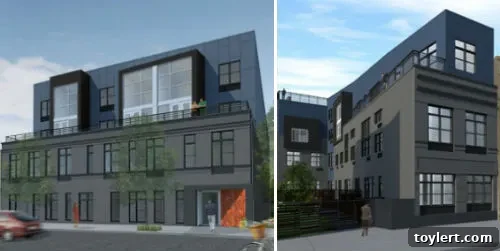
The Billiard Factory Lofts: A Landmark Adaptive Reuse in Prospect Heights, Brooklyn
Prospect Heights, a vibrant and historically rich neighborhood in Brooklyn, is constantly evolving, blending its storied past with contemporary urban living. Among its most compelling transformations is the ambitious conversion of the former Billiard Factory into 44 distinct loft apartments. Located prominently at 363 St. Marks Avenue, also known by its longer address span of 363-371 Prospect Place, this impressive residential project sits just west of Washington Avenue, placing it at the heart of one of Brooklyn’s most desirable locales. This adaptive reuse initiative, known as the Billiard Factory Lofts, represents a significant undertaking in urban development, promising to inject new life into a historic industrial structure while creating unique, character-filled homes for Brooklynites.
The vision for the Billiard Factory Lofts was brought to life by S3 Architects, a firm renowned for its expertise in breathing new purpose into existing buildings. Their approach to this project embodies the best practices of adaptive reuse, meticulously balancing the preservation of industrial heritage with the demands of modern residential design. The initial announcement and subsequent renderings generated considerable excitement within the community, offering a glimpse into what promised to be a truly special addition to the Prospect Heights streetscape.
From Industrial Hub to Residential Oasis: The Story of 363 St. Marks Avenue
Before its transformation, the building at 363 St. Marks Avenue served as a two-story billiard factory, a testament to Brooklyn’s rich industrial past. For decades, this structure contributed to the local economy, housing the manufacturing processes that produced billiard tables and related equipment. Such factories were once common sights across Brooklyn, a borough that played a crucial role in America’s industrial growth. As manufacturing shifted, many of these buildings faced an uncertain future, often left vacant or underutilized, waiting for a new purpose to unfold.
The decision to convert the billiard factory into residential units reflects a broader trend in urban planning: recognizing the inherent value and architectural beauty of these older industrial structures. Their sturdy construction, generous floor plates, and often distinctive design elements make them ideal candidates for conversion into spacious, character-rich homes. The historical context of the building adds an undeniable layer of charm and authenticity, offering residents a tangible connection to the area’s heritage, a characteristic often sought after in a rapidly gentrifying urban landscape.
S3 Architects’ Vision: Preserving Character, Embracing Modernity
The architectural firm S3 Architects articulated their vision for the Billiard Factory Lofts with a clear commitment to adaptive reuse. Their description emphasizes a respectful transformation:
Adaptive reuse of a former 2 story billiard factory into 44 loft apartments. Industrial architectural elements are restored, including brick walls, concrete columns and beams, preserving the authentic feel of the factory structure. A courtyard was cut into the middle of the structure, and a 3rd and partial 4th floor are to be added.
This statement encapsulates the core philosophy driving the project. Rather than demolishing the existing structure, S3 Architects chose to celebrate its industrial past. The meticulous restoration of original brick walls, robust concrete columns, and weighty beams ensures that the raw, authentic character of the factory is not only preserved but highlighted as a key design feature. These elements tell a story, providing a unique backdrop for contemporary living spaces that mass-produced new constructions simply cannot replicate. The interplay between raw industrial aesthetics and refined modern finishes creates a truly distinctive environment, appealing to those who appreciate history and design.
Beyond preservation, the project also involved significant architectural innovation. To enhance the living experience and introduce natural light deep into the building’s core, a central courtyard was strategically cut into the middle of the structure. This brilliant design choice serves multiple purposes: it floods interior units with light and air, provides private outdoor space, and breaks up the mass of the building, creating a more intimate and community-oriented feel within the complex. This courtyard transforms what could have been dark, cavernous factory spaces into airy, inviting homes.
Expanding Horizons: New Floors and Diverse Living Spaces
A crucial aspect of the conversion involved expanding the building’s footprint to maximize its potential. The original two-story factory gained an additional third floor and a partial fourth floor, adding approximately 11,000 square feet of new residential space. This vertical expansion was carefully integrated to complement the existing structure, ensuring that the additions felt harmonious rather than tacked on. The result is a more substantial building that offers a greater variety of unit types and accommodates the target number of 44 loft apartments.
The Billiard Factory Lofts are designed to cater to diverse residential needs, featuring a mix of highly sought-after unit configurations. The development includes three spacious triplex townhouses, offering multi-level living akin to traditional homes but within the unique framework of a loft conversion. These units provide ample space, privacy, and the flexibility often desired by families or those seeking expansive urban residences. Additionally, seven duplex lofts provide another dimension of multi-level living, characterized by double-height ceilings and open-plan designs that maximize light and space, embodying the quintessential loft aesthetic.
The remaining units are also designed as open-plan lofts, each benefiting from the building’s robust industrial bones and the thoughtful integration of modern amenities. Residents can expect soaring ceilings, oversized windows (where possible), and an overall sense of spaciousness rarely found in conventional apartment buildings. The blend of unit types ensures a vibrant community, attracting a range of residents who value distinctive living environments.
Prospect Heights: The Ideal Setting for Loft Living
The location of the Billiard Factory Lofts in Prospect Heights is undoubtedly a major draw. Known for its picturesque, tree-lined streets, historic brownstones, and vibrant cultural scene, Prospect Heights offers a quintessential Brooklyn experience. The neighborhood boasts an enviable array of amenities, including close proximity to Grand Army Plaza, Prospect Park – Brooklyn’s urban oasis designed by Frederick Law Olmsted and Calvert Vaux – and the Brooklyn Botanic Garden. Cultural institutions such as the Brooklyn Museum and the Brooklyn Public Library are also just a stone’s throw away, enriching the lives of residents with art, education, and nature.
Transportation links are excellent, with multiple subway lines providing easy access to Manhattan and other parts of Brooklyn. The area also offers a plethora of independent boutiques, acclaimed restaurants, and charming cafes, creating a lively street life that residents can fully immerse themselves in. The Billiard Factory Lofts, situated on St. Marks Avenue, benefit directly from this dynamic environment, offering an unparalleled blend of convenience, culture, and community.
A Significant Investment: The $4.2 Million Acquisition
The acquisition of the former billiard factory in April, for a reported $4.2 million, underscored the significant potential developers saw in this site. This investment reflected not only the building’s prime location in Prospect Heights but also the growing demand for unique residential properties in Brooklyn. The price point signaled confidence in the adaptive reuse strategy and the strong market for distinctive loft apartments that offer more character and history than standard new constructions. This sale was a key moment, marking the official transition of the property from its industrial past to its promising residential future.
Such an investment in an existing structure, rather than a new build on an empty lot, often indicates a strategic decision to capitalize on the inherent charm and architectural integrity that older buildings provide. For developers, the adaptive reuse model can be economically advantageous, offering unique selling points that attract a specific demographic willing to pay a premium for authenticity and character. For the neighborhood, it represents a commitment to thoughtful development that honors its historical fabric.
The Enduring Appeal of Adaptive Reuse
The Billiard Factory Lofts project stands as a prime example of the enduring appeal and numerous benefits of adaptive reuse. Environmentally, converting an existing building significantly reduces waste associated with demolition and minimizes the consumption of new materials required for ground-up construction, aligning with sustainable development practices. This green approach is increasingly important for urban centers striving for ecological responsibility.
Aesthetically, adaptive reuse projects contribute immensely to urban character. They prevent the homogenization of cityscapes by preserving unique architectural forms and textures that tell a story. In an era where new developments can sometimes feel generic, projects like the Billiard Factory Lofts offer a refreshing alternative, providing homes with soul and individuality. The blend of original industrial features with modern residential finishes creates spaces that are both historically resonant and utterly contemporary, appealing to a sophisticated urban clientele.
Sociologically, these projects often catalyze neighborhood revitalization without erasing its past. They breathe new economic life into underutilized areas, attracting residents and businesses, while maintaining a tangible link to the community’s history. The Billiard Factory Lofts embody this multifaceted value, transforming a relic of Brooklyn’s industrial age into a vibrant hub for modern residential life.
Life at the Billiard Factory Lofts: A Harmonious Blend of Old and New
Imagine waking up in a spacious loft where exposed brick walls and concrete structural elements serve as a constant reminder of the building’s storied past, yet every modern comfort and convenience is at your fingertips. The carefully designed layouts, including the innovative central courtyard, ensure an abundance of natural light, creating bright and airy living spaces. Residents of the Billiard Factory Lofts will experience a living environment unlike any other – a harmonious blend of rugged industrial charm and sleek, contemporary design.
From the private retreats of the triplex townhouses to the expansive, open-concept duplex lofts, each home offers a unique canvas for personal expression. The common areas, designed with equal attention to detail, foster a sense of community, while the prime Prospect Heights location provides unparalleled access to everything Brooklyn has to offer. This project is more than just a collection of apartments; it’s an opportunity to inhabit a piece of Brooklyn history, reimagined for the 21st century.
Looking Ahead: Shaping Brooklyn’s Future
The Billiard Factory Lofts project on St. Marks Avenue is a powerful testament to Brooklyn’s ongoing evolution. It highlights how thoughtful design, respect for history, and an innovative approach to urban development can transform forgotten industrial spaces into highly desirable residential properties. As Brooklyn continues to grow and adapt, projects like this serve as models for sustainable and character-rich urbanization, ensuring that the borough’s unique identity is preserved and celebrated for generations to come.