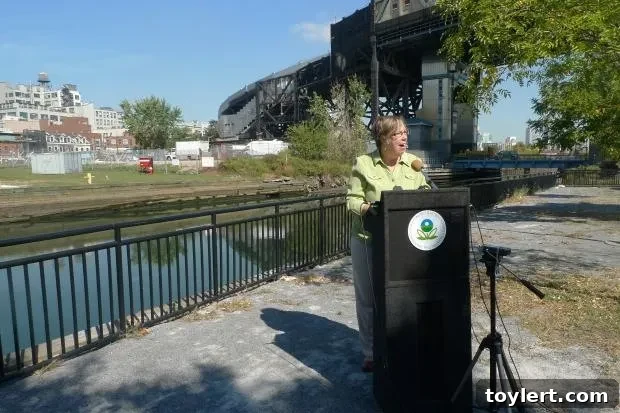
Gowanus Canal Cleanup: Unpacking the EPA’s Final Remediation Plan for Brooklyn’s Infamous Waterway
The Gowanus Canal, a notorious industrial waterway in Brooklyn, New York, has long been a symbol of urban environmental degradation. For decades, it has suffered from severe pollution, earning it the infamous designation as an EPA Superfund site. The long-awaited final plan to clean up this historically significant yet heavily contaminated canal has been announced, sparking both relief and concern within the community. While the plan promises significant progress in addressing the canal’s toxic legacy, it represents only a partial cleanup, leaving some fundamental environmental challenges unaddressed.
A Dual Challenge: Toxic Sludge and Persistent Sewage
At the heart of the Gowanus Canal’s contamination lies a deeply complex problem with two primary components: a thick layer of toxic, cancer-causing sludge accumulated over more than a century, and persistent raw sewage overflows from New York City’s aging sewer system. The Environmental Protection Agency (EPA) has committed to a robust dredging operation aimed at removing the highly contaminated sediment from the canal bed. This sludge, a hazardous cocktail of heavy metals, coal tar, PCBs (polychlorinated biphenyls), and other industrial byproducts, poses severe risks to human health and the environment.
However, as DNAinfo and numerous other media outlets reported, the plan falls short of completely eliminating the influx of sewage. Sewage from the city’s combined sewer overflows (CSOs) will regrettably continue to pour into the canal during heavy rain events. This critical omission stems from the colossal undertaking that would be required to fully overhaul and rebuild the city’s extensive sewer infrastructure—a project far beyond the scope and budget of the current Superfund initiative. To mitigate this ongoing issue, the EPA plan includes the construction of two new large-capacity overflow tanks designed to capture and treat a significant portion of the sewage before it reaches the canal, thereby reducing the frequency and volume of these discharges.
The Vision for a “Clean Enough” Canal
EPA regional administrator Judith Enck emphasized that while the cleanup efforts will dramatically improve the canal’s water quality, the Gowanus may ultimately be “clean enough for boating, but not swimming or fishing.” This statement encapsulates the ambitious yet constrained nature of the project. For residents and environmental advocates who have dreamed of a fully restored, pristine urban waterway, this partial remediation presents a bittersweet reality. While the prospect of safely navigating the canal in kayaks or canoes offers a glimpse of its recreational potential, the continued advisories against direct contact with the water highlight the enduring impact of its polluted past and the limitations of the current cleanup.
A Legacy of Industrial Proliferation and Environmental Neglect
To truly understand the monumental task of cleaning the Gowanus Canal, one must delve into its rich, albeit grim, industrial history. As The New York Post eloquently described, the canal, built in 1848, rapidly transformed into one of the busiest industrial waterways in the nation. Its banks were lined with a dense array of factories and processing plants, each contributing to an era of rapid industrial expansion that came at a severe environmental cost. Gas and coal companies, chemical manufacturers, cement producers, paint and ink factories, machine shops, and tanneries all found a convenient disposal site in the canal. For over a century, these industries discharged their waste directly into its waters, creating an environmental catastrophe that would take generations to address.
The Anatomy of Pollution: What Lies Beneath
The industrial waste dumped into the Gowanus Canal settled into its muddy bottom, forming the infamous “black mayonnaise” – a thick, odorous, and highly toxic sludge. This mixture contains a terrifying inventory of hazardous substances: polycyclic aromatic hydrocarbons (PAHs) from coal tar, volatile organic compounds (VOCs) from chemical plants, heavy metals like lead and mercury, and PCBs. These contaminants are known carcinogens and neurotoxins, posing severe risks to the ecosystem and any humans or wildlife coming into contact with them. The dredging operation is therefore not merely about removing mud, but meticulously extracting a hazardous waste dump that underlies a thriving urban community.
The EPA Superfund Designation: A Critical Intervention
The severity of the Gowanus Canal’s contamination led to its designation as an EPA Superfund site in 2010. The Superfund program, officially known as the Comprehensive Environmental Response, Compensation, and Liability Act (CERCLA), was established in 1980 to clean up uncontrolled hazardous waste sites. This designation triggers a complex, multi-year process involving extensive investigations, detailed feasibility studies, public input, and finally, the implementation of a comprehensive remediation plan. For the Gowanus Canal, this meant the federal government stepping in to oversee and largely fund the cleanup, a recognition of the problem’s scale and the inadequacy of local efforts to address it.
The Superfund process for Gowanus has been characterized by rigorous scientific analysis and extensive public engagement. Community groups, environmental organizations, and local residents have played a crucial role in advocating for a thorough cleanup, holding public meetings, and scrutinizing the EPA’s proposals. This participatory approach, while sometimes leading to delays, ensures that local concerns are heard and incorporated into the final plan to the greatest extent possible.
Impact on the Gowanus Community and Ecosystem
The cleanup of the Gowanus Canal is not just an environmental project; it is a community revitalization project. The canal runs through a vibrant and rapidly developing Brooklyn neighborhood, home to a diverse mix of long-time residents, new businesses, artists’ studios, and burgeoning residential developments. The polluted waterway has historically been a barrier, both physical and psychological, to the full integration of the neighborhood. An improved canal promises to enhance property values, spur further economic development, and provide much-needed green and recreational spaces.
Ecological Restoration: A Slow but Steady Recovery
Beyond human benefits, the cleanup is vital for the canal’s struggling ecosystem. Despite its toxic conditions, the Gowanus Canal supports some hardy marine life, including certain fish species and crabs. Removing the toxic sludge and reducing sewage discharges will significantly improve water quality, allowing for the slow recovery of a more diverse and healthier ecosystem. Cleaner water means safer habitats for fish and invertebrates, which in turn can support higher trophic levels. However, the legacy of pollution means that full ecological restoration will be a long-term endeavor, extending far beyond the initial dredging phase.
Navigating the Future: Challenges and Opportunities
The implementation of the EPA’s final plan represents a critical milestone, but it also heralds the beginning of a challenging remediation period. Dredging operations are complex and costly, requiring specialized equipment and careful management to prevent further contamination during the process. The treatment and disposal of the extracted toxic sludge will also be a significant undertaking. Moreover, the construction of the new overflow tanks will require careful planning and coordination with city infrastructure projects.
One of the persistent challenges remains the ongoing management of stormwater and sewage. Even with the new retention tanks, the issue of combined sewer overflows is deeply entrenched in NYC’s infrastructure. Continuous investment in green infrastructure, such as permeable surfaces and rain gardens, as well as broader sewer system upgrades, will be necessary to achieve truly clean water in the long run. The EPA’s plan is a foundational step, but it must be complemented by sustained efforts from the city and state.
Conclusion: A Step Towards Remediation, But the Journey Continues
The EPA’s final plan for the Gowanus Canal cleanup marks a pivotal moment in the history of one of America’s most polluted urban waterways. By committing to dredge the highly toxic sludge and significantly reduce sewage overflows, the plan lays the groundwork for a healthier, more accessible canal. While the reality of a “boating-only” canal, rather than one fit for swimming and fishing, may temper some aspirations, it is an undeniable leap forward from its current state as a noxious environmental hazard.
This comprehensive remediation effort is a testament to the perseverance of environmental advocates, dedicated government agencies, and a community determined to reclaim its industrial heritage as a vibrant, ecologically healthier asset. The journey to a fully revitalized Gowanus Canal is long and intricate, demanding ongoing vigilance and commitment from all stakeholders. This plan, while partial, is a crucial step towards healing a deep wound in Brooklyn’s urban landscape, offering hope for a cleaner, more sustainable future for the Gowanus neighborhood and its iconic waterway.