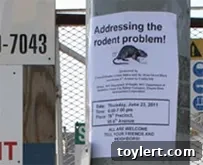
Taming the Urban Tide: Addressing the Rat Problem Near Atlantic Yards and Beyond
Urban environments, with their dense populations and complex infrastructures, frequently grapple with a persistent challenge: rodent infestation. While common, these issues can escalate dramatically, particularly in areas undergoing significant development. The community surrounding Atlantic Yards in Brooklyn serves as a vivid example, where a meeting documented by Prospect Heights Patch revealed a community besieged not merely by a rat problem, but by what one resident chillingly described as a “rat tsunami.” This incident underscores the profound impact that uncontrolled rodent populations can have on urban dwellers, highlighting critical issues in public health, property damage, and the overall quality of life.
The Unsettling Reality: Life Amidst a Rodent Tsunami
The sheer scale of the rat problem near Atlantic Yards was brought to light during a community meeting, where approximately 75 concerned residents gathered to share their harrowing experiences. These were not isolated incidents but rather widespread occurrences affecting homes, public spaces, and even personal safety. Residents recounted stories that painted a grim picture of daily life overshadowed by rodents. The Dean Street Playground, a vital recreational space for children, was reported to be “taken over” by rats, rendering it unsafe and largely unusable. This pervasive encroachment on public amenities illustrates how deeply the issue had penetrated the community, affecting its very fabric.
Beyond public spaces, the rats posed direct threats to property and safety. Multiple accounts detailed rats dragging food under the hoods of cars, a dangerous habit that had, in some instances, led to fires due to damaged wiring or nesting materials igniting. Even more concerning were reports of rodents eating through car insulation, causing significant damage and costly repairs for vehicle owners. The most intimate invasions occurred when rats burrowed through walls, gaining insidious entry into residents’ homes. Such incidents transform a general nuisance into a deeply unsettling violation of personal space and security. One resident’s chilling testimony of a rat crawling up her leg in her own backyard encapsulates the profound loss of comfort and peace of mind experienced by many living in the affected area.
These firsthand accounts are more than just “horror stories”; they are stark indicators of a profound environmental imbalance. The phrase “rat tsunami” perfectly captures the overwhelming nature of the infestation, distinguishing it sharply from a typical, manageable urban rodent presence. It signals an uncontrolled proliferation that demands urgent, comprehensive, and multi-faceted intervention, far beyond routine pest control measures. The emotional and psychological toll on residents, living in constant vigilance against such pervasive threats, should not be underestimated, as it severely impacts their mental well-being and sense of safety.
Understanding the Root Causes: Construction and Urban Rodent Dynamics
While urban areas naturally harbor rodent populations, large-scale construction projects like the Atlantic Yards development often act as significant catalysts, exacerbating existing problems and creating entirely new challenges. Developers, such as Forest City Ratner in this particular case, frequently argue that the problem “was beginning long before construction started,” which may hold some truth. However, construction inherently disrupts the delicate ecological balance in a city. Excavation, demolition, and heavy machinery operations displace existing rat populations from their established burrows and nests, forcing them to seek new food sources and shelter in nearby residential areas. This sudden influx of displaced rodents can quickly overwhelm the pest control capacities of adjacent neighborhoods, leading to rapid escalation of the problem.
Furthermore, construction sites themselves can inadvertently become attractive havens for rats if not properly managed. Accumulations of debris, discarded food from workers, and readily available harborage in building materials provide ideal conditions for rodents to thrive. The constant movement of soil and materials can also inadvertently damage underground infrastructure, such as sewer lines and utility conduits, creating new, unobserved pathways for rats to emerge into homes, businesses, and public streets. Without proactive and integrated pest management strategies implemented rigorously from the outset of a project, what might have been a manageable issue can swiftly spiral into a full-blown crisis, as powerfully evidenced by the Atlantic Yards situation.
Effective urban planning and responsible development must integrate robust rodent control protocols as an essential component. This involves not only reactive measures after an infestation has taken hold but, critically, preventative strategies implemented at every stage of a project. Developers have a crucial role to play in ensuring construction sites are kept meticulously clean, waste is managed and contained properly in rodent-proof receptacles, and potential entry points for rodents into the wider community are proactively addressed before, during, and after construction. A failure to acknowledge and act on this responsibility often leads to significant community backlash, prolonged suffering for residents, and can transform a development project itself into a source of deep-seated local contention and distrust.
Public Health Implications and the Broader Community Impact
Beyond the immediate distress and tangible property damage, a severe rat infestation poses serious and often underestimated public health risks. Rats are notorious vectors for numerous diseases, including Leptospirosis, Hantavirus, Salmonellosis, and even the rare but serious bubonic plague in certain regions. These diseases can be transmitted through direct contact with rodents, their urine or feces, or indirectly through contaminated food and water sources. The widespread presence of rats in playgrounds, homes, and in close proximity to people significantly increases the risk of disease transmission, placing children, the elderly, and other vulnerable populations at particular risk.
Moreover, rat droppings, urine, and dander can trigger allergies and exacerbate asthma symptoms, especially in individuals with pre-existing respiratory sensitivities. The psychological impact on residents is equally profound and should not be overlooked. Living in constant fear of rodents, experiencing regular property damage, and contending with the unsanitary and unhygienic conditions they create leads to chronic stress, anxiety, and a significantly diminished sense of well-being. This pervasive erosion of quality of life impacts mental health, fosters feelings of helplessness, and can undermine the social fabric of a community, making it harder for residents to feel safe, comfortable, and secure in their own homes and neighborhoods.
The situation at Atlantic Yards highlighted the urgent need for coordinated public health responses. The Department of Health (DOH) representative, in this instance, played a crucial role by collecting a detailed list of problem spots for immediate follow-up. However, the scope of public health action is often limited to treatment and localized baiting, which can only be truly effective when combined with broader environmental and structural interventions. A holistic approach, integrating public health initiatives with environmental sanitation and robust urban planning, is absolutely essential to protect the public’s health and restore community confidence in the long term.
Navigating Jurisdictional Complexities and Seeking Solutions
The Atlantic Yards case also starkly exposed the bureaucratic challenges inherent in large-scale urban pest control. While the Empire State Development Corporation (ESDC) representatives committed to adding rat baits to the immediate construction site, a critical gap emerged regarding issues outside their direct jurisdiction. Specifically, placing baits outside the immediate construction area and adding more trash cans to neighborhood blocks were deemed beyond ESDC’s purview. This highlights a common and often frustrating dilemma in urban pest management: responsibility is frequently fragmented among various city agencies, private developers, and even individual property owners, leading to a lack of comprehensive action.
Effective rodent control necessitates a genuinely coordinated, multi-agency approach. No single entity can effectively solve a “rat tsunami” alone; it requires a concerted effort. The Department of Health, Sanitation Department, Department of Buildings, and private developers all have distinct but ultimately interconnected roles. For instance, the Sanitation Department is critical for establishing and maintaining robust waste management programs and ensuring the provision of adequate, rodent-proof trash receptacles. The Department of Buildings can enforce codes related to structural integrity, requiring landlords and property owners to seal entry points in buildings. Without seamless collaboration and clear lines of communication, efforts remain siloed, isolated, and largely ineffective, allowing the problem to persist or merely shift from one area to another.
Community requests, such as increasing the number of public trash cans or implementing regular street cleaning, are often simple yet profoundly impactful solutions that can dramatically reduce food sources for rodents. When such basic needs fall into a jurisdictional limbo, it not only deeply frustrates residents but also prolongs their suffering and perpetuates the infestation. This incident serves as a powerful reminder that robust urban development plans must include clear, agreed-upon inter-agency protocols for pest management, ensuring that no essential aspect of community health, safety, and well-being falls through the cracks due to bureaucratic red tape.
Integrated Pest Management (IPM): A Path Forward for Urban Rodent Control
To effectively combat widespread urban rat problems, especially those exacerbated by development, an Integrated Pest Management (IPM) strategy is not just beneficial, but absolutely crucial. IPM is an ecosystem-based strategy that focuses on the long-term prevention of pests or their damage through a combination of techniques. It prioritizes understanding the pest’s biology and environment to implement targeted, sustainable solutions, rather than simply reacting with widespread chemical applications. In the specific context of urban rodents, this translates to several key pillars:
- Sanitation and Waste Management: The primary driver for urban rodent populations is the readily available supply of food and water. Implementing strict, comprehensive waste management protocols, including regular and timely garbage collection, mandatory use of rodent-proof bins for both residential and commercial properties, and prompt cleanup of spills and litter, significantly reduces attractants and food sources. This extends beyond household waste to include proper management of commercial and construction waste.
- Exclusion and Structural Repairs: Sealing entry points in buildings – addressing cracks in foundations, repairing gaps around pipes and utility lines, ensuring unsealed vents and damaged doors are fixed – is vital to prevent rats from gaining access to homes and businesses. This proactive approach, which is often overlooked, creates physical barriers against infestation and is a cornerstone of long-term control.
- Population Reduction: This involves the strategic, safe, and judicious use of baits and traps. Baits, when used, should be placed by trained professionals in tamper-resistant stations to protect non-target species (like pets and children) and minimize environmental impact. The DOH and ESDC’s commitment to placing baits is a part of this, but it needs to be widespread, sustained, and monitored for effectiveness.
- Education and Community Engagement: Empowering residents with knowledge about rodent behavior, preventative measures they can take, and clear reporting mechanisms for infestations is essential. Community clean-up initiatives, public awareness campaigns, and accessible educational resources can foster a collective responsibility for maintaining a rodent-free environment and encourage proactive participation.
- Monitoring and Evaluation: Continuous monitoring of rodent activity, population levels, and control measure effectiveness is critical. This data-driven approach allows pest management professionals and city agencies to assess which strategies are working, where resources are most needed, and how to adapt plans to changing conditions or emerging challenges, ensuring efficiency and efficacy.
For large-scale developments, IPM should be a mandatory component of the construction plan from the very beginning. This includes pre-construction surveys to identify existing rodent populations, implementation of exclusion and baiting programs during the construction phase to prevent displacement into adjacent areas, and ongoing monitoring and maintenance post-construction. Developers should be held clearly accountable for adhering to these standards, with city agencies providing rigorous oversight and consistent enforcement.
Conclusion: A Collective Responsibility for Healthier Urban Living
The “rat tsunami” near Atlantic Yards serves as a powerful and enduring case study, vividly illustrating the complex and multifaceted challenges of urban rodent control when large-scale development projects intersect with dense residential areas. It highlights the critical need for proactive planning, seamless inter-agency collaboration, and sustained, meaningful community engagement to effectively manage and mitigate widespread rodent infestations. While the immediate responses from the Department of Health and ESDC at the time offered some localized relief, the long-term solution lies firmly in adopting a comprehensive, integrated pest management strategy that transcends artificial jurisdictional boundaries and embraces a spirit of collective responsibility.
Ensuring the health, safety, and overall well-being of urban residents demands more than just reacting to crises as they emerge. It requires foresight, sustained investment in robust public infrastructure, stringent environmental sanitation practices, and an unwavering commitment from all stakeholders – including government agencies, private developers, and the community itself – to work in concert. Only through such a unified and sustained approach can cities truly tame the urban tide of rodent problems, transforming public outcry into lasting, livable, and healthy environments for everyone. The story of Atlantic Yards rats is a vivid and timeless reminder that vigilance, cooperation, and integrated action are paramount in the ongoing battle for urban health and quality of life.
Read more about the Atlantic Yards rat meeting and community reactions: AY Rat Meeting Elicits Lots of Horror Stories, Few Solutions [PH Patch]