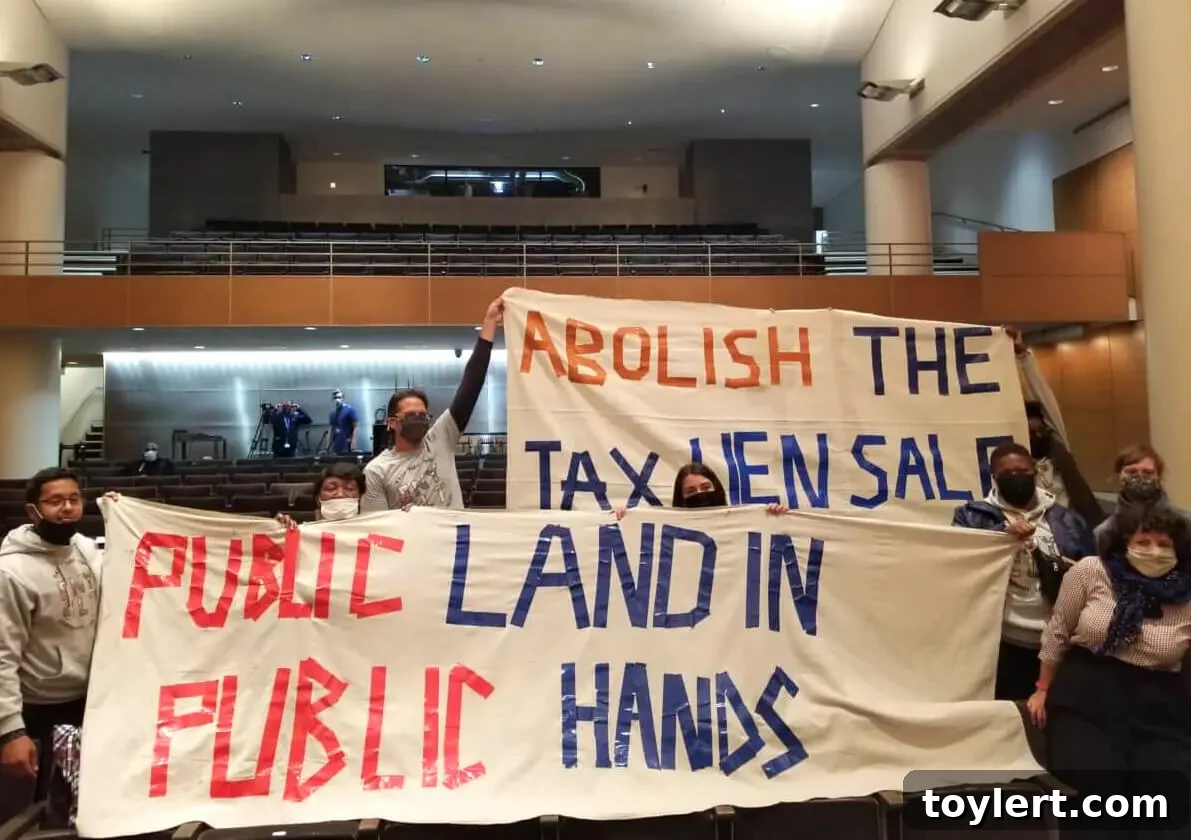
NYC’s Controversial Tax Lien Sale Expires: Paving the Way for Equitable Homeownership and Community Wealth
The highly contentious tax lien sale program in New York City officially expired on Monday, marking a significant shift in how the city addresses delinquent property taxes. This controversial practice, long criticized as a predatory mechanism that disproportionately harmed communities of color, particularly those who have painstakingly built generational wealth through homeownership, now faces an uncertain future. Its cessation signals a potential new direction for urban policy, aiming to foster greater equity and stability within the city’s diverse neighborhoods. The expiration of this decades-old system opens a critical window for city leaders to implement innovative solutions that prioritize resident well-being and prevent displacement.
Understanding New York City’s Tax Lien Sale Program
For many years, the tax lien sale served as a primary tool for New York City to recover unpaid property taxes, along with water and sewer charges. Under this system, the city would essentially sell the debt owed by homeowners to private investors, often financial institutions or collection agencies. These investors would then gain the right to collect the outstanding taxes, along with accumulating interest and often substantial fees, directly from the property owner. While presented as a necessary revenue-generating mechanism for the city, the program frequently placed vulnerable homeowners in incredibly precarious situations, accelerating their path towards potential foreclosure if they couldn’t repay the escalating debt.
The process was typically initiated when a property owner fell behind on their obligations by a certain threshold or for a specific period. Once deemed eligible, their unpaid tax bills would be bundled and offered for sale to the highest bidder in a public auction. The financial mechanics of a tax lien sale are often opaque to the average homeowner, but the potential outcome could be devastatingly simple: the loss of their home. Once a lien was sold, homeowners no longer owed the city, but rather a private entity whose primary goal was often profit maximization. This often translated into aggressive collection tactics, high annual interest rates (which could be as high as 18% in New York City), and a rapid escalation of the overall debt. This financial pressure made it increasingly difficult for struggling homeowners to regain their financial footing, with the ever-present threat of foreclosure looming over their family homes and the generational assets they represented.
A History Steeped in Controversy and Inequality
The legislation authorizing the tax lien sale, which notably dates back to the administration of then-Mayor Rudy Giuliani, formally sunsetted on Monday. This crucial legislative term means that without explicit reauthorization from both the City Council and the Mayor, the program will not be reinstated. Its origins were rooted in an effort to streamline municipal debt collection and improve the city’s financial solvency during challenging times. However, its real-world impact over decades diverged sharply from any benign intentions, evolving into a widely condemned practice.
Over its long tenure, the tax lien sale program garnered intense and sustained criticism from housing advocates, community organizers, legal aid groups, and affected residents across the five boroughs. Opponents consistently argued that it preyed on the most vulnerable segments of the population, transforming a public service into a vehicle for private profit at the expense of community stability. Critics persistently highlighted the program’s profoundly disproportionate impact on Black and Latino communities. These communities, often victims of historical inequities, systemic disinvestment, and discriminatory lending practices, found themselves particularly susceptible to losing their homes over relatively small tax debts.
Factors such as fixed incomes among the elderly, temporary job losses, illness, unexpected medical emergencies, or other personal crises could quickly lead to property tax arrears. Once a property entered the complex and often unforgiving lien sale process, the pathway out became incredibly steep and challenging. This dynamic effectively eroded hard-won homeownership and the cornerstone of family wealth for countless families. For generations, homeownership has been a vital, albeit often challenging, means for minority families to build and pass down wealth to future generations. The threat of losing a home through a lien sale, therefore, struck at the very heart of economic security and generational progress within these communities.
The debate surrounding the tax lien sale wasn’t merely about the efficient collection of unpaid taxes; it was fundamentally about equity, justice, and the role of government in protecting its citizens’ most valuable assets. Advocates argued that the city was essentially outsourcing the collection of delinquent taxes to private companies that had little incentive to work constructively with struggling homeowners, preferring instead to profit handsomely from the high interest, punitive fees, and the potential for foreclosure. This created a perverse system where private financial interests could indirectly dispossess residents of their homes, often for sums far less than the property’s actual market value, effectively transforming a public debt collection mechanism into a tool for private gain at the expense of community stability and individual well-being.
City Leaders Signal a New Direction
In a clear and emphatic statement on Monday, City Council Speaker Adrienne Adams articulated her strong desire to relegate the tax lien sale to the past. She emphasized the critical need to actively pursue and swiftly implement “new solutions” to replace this antiquated, harmful, and widely discredited practice. Speaker Adams’ stance reflects a growing consensus among city leadership, community advocates, and a concerned public that New York City urgently needs a more humane, equitable, and supportive approach to property tax collection – one that prioritizes housing stability and actively prevents unnecessary displacement rather than accelerating it.
This commitment to finding viable, homeowner-centric alternatives is absolutely crucial for addressing the root causes of tax delinquency without resorting to punitive measures that strip away homeowner equity and dismantle community fabric. The expiration of the current legislation represents a unique and powerful opportunity for policymakers to fundamentally rethink how the city supports its residents, especially those grappling with economic hardship. It paves the way for a collaborative and constructive effort between city agencies, non-profit community organizations, housing experts, and the affected residents themselves to design and implement systems that are both fiscally responsible for the city and socially just for its diverse inhabitants. The focus now definitively shifts from punitive, reactive measures to preventative strategies and supportive interventions that proactively safeguard homeownership and build lasting community resilience.
Exploring Humane and Equitable Alternatives for Tax Collection
The significant challenge ahead for New York City lies in developing robust and effective alternatives that can not only recover outstanding tax revenue necessary for municipal services but do so without jeopardizing homeownership or exacerbating existing wealth disparities. Fortunately, several promising models and strategic approaches are already being actively discussed and could form the bedrock of a new, progressive framework for property tax collection and homeowner support.
Community Land Trusts (CLTs)
One of the most frequently cited and promising alternatives is the expansion and strategic empowerment of Community Land Trusts (CLTs). CLTs are innovative non-profit organizations that acquire and hold land in trust for the benefit of the community, ensuring permanent affordability and preventing speculative development. When a property owner within a CLT falls behind on taxes, the CLT can often step in to provide critical mediation, offer direct financial assistance, or even strategically purchase the lien itself. This intervention keeps the property within the community’s control and prevents predatory private investors from profiting from residents’ distress. This model explicitly prioritizes long-term affordability, housing stability, and community self-determination over short-term financial gains for external private entities. Significantly expanding the role and capacity of CLTs could create a vital protective buffer for homeowners in vulnerable neighborhoods, providing a tangible mechanism for preserving housing affordability and preventing involuntary displacement.
Enhanced Homeowner Assistance and Flexible Payment Plans
A more direct and immediate approach involves bolstering existing programs and creating new ones that provide direct financial assistance and highly flexible payment plans for homeowners facing tax arrears. This comprehensive strategy includes:
- Property Tax Exemption Programs: Expanding eligibility criteria, enhancing benefits, and significantly increasing public awareness for existing programs designed to assist seniors, veterans, individuals with disabilities, and low-income homeowners.
- Interest-Free or Low-Interest Payment Agreements: Implementing robust programs that allow struggling homeowners to pay off their arrears over an extended period without the crushing burden of accumulating high-interest rates that often make repayment an impossible task.
- Proactive Financial Counseling and Outreach: Launching targeted initiatives to educate homeowners about their property tax obligations, make them aware of all available relief programs, and clearly explain the potential consequences of delinquency *before* they reach a crisis point. This must involve culturally sensitive and linguistically appropriate outreach in communities most affected by the former lien sale program.
- Emergency Relief Funds: Establishing dedicated emergency funds to help homeowners facing temporary hardships (such as job loss, illness, or unexpected expenses) cover their property tax obligations, acting as a crucial and accessible safety net.
These proactive, preventative, and supportive measures can prevent small tax debts from rapidly snowballing into insurmountable burdens, thereby effectively preserving homeownership, protecting individual and family assets, and strengthening community resilience.
Reforming Property Tax Assessment and Collection Systems
Beyond direct assistance, deeper and more systemic reforms to the property tax system itself could alleviate some of the underlying pressures that lead to delinquency in the first place. This comprehensive approach could include:
- Progressive Tax Structures and Assessment Methodologies: Thoroughly examining current property tax assessment methodologies to ensure they do not disproportionately burden lower-income homeowners or those residing in rapidly gentrifying areas where property values (and thus taxes) are soaring beyond residents’ means.
- Enhanced Transparency and Accessibility: Making the entire property tax assessment and collection process significantly more transparent, understandable, and accessible to all residents, ensuring they fully comprehend their tax bills, assessment methods, and the available appeal processes.
- Targeted Tax Relief for Long-Term Residents: Implementing specific tax relief measures, such as circuit breakers or homestead exemptions, tailored for long-term residents in neighborhoods experiencing rapid increases in property values. These measures would help them remain in their homes without being taxed out of their communities.
These systemic changes aim to create a fairer and more equitable tax environment from the outset, significantly reducing the likelihood of arrears and minimizing the need for punitive collection methods.
The Path Forward: Challenges and Opportunities
The expiration of the tax lien sale legislation, while undoubtedly a significant victory for housing justice advocates and affected communities, simultaneously presents New York City with a complex and multifaceted challenge. The city still faces the imperative to collect billions of dollars in property taxes and charges annually, which are absolutely essential to fund a vast array of critical public services, from schools and sanitation to public safety and infrastructure. The overriding imperative is to find alternatives that are not only equitable and humane but also financially sustainable and demonstrably effective in ensuring the city’s long-term fiscal health. Achieving this delicate balance will necessitate careful planning, robust public engagement, innovative policy-making, and a sustained commitment from all stakeholders.
The coming months will be absolutely critical as the City Council and the Mayor’s office work diligently to forge a new path forward. The conversation will undoubtedly involve tough decisions about funding mechanisms for new programs, administrative capacity to implement them efficiently, and the political will required to enact truly transformative changes. However, the opportunity to establish a new gold standard for urban tax collection – one that champions equity, preserves homeownership, and actively builds community wealth – is immense and historically significant. This pivotal moment offers a profound chance to rectify past injustices, address systemic inequalities, and build a more inclusive, stable, and resilient New York City for all its residents, particularly those who have been historically marginalized and disproportionately affected by the previous system.
The shift away from the tax lien sale is more than just a procedural or administrative change; it represents a fundamental philosophical pivot in how New York City views its relationship with its homeowners. It is an acknowledgement that a city’s true prosperity is inextricably linked to the stability, security, and well-being of its residents, especially those who have historically been marginalized and financially vulnerable. By committing to solutions that actively support and strengthen homeownership rather than undermining it, New York City can set a powerful and inspiring precedent for other municipalities across the nation that are grappling with similar challenges. The journey to a truly equitable and just property tax system will undoubtedly be long and require continuous effort, but the expiration of this controversial program is a momentous and deeply meaningful first step towards achieving that vital goal.