Red Hook’s Transformation: Amazon Distribution Center Takes Shape at Historic Waterfront Site
A significant development is underway in Brooklyn’s vibrant Red Hook neighborhood, as construction has officially commenced on the highly anticipated Amazon distribution center. This ambitious project signals a dramatic transformation for a historically rich waterfront site, poised to become a critical hub in Amazon’s extensive logistics network.
Located at the former grounds of the iconic Revere Sugar Factory, specifically 280 Richards Street, the site occupies a strategic pier nestled between the popular IKEA store and the previous location of Fairway Market. This parcel of land has long been a focal point for urban planners and developers, with grand visions for its future. For years, the community anticipated a stunning Norman Foster-designed waterfront office complex, a project that promised to bring architectural prestige and modern corporate space to the area. However, these elaborate plans were ultimately scrapped by developer Thor Equities in 2019, paving the way for the current industrial undertaking.
From Sugar to Logistics: The Site’s Industrial Legacy and Modern Rebirth
The 280 Richards Street address carries a profound industrial legacy. For decades, it was home to the Revere Sugar Factory, a prominent feature of the Red Hook landscape and a significant employer in the area. The factory, with its imposing structures and waterfront access, was a testament to Brooklyn’s manufacturing prowess and its critical role in global trade. Its closure left a void, but also an opportunity for redevelopment that captured the imagination of many.
The initial vision for the site, spearheaded by Thor Equities, was an ambitious multi-building complex designed by world-renowned architect Norman Foster. Renderings showcased sleek, contemporary office towers that aimed to redefine Red Hook’s waterfront, attracting high-profile businesses and creating a modern commercial hub. This proposal resonated with some who hoped to see Red Hook evolve into a sophisticated business district, blending its gritty charm with cutting-edge design. However, market dynamics, changing investment priorities, and the burgeoning demand for e-commerce fulfillment centers ultimately led Thor Equities to pivot dramatically, shifting from an office campus to a logistics facility.
Detailed Look at the New Amazon Fulfillment Center
Project Specifications and Design
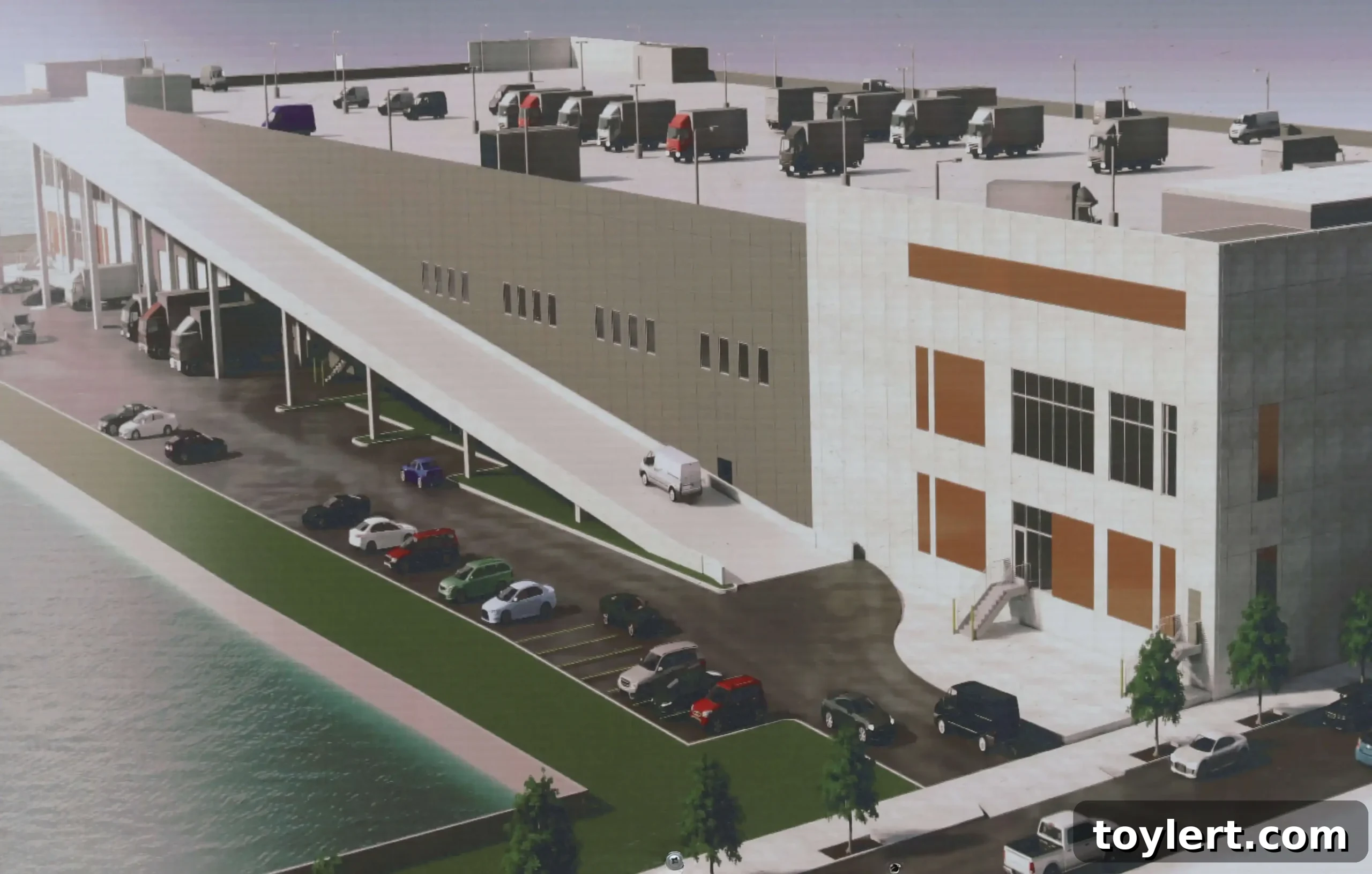
Permits filed in September 2019 provided the first concrete details of the current development. The plans outline a one-story manufacturing facility, sprawling across an impressive 310,967 square feet. While officially termed a “manufacturing facility,” the project is widely understood to function as a state-of-the-art Amazon distribution or fulfillment center, designed to efficiently process and dispatch packages for last-mile delivery across New York City.
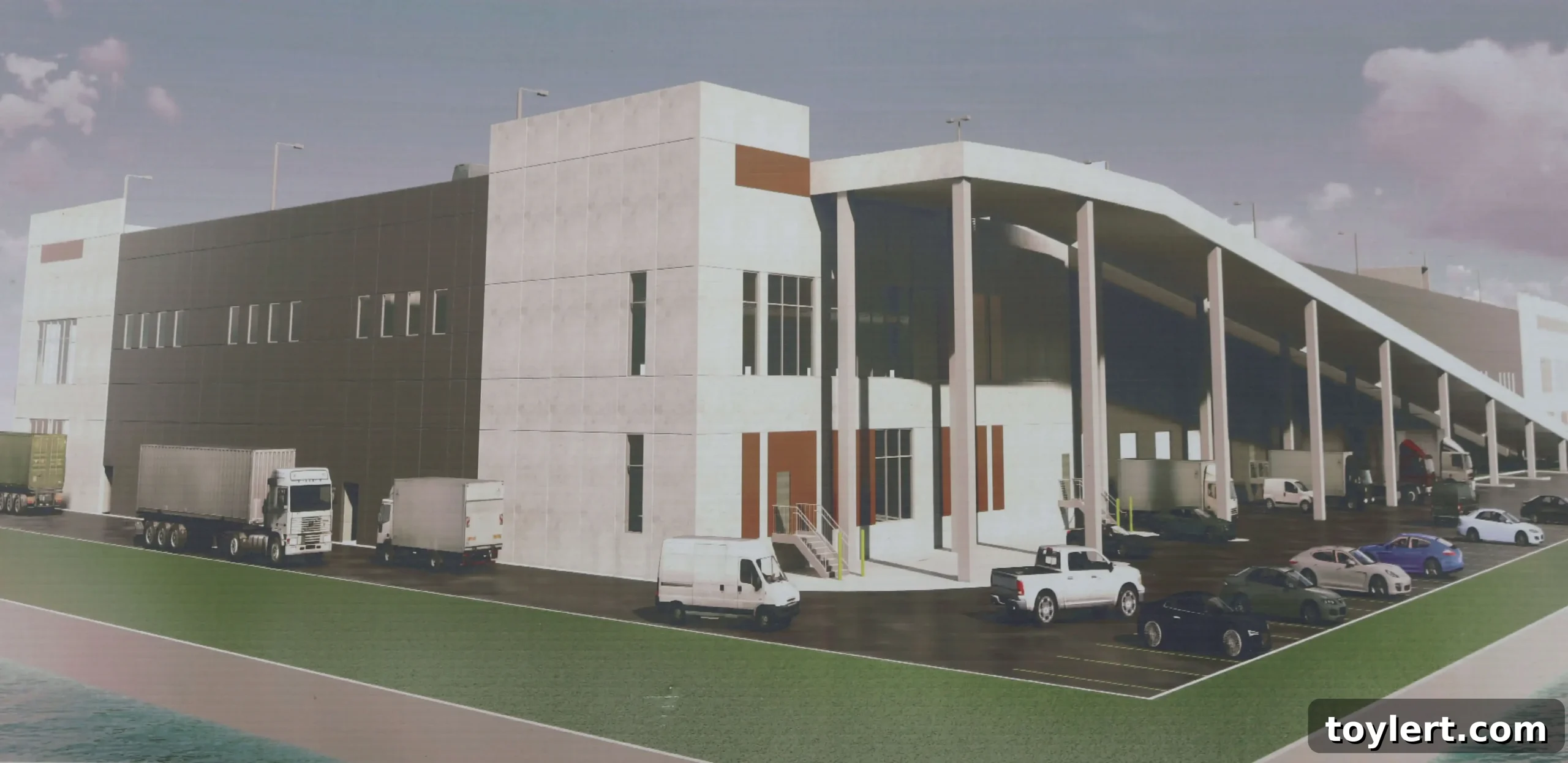
The architectural renderings reveal a practical and functional design, characteristic of modern logistics facilities. The facade features a contemporary mix of white and olive tones, presenting a clean yet unobtrusive aesthetic. A distinctive element of the design is a long vehicle ramp strategically positioned at the side of the building, providing access to extensive parking facilities on the roof. This innovative use of vertical space is crucial in urban environments like Red Hook, where land is at a premium. Additional parking areas are planned along the sides and back of the building, ensuring ample capacity for the numerous delivery vans and employee vehicles that will serve the center.
Amazon’s Strategic Location Choice in Red Hook
Amazon’s decision to establish a major distribution center in Red Hook is a testament to the neighborhood’s unparalleled strategic advantages. Red Hook offers direct access to the densely populated boroughs of Brooklyn, Manhattan, and Staten Island, making it an ideal location for rapid “last-mile” delivery. Its waterfront position, while not directly utilized for waterborne freight in this capacity, historically signifies excellent connectivity. Crucially, the site benefits from relatively easy access to major transportation arteries, including the Gowanus Expressway, facilitating efficient inbound and outbound logistics. This proximity to millions of customers aligns perfectly with Amazon’s strategy of decentralizing its fulfillment operations to ensure faster, more reliable delivery times.
The Red Hook center will play a vital role in Amazon’s elaborate network, acting as a crucial intermediary between larger regional warehouses and the end consumer. Packages from regional fulfillment centers will arrive, be sorted, packaged, and then loaded onto smaller vans for delivery to homes and businesses across the metropolitan area. This operational model not only enhances customer service but also underscores the growing importance of urban logistics in the age of e-commerce.
Anticipated Impact on the Red Hook Community
Economic Opportunities and Challenges
The construction and subsequent operation of the Amazon distribution center bring a mix of economic opportunities and potential challenges for Red Hook. On the positive side, the project is expected to generate a significant number of jobs, both during the construction phase and for ongoing operations. These roles will range from skilled construction trades to full-time positions in sorting, packing, and last-mile delivery. For a neighborhood that has experienced periods of economic fluctuation, these jobs could offer valuable employment prospects for local residents.
However, the nature of these jobs and their impact on local wages and labor practices are often subjects of public debate. Concerns typically revolve around the competitive landscape for local small businesses, the potential for wage suppression in certain sectors, and the overall quality of employment offered by large e-commerce giants. While Amazon emphasizes its investment in local economies, community advocates often highlight the importance of fair labor practices and the creation of sustainable career paths.
Traffic, Infrastructure, and Environmental Considerations
Perhaps the most significant concern for Red Hook residents and local stakeholders is the anticipated increase in truck traffic. A facility of this size, handling thousands of packages daily, will necessitate a constant flow of delivery vans and larger trucks. This influx could exacerbate existing traffic congestion on local streets, strain aging infrastructure, and lead to increased noise pollution and wear and tear on roads. Environmental concerns, particularly related to air quality from vehicle emissions, are also frequently raised by community groups.
Local advocacy organizations often champion sustainable urban development that prioritizes pedestrian safety, public transit, and green infrastructure. The transformation of a waterfront site, once envisioned for public-facing uses, into a high-volume industrial hub sparks discussions about balancing economic utility with environmental stewardship and community well-being.
Evolving Neighborhood Identity and Urban Planning Debates
Red Hook has a unique and resilient identity, characterized by its industrial past, vibrant artist community, and tight-knit residential areas. The arrival of an Amazon distribution center represents a new chapter in its ongoing evolution. For some, it symbolizes economic progress and adaptation to the modern economy. For others, it signifies a departure from a more romantic vision of waterfront revitalization that might have prioritized public access, green spaces, or creative industries.
The project also highlights broader urban planning debates about the best use of valuable urban waterfronts. Should these areas be preserved for recreational and residential purposes, or should they continue to serve as vital industrial and logistical arteries for the city? The Red Hook Amazon facility is a tangible manifestation of the latter, reflecting New York City’s growing need for efficient infrastructure to support its massive consumer base and e-commerce economy. This development underscores the complex interplay between commercial interests, community aspirations, and the realities of modern urban logistics.
The Future of Red Hook’s Waterfront
As the Amazon distribution center at 280 Richards Street rises, it solidifies Red Hook’s continued role as a crucial industrial and logistical nexus for New York City. This development marks a definitive pivot from earlier, more aesthetically driven plans, firmly planting the neighborhood in the heart of the e-commerce supply chain. While it promises economic activity and jobs, it also brings with it significant considerations regarding traffic, environmental impact, and the long-term character of this cherished Brooklyn community.
The completion of this facility will undoubtedly reshape the local landscape, both physically and economically. It will serve as a stark reminder of how rapidly urban priorities can shift and how essential industrial infrastructure remains, even in a city increasingly defined by its tech, culture, and residential appeal. Red Hook, with its rich history and dynamic present, continues to adapt, demonstrating the intricate balance between preserving its unique heritage and embracing the demands of a constantly evolving global economy.