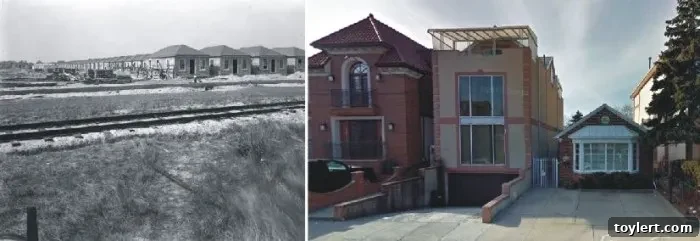
Brooklyn Then and Now: Unearthing the Legacy of Manhattan Beach’s Apartcot Bungalows
Ah, the quintessential allure of summertime in New York City! For generations, the promise of sandy beaches and refreshing ocean breezes has drawn city dwellers to Brooklyn’s scenic coastline. Among the most enchanting and historically significant destinations was Manhattan Beach, a prestigious resort community that offered a serene escape from the urban hustle. This article delves into the fascinating history of the “Apartcot” bungalows, a unique architectural marvel that defined an era of leisurely coastal living in Brooklyn, examining their charm, their rise, their eventual transformation, and the enduring legacy they hold in the borough’s vibrant tapestry.
Manhattan Beach, often celebrated as Brooklyn’s original seaside resort, was meticulously developed in the late 19th century by railroad magnate Austin Corbin. His vision was ambitious: to create an exclusive, high-class summer destination rivaling the grand resorts of Saratoga Springs or Newport. Far from the boisterous crowds of Coney Island, Manhattan Beach offered refined elegance, featuring sprawling hotels, picturesque promenades, and manicured landscapes designed for the elite. It was within this sophisticated environment that the innovative concept of the Apartcot bungalows began to take root, offering a more intimate, yet still luxurious, form of summer accommodation.
The Genesis of the Apartcot: A Blend of Comfort and Coastal Charm
The term “Apartcot” itself is a delightful portmanteau, often understood as a fusion of “apartment” and “cottage.” These distinctive structures were designed to provide the comforts of a private cottage with the convenience and compact efficiency of an apartment. Unlike single-family homes, Apartcots were typically small, self-contained units, often grouped together or built in rows, offering residents immediate access to the beach and resort amenities without the upkeep of a large property. They represented a clever solution for those seeking a seasonal retreat in a prime location, blending affordability with the prestige of a Manhattan Beach address.
The architectural style of the Apartcot bungalows was typically modest yet charming. Characterized by their quaint designs, often featuring wide porches, shingled exteriors, and multiple windows to capture the sea breeze, these bungalows epitomized relaxed coastal living. Their interiors were compact but functional, designed to maximize space and offer all the necessary conveniences for a summer stay. They quickly became highly sought-after, offering New Yorkers a tangible piece of the dream – a personal seaside haven just a train ride away from the city.
Life in a Manhattan Beach Apartcot: A Glimpse into Early 20th Century Summers
Imagine the scene: the early 20th century, sun-drenched days, and the rhythmic sound of waves crashing on the shore. Families would flock to their Apartcot bungalows as soon as the weather warmed, transforming Manhattan Beach into a bustling summer community. Days were spent swimming, sunbathing, and strolling along the boardwalk. Evenings brought communal gatherings, dining al fresco, and enjoying the lively atmosphere of the resort’s hotels and entertainment venues. The Apartcots fostered a strong sense of community, where neighbors became friends, and shared experiences created lasting memories.
These bungalows weren’t just buildings; they were vessels of a particular lifestyle – one that prioritized leisure, family time, and communion with nature. They allowed middle and upper-class families to partake in the exclusive Manhattan Beach experience without the commitment or expense of owning a grand estate. For children, it was an idyllic summer playground; for adults, a much-needed respite from the urban grind. The Apartcots truly captured the essence of an ideal New York City summer retreat, a testament to thoughtful urban planning and the enduring human desire for escape.
Brooklyn Then and Now: The Evolution of Manhattan Beach
The story of the Apartcot bungalows is inextricably linked to the broader narrative of Brooklyn’s development, particularly the dramatic transformation of its coastal communities. The “then” of Manhattan Beach was a pristine, exclusive resort, a carefully curated fantasy land of leisure. The “now” presents a different picture, one shaped by urban expansion, demographic shifts, and evolving architectural trends.
As the 20th century progressed, several factors led to the gradual decline of the traditional Apartcot bungalow lifestyle. Changing transportation patterns made other coastal destinations more accessible. Economic shifts and the Great Depression impacted leisure spending. Perhaps most significantly, the demand for year-round housing in Brooklyn grew exponentially. Many Apartcot bungalows were either expanded, modernized beyond recognition, or demolished to make way for larger, permanent residences. The charming, seasonal structures slowly gave way to the demands of a growing metropolis.
From Seasonal Retreats to Permanent Homes: Architectural Transformation
Today, finding an original, untouched Apartcot bungalow in Manhattan Beach is a rare feat. While some echoes of their past architecture might still be discernible in older homes, most have been significantly altered. The plots that once held a quaint summer cottage now often host multi-story, year-round homes reflecting contemporary tastes and the increased value of coastal land. The transformation mirrors the broader development of Brooklyn itself, from a collection of distinct neighborhoods to a densely populated, sought-after urban center.
Yet, the spirit of the Apartcots and the original vision of Manhattan Beach endure. The area remains a highly desirable residential neighborhood, cherished for its beautiful beach, scenic parks, and tranquil atmosphere. It continues to offer a unique blend of urban convenience and seaside serenity, attracting residents who appreciate its rich history and peaceful ambiance. While the architectural forms have changed, the fundamental appeal of living by the sea in Brooklyn remains a powerful draw.
The Enduring Legacy of Brooklyn’s Coastal Charm
The story of Manhattan Beach’s Apartcot bungalows serves as a poignant reminder of Brooklyn’s dynamic past and its continuous evolution. It highlights how architectural styles and living patterns adapt to societal changes, economic forces, and urban growth. These humble yet iconic bungalows were more than just buildings; they were a significant part of Brooklyn’s cultural heritage, offering an escape and shaping the summer memories of countless New Yorkers.
Their legacy can be seen not only in the remnants of their architecture but also in the continued appreciation for coastal living within New York City. The desire for a personal sanctuary by the sea, first catered to by the innovative Apartcots, resonates even today. As Brooklyn continues to grow and redefine itself, understanding these historical layers – like the story of the Apartcot bungalows – allows us to appreciate the depth and complexity of its identity, bridging the charm of “then” with the vibrancy of “now.” They stand as a testament to the ingenuity and enduring appeal of finding seaside solace within the bustling heart of the metropolis.