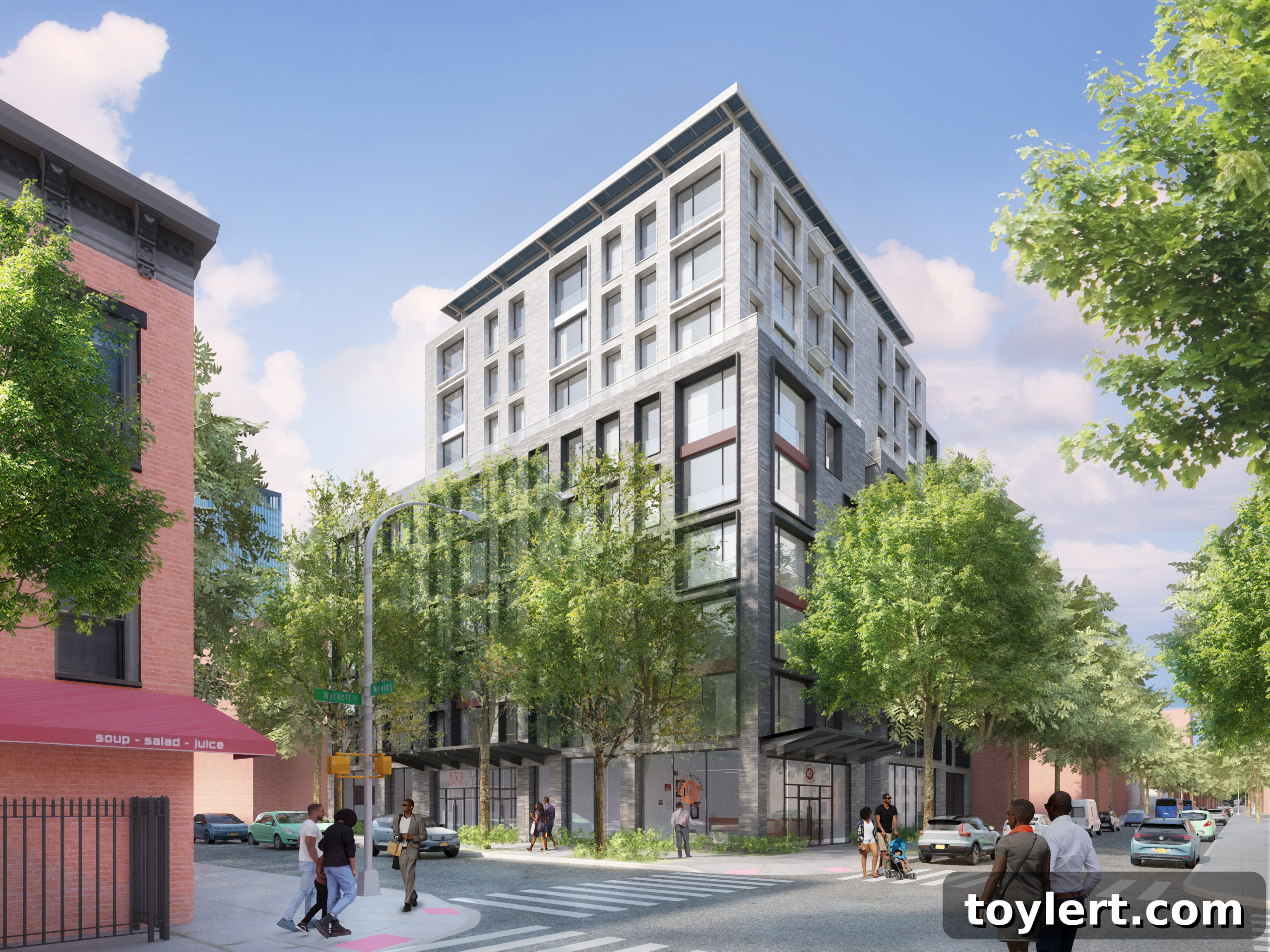
by Emily Davenport, Brooklyn Paper
Transforming Boerum Hill: New Affordable Housing Development at 153 Nevins Street Poised to Reshape Community
Boerum Hill, one of Brooklyn’s most coveted and expensive neighborhoods, is on the cusp of a significant transformation. Following years of being an underutilized resource, a long-empty, city-owned parking lot at 153 Nevins Street is finally slated for a vital new development. The city’s Department of Housing Preservation and Development (HPD) recently announced that developers have been selected and comprehensive details released for this pivotal project. This forthcoming building is not just another structure; it promises to be a cornerstone of community growth, offering desperately needed affordable apartments, dynamic community space, and a crucial job training center.
The development at 153 Nevins Street marks the second of two such city-owned sites in Boerum Hill to be revitalized, signaling a concerted effort by municipal authorities to address the pressing housing needs of its diverse population. This initiative underscores a broader commitment to leveraging public land for public good, ensuring that even in the most sought-after areas of New York City, opportunities for equitable living and upward mobility remain accessible.
Addressing Brooklyn’s Affordability Crisis with 70 New Rent-Stabilized Homes
At the heart of this new development are 70 affordable, rent-stabilized homes. In a borough where the cost of living continues to soar, and the median rent often pushes families to their financial limits, the creation of rent-stabilized units is a critical intervention. These homes offer long-term financial stability for residents, protecting them from the volatile fluctuations of the market and fostering a more predictable living environment. The 11,500-square-foot lot, once a mere parking space, will soon be a vibrant residential hub, designed to integrate seamlessly into the existing fabric of Boerum Hill while injecting much-needed housing diversity.
The announcement from HPD comes at a particularly opportune moment, hot on the heels of NYC Housing Week 2025. During this significant annual event, the city celebrated a record-breaking production of new affordable rental housing, alongside a remarkable increase in supportive apartments specifically designated for formerly homeless households. The 153 Nevins Street project stands as a tangible testament to this ongoing city-wide commitment, demonstrating that the ambitious goals set during Housing Week are actively being translated into real-world developments that benefit countless New Yorkers.
Beyond Housing: Creating a Hub for Community and Economic Empowerment
What truly sets the 153 Nevins Street project apart is its holistic approach to community development. While the provision of affordable housing is paramount, the inclusion of dedicated community space and a job training center elevates this development beyond a simple residential building. These features are designed to cultivate a self-sustaining ecosystem within the neighborhood, fostering social connections and economic opportunities for all residents.
A Dedicated Job Training Center: Paving Pathways to Opportunity
The planned job training center is a strategic investment in human capital. In an ever-evolving economy, access to relevant skills and vocational training is crucial for securing stable employment and advancing careers. This center will likely offer programs tailored to the needs of the local community, potentially focusing on high-demand sectors such as construction, technology, healthcare, or administrative services. By providing residents with the tools and knowledge necessary to thrive in today’s job market, the center will not only empower individuals but also contribute to the overall economic resilience of Boerum Hill and Brooklyn at large. It will serve as a beacon of hope for those seeking to enhance their professional skills, enter new fields, or simply gain a stronger foothold in the workforce, directly impacting local employment rates and economic well-being.
Community Space: Fostering Connection and Collaboration
The inclusion of robust community space within the development is equally vital. Such spaces are essential for building strong, cohesive neighborhoods. They provide venues for a wide array of activities, from educational workshops and cultural events to local meetings, after-school programs, and social gatherings. This dedicated area will serve as a focal point for interaction among residents, promoting a sense of belonging and mutual support. It could also host health and wellness initiatives, arts and crafts classes, or youth mentorship programs, transforming the building into a true community hub where neighbors can connect, collaborate, and collectively enrich their lives. In a bustling urban environment like Brooklyn, having accessible and versatile community spaces is invaluable for fostering social cohesion and enhancing the quality of life for everyone.
The Significance of Rent Stabilization in Brooklyn’s Housing Landscape
For many New Yorkers, the concept of rent-stabilized housing is a lifeline. Unlike market-rate apartments, rent-stabilized units are subject to limitations on rent increases, typically regulated by the city’s Rent Guidelines Board. This mechanism ensures that tenants are protected from exorbitant annual rent hikes, allowing them to maintain long-term residency in their homes and communities without fear of being priced out. For families and individuals on fixed incomes or those working in essential but lower-paying jobs, rent stabilization means the difference between stability and displacement. The 70 rent-stabilized homes at 153 Nevins Street are therefore more than just units; they are foundational elements of equitable urban living, offering security and peace of mind in one of the nation’s most competitive housing markets. This commitment to rent stabilization helps preserve the socioeconomic diversity of neighborhoods like Boerum Hill, preventing them from becoming exclusively accessible to the ultra-wealthy.
A Model for Sustainable Urban Development in New York City
The 153 Nevins Street development is poised to become a model for sustainable urban development, showcasing how municipal governments can strategically utilize public land to address complex urban challenges. By combining affordable housing with essential community services, the project exemplifies a forward-thinking approach to urban planning that prioritizes people over profit. This project, alongside other initiatives celebrated during NYC Housing Week 2025, reflects a comprehensive vision for a more inclusive and resilient New York City.
The commitment to transforming long-dormant parking lots into vibrant community assets speaks volumes about the city’s proactive stance on urban renewal. These sites, once symbols of underutilization, are now being reimagined as centers of growth and opportunity. The thoughtful integration of residential, educational, and social components within a single development maximizes the impact of each square foot, ensuring that every element serves a crucial purpose in enhancing the lives of future residents and the broader Boerum Hill community.
The Broader Impact on Boerum Hill
Boerum Hill is renowned for its charming brownstones, tree-lined streets, and vibrant local businesses. However, like many desirable Brooklyn neighborhoods, it has faced the challenges of gentrification and a growing affordability gap. The development at 153 Nevins Street will play a crucial role in mitigating these pressures. By providing diverse housing options, it will help maintain the rich tapestry of socioeconomic backgrounds that defines Brooklyn. Furthermore, the community space and job training center will offer tangible benefits to existing residents, fostering a more robust and interconnected neighborhood fabric. This project is not merely about adding buildings; it’s about strengthening the social infrastructure of Boerum Hill, ensuring it remains a welcoming and dynamic place for a wide range of residents for generations to come. It represents a balanced approach to urban growth, where development is harmonized with the needs of the community.
Looking Ahead: A Brighter Future for Brooklyn
The selection of developers and the release of details for the 153 Nevins Street project represent a significant milestone in Brooklyn’s ongoing efforts to create a more equitable and accessible city. This development is more than just a collection of apartments; it is an investment in the future of Boerum Hill and a testament to the power of strategic urban planning. As construction begins and the vision takes shape, the new building at 153 Nevins Street will undoubtedly stand as a beacon of hope and opportunity, fostering a stronger, more inclusive community for all who call Brooklyn home. It underscores the continued dedication to ensuring that New York City remains a place where diverse communities can thrive, and where fundamental rights like access to affordable housing are actively championed and realized.