Hillary Clinton’s Pivotal Brooklyn Visit: Unveiling Campaign Headquarters and Engaging New York Supporters
In a significant demonstration of her presidential campaign’s strategic intent, Hillary Clinton made a highly anticipated return to Brooklyn. This visit, her first to the dynamic borough since formally announcing her candidacy in April, marked a crucial step in solidifying her campaign’s operational base and connecting with key stakeholders. Local readers and media outlets keenly followed her movements, capturing moments that blended high-level political strategy with genuine community engagement. The careful orchestration of these early campaign stops highlighted a clear objective: to establish a robust and visible presence while simultaneously cultivating essential donor relationships. This particular Thursday in Brooklyn became a microcosm of the sophisticated groundwork necessary for a national presidential bid, signaling a deep commitment to leveraging New York’s diverse landscape as a launchpad for her aspirations.
A Strategic Foothold: The Brooklyn Heights Campaign Headquarters at 1 Pierrepont Plaza
A cornerstone of Hillary Clinton’s Brooklyn itinerary was the official tour of her newly designated campaign headquarters at 1 Pierrepont Plaza in the esteemed neighborhood of Brooklyn Heights. The selection of Brooklyn Heights as the nerve center for a national presidential campaign was a move laden with strategic significance. This historic district, famed for its elegant architecture, verdant streets, and panoramic views of the Manhattan skyline, embodies a unique confluence of historical gravitas and contemporary urban vitality. It is a community recognized for its politically aware and diverse population, providing an ideal backdrop for a high-profile political operation that sought to project both accessibility and a deep understanding of urban dynamics.
The building at 1 Pierrepont Plaza quickly transformed into a bustling hub of activity, symbolizing the vibrant energy of a presidential campaign in full swing. This location offered not only ample space for the expanding staff and dedicated volunteers but also the critical logistical infrastructure required to manage an extensive national political effort. Beyond its practical advantages, situating the campaign’s central command in Brooklyn, rather than more traditional political enclaves in Washington D.C., carried a profound symbolic weight. It underscored a deliberate effort to align the campaign with a broader, more diverse electorate, emphasizing a “main street” rather than a “beltway” approach. This decision resonated with many, signaling a campaign committed to being rooted in the communities it sought to represent, fostering an image of grounded engagement and direct connection with everyday Americans.
Cultivating Crucial Support: Donor Engagement in Red Hook
Following the headquarters tour, Hillary Clinton’s schedule included an essential stop in Red Hook, where she convened with a gathering of key donors. Fundraising is an absolutely indispensable element of any presidential campaign, particularly during its nascent stages, as it provides the financial lifeblood for critical operations such as advertising, staffing, travel, and extensive voter outreach programs. Red Hook, a vibrant and evolving waterfront community in Brooklyn, presented a fascinating contrast to the classic elegance of Brooklyn Heights. Known for its rich industrial heritage, burgeoning arts scene, and innovative culinary landscape, Red Hook offered an unconventional yet highly strategic setting for donor engagement. These meetings are not merely about securing financial commitments; they are equally vital for forging a robust network of influential supporters who can champion the campaign’s message and objectives within their respective professional and social circles.
The deliberate choice to host donor events in such diverse Brooklyn neighborhoods highlighted the campaign’s sophisticated, multi-faceted outreach strategy. This approach enabled engagement with a broad spectrum of potential supporters, encompassing established political figures, prominent business leaders, emerging philanthropists, and passionate community advocates. Such early and sustained efforts in fundraising are paramount for demonstrating the campaign’s viability and building crucial momentum, which, in turn, can attract further financial backing and widespread investment. Clinton’s strategic presence in Red Hook underscored her campaign’s keen understanding of Brooklyn’s complex identity and its significance as a dual hub for both energetic grassroots activism and substantial financial support – both indispensable components for sustaining a demanding and lengthy presidential campaign cycle.
A Glimpse of the Candidate: Public Sightings on Pierrepont Street
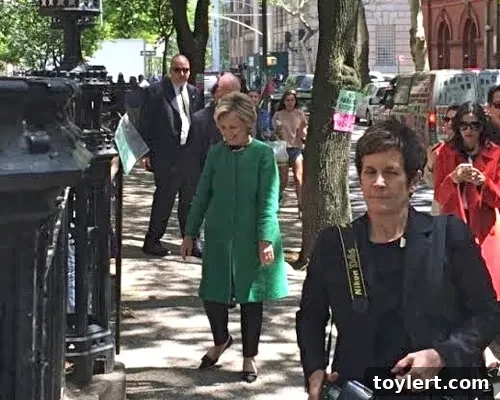
Adding a touch of local authenticity and genuine connection to her visit, Hillary Clinton was also observed engaging with the public and navigating the picturesque streets of Brooklyn Heights. Local readers, with their keen eyes and quick reflexes, managed to capture candid photographs of her walking along the charming Pierrepont Street. These spontaneous public appearances are invaluable for humanizing a candidate, allowing for direct, unscripted interaction with potential voters and everyday citizens. The shared images depicted her passing by local landmarks, initially believed by some to be St. Ann’s school. However, a helpful clarification provided by an astute commenter correctly identified the building on the corner of Monroe and Pierrepont as the Unitarian Church. This minor correction, far from detracting from the narrative, actually amplified the local flavor and authenticity of the event, showcasing the community’s attentive engagement with their high-profile visitor.
Such organic interactions, often unscripted and direct, offer a powerful counterpoint to the more formal and controlled aspects of a political campaign. They allow a candidate to be seen as an integral part of the community, walking alongside residents, and experiencing the local environment firsthand. For the campaign, these moments provide invaluable opportunities for organic media coverage and positive word-of-mouth, effectively reinforcing a message of accessibility and relatability. The visibility on Pierrepont Street served as a concrete reminder that even a presidential campaign, with all its grand national ambitions, is fundamentally built upon countless smaller, local interactions that collectively shape public perception and build a vital groundswell of support across diverse communities throughout the nation.
Brooklyn’s Enduring Political Significance in a National Context
The deliberate selection of Brooklyn as a primary operational base and a frequent stop for Hillary Clinton was a highly strategic decision that reflected the borough’s profound political and cultural significance within the broader American landscape. Beyond its well-deserved reputation as a global hub of creativity, innovation, and diverse cultures, Brooklyn stands as a rich microcosm of diverse American communities, representing a vast array of demographic groups, socio-economic backgrounds, and political persuasions. For a Democratic presidential candidate, forging strong, visible ties in Brooklyn is not merely about securing votes in a reliably “blue” state; it is about projecting an image of broad appeal and demonstrating a tangible commitment to critical urban issues, equitable economic development, and social justice initiatives that resonate powerfully with a national audience.
New York, as a whole, functions as an absolutely critical fundraising center for national political campaigns, drawing upon its immense financial resources and its extensive networks of influential individuals. However, Brooklyn offers something more profound: a vibrant, deeply engaged populace that can serve as an energized base for dedicated volunteers, grassroots organizers, and digital activists. The sustained energy generated from a well-established Brooklyn headquarters can create a powerful ripple effect, inspiring similar efforts in other key urban centers and across the entire country. Clinton’s early and sustained presence in Brooklyn unequivocally underscored her campaign’s sophisticated understanding of this dynamic, recognizing that deep local engagement and a strong operational footprint in a diverse urban environment are indispensable for building a truly national movement capable of competing and winning on a grand scale.
The Road Ahead: Early Campaign Dynamics and Strategic Messaging
This pivotal early visit to Brooklyn, occurring just weeks after her formal announcement, was instrumental in shaping the initial narrative and public perception of Hillary Clinton’s presidential campaign. It served as a vital opportunity to articulate her evolving vision for the country, to connect with potential voters on a more personal and authentic level, and to demonstrate the robust organizational muscle already actively at work. The dual objectives of establishing a headquarters and engaging vigorously with key donors clearly reflected a campaign that was moving swiftly and purposefully to solidify both its logistical framework and its financial viability. This foundational period was absolutely crucial for refining core messages, identifying key policy priorities, and setting the strategic direction for what would undoubtedly be a long, arduous, and intensely scrutinized campaign season.
The clear, fluent, and direct communication fostered during such early public appearances was vital for setting public expectations and for effectively differentiating her campaign from potential rivals who would soon emerge. By strategically choosing Brooklyn as a prominent base, Clinton’s team was also making a profound statement about the type of broad coalition they intended to build – one that wholeheartedly embraced the inherent diversity and progressive ideals often associated with New York City. Her interactions, whether with dedicated campaign staff, influential donors, or the casual passersby on Pierrepont Street, collectively contributed significantly to the evolving public perception of her candidacy, laying down critical early markers for the formidable journey towards the White House.
Conclusion: A Firm Foothold and a Clear Path in the Empire State
Hillary Clinton’s Thursday visit to Brooklyn Heights and Red Hook represented far more than a routine campaign stop; it was a meticulously orchestrated maneuver designed to establish a firm, visible, and strategically vital foothold in one of the nation’s most influential states. By formally unveiling her campaign headquarters at 1 Pierrepont Plaza and engaging with crucial donor networks, she unequivocally signaled a clear intent to leverage New York’s vast resources – encompassing both its human capital and its significant financial backing – in her ambitious bid for the presidency. The compelling blend of strategic organizational setup and genuine community interaction, attentively captured by engaged local readers, underscored a campaign deeply committed to both high-level strategizing and authentic grassroots connectivity.
This early, impactful engagement in Brooklyn served as a powerful declaration of her campaign’s unwavering commitment to building a broad-based movement, deeply rooted in diverse communities across the nation. It laid essential groundwork, not only logistically but also narratively, by showcasing her accessibility, her formidable organizational capacity, and her overarching strategic vision. As the 2016 presidential election cycle began to intensify, these foundational visits to key urban centers like Brooklyn would prove indispensable in shaping the trajectory and ultimately influencing the outcome of one of the most closely watched and highly contested political contests in modern American history. The significant buzz and palpable energy generated in Brooklyn Heights and Red Hook stood as a testament to the campaign’s early momentum and its profound understanding of precisely where to plant its deepest and most enduring roots.