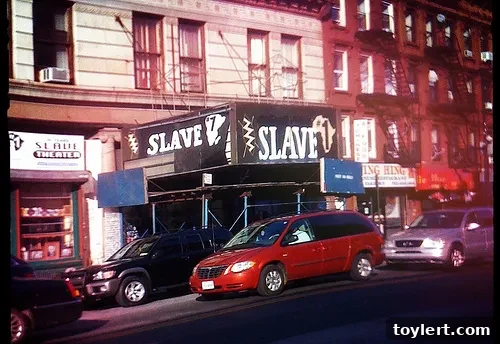
The Enduring Legacy of Bed-Stuy’s Slave Theater: A Fight for Preservation and Identity
Breaking News: Foreclosure Auction for Historic Slave Theater Cancelled Amidst Community Outcry and New Developments
In a dramatic turn of events that underscores the passionate struggle for historic preservation in rapidly gentrifying Brooklyn, the highly anticipated foreclosure auction for the beloved Slave Theater at 1215 Fulton Street in Bed-Stuy was abruptly cancelled. Scheduled for yesterday afternoon at 2:30 pm, the eleventh-hour cancellation brings a temporary reprieve to a landmark that has served as a pivotal cultural beacon for the African American community for decades. This crucial update comes from the New Brooklyn Theater (NBT), a dedicated non-profit organization that has been spearheading efforts to acquire the building through a community-backed Kickstarter campaign. The development introduces a fresh layer of complexity to an already intricate saga, as NBT reports whispers that the theater’s long-time owner, Reverend Samuel Boykin, may now be under contract with an undisclosed potential buyer.
“We have not heard from the Reverend Boykin in several days,” stated Jonathan Solari, Artistic Director of New Brooklyn Theater, his words reflecting the uncertainty and concern palpable within the community. This lack of communication leaves NBT, and indeed many preservationists and residents, in a precarious position, unsure of the future of a building that represents far more than just bricks and mortar.
The Slave Theater: A Cornerstone of Black Arts and Activism in Bed-Stuy
To understand the depth of emotion surrounding the Slave Theater, one must delve into its rich and impactful history. Located in the heart of Bedford-Stuyvesant, Brooklyn, a neighborhood historically synonymous with African American culture and resilience, the building at 1215 Fulton Street has a past as multifaceted as the community it serves. Originally opening in 1914 as the Astor Theatre, a vaudeville and silent film house, it later transitioned into a popular movie theater. However, its true transformation into a cultural institution began in the 1980s under the visionary leadership of Judge John J. Gates Jr., often referred to as Clarence J. Gates Jr. It was Gates who famously rebranded the venue as the “Slave Theater,” a name chosen not to commemorate bondage, but to invoke the imperative of intellectual and spiritual freedom within the Black community.
Gates envisioned the Slave Theater as a vital hub for Black artistic expression, political discourse, and community organizing. During an era when mainstream venues often overlooked or marginalized Black voices, the Slave Theater stood as a powerful antidote. It became a sanctuary where artists could freely express themselves, activists could rally for social justice, and community members could gather to share stories, celebrate heritage, and strategize for a better future. It hosted a remarkable array of talent, from renowned poets and playwrights to musicians and spoken-word artists. Crucially, it also became a critical platform for prominent civil rights leaders and political figures, offering a space for critical conversations that shaped the local and national dialogue on race, equality, and empowerment. Its stage bore witness to countless impassioned speeches, groundbreaking performances, and vibrant cultural celebrations, solidifying its reputation as an unparalleled institution in the fabric of Black Brooklyn.
More Than a Building: A Symbol of Resistance and Cultural Pride
The name “Slave Theater” itself was a deliberate and provocative choice by Gates, designed to challenge perceptions and spark conversation. It served as a constant reminder of the historical injustices faced by African Americans, while simultaneously advocating for mental liberation and self-determination. The theater’s mission was to “free the minds of those still enslaved,” fostering an environment where critical thinking, cultural awareness, and collective empowerment could flourish. It became a crucible for the Black Arts Movement in Brooklyn, directly influencing generations of artists and activists. The architecture, while not monumental, held a distinct neighborhood charm, its marquee often adorned with messages of empowerment and community events, making it an unmistakable fixture on Fulton Street. For many in Bed-Stuy, the Slave Theater isn’t merely an old building; it is a living monument to the struggles, triumphs, and enduring spirit of African American people.
The Recent Crisis: Financial Woes and the Threat of Foreclosure
Despite its profound cultural significance, the Slave Theater has, like many historic community assets, faced considerable financial headwinds over the years. Following Judge Gates’ passing in 2009, ownership transitioned to Reverend Samuel Boykin, his nephew. While Rev. Boykin initially expressed a desire to continue his uncle’s legacy, the theater gradually fell into disrepair, and its financial stability became increasingly precarious. Years of deferred maintenance, escalating property taxes, and the general economic pressures facing independent cultural institutions took their toll. The once-vibrant marquee dimmed, the stage lay silent, and the building began to show visible signs of neglect, much to the dismay of a community that cherished its memory.
The accumulation of debts eventually led to the inevitable: a foreclosure judgment. The prospect of the Slave Theater being sold on the auction block sent shockwaves through Bed-Stuy and the wider preservation community. The fear was palpable – that a vital piece of Black history and cultural infrastructure would be lost forever, potentially acquired by developers with no interest in its legacy, only its prime real estate value. This scenario is an all too common narrative in rapidly gentrifying urban centers, where the economic pressures of development often threaten to erase the physical markers of a community’s heritage and identity.
New Brooklyn Theater Steps Up: A Community-Driven Rescue Mission
Amidst the looming threat of foreclosure, the New Brooklyn Theater emerged as a beacon of hope. Driven by a deep appreciation for the Slave Theater’s historical and cultural importance, NBT launched an ambitious campaign to save the building. Their strategy involved a multi-pronged approach: raising public awareness about the theater’s plight, mobilizing community support, and, critically, initiating a crowdfunding effort via Kickstarter. The idea was to empower ordinary citizens to contribute to the preservation of a shared cultural heritage, transforming a potential tragedy into a testament to collective action.
NBT’s vision extended beyond simply purchasing the building; they aimed to restore the Slave Theater to its former glory, reimagining it as a modern, vibrant performing arts center that would honor its legacy while serving the contemporary needs of the Bed-Stuy community. Their plans included spaces for theater productions, film screenings, educational workshops, and community events, ensuring that the spirit of Judge Gates’ original mission would continue to thrive. The Kickstarter campaign garnered significant attention, drawing contributions from local residents, former patrons, and supporters from across the globe, all united by the desire to prevent the loss of this irreplaceable landmark.
A New Twist: The Mysterious Potential Buyer
The recent news of the foreclosure auction cancellation, while initially a cause for relief, has quickly introduced a new layer of uncertainty. NBT’s statement indicates that Reverend Boykin is reportedly in contract with a “potential buyer.” The identity of this buyer, and their intentions for the Slave Theater, remain unknown. This development complicates NBT’s fundraising efforts and future plans, as their ability to acquire the building directly is now in question. The community waits with bated breath to learn whether this new party intends to honor the theater’s historical significance and cultural purpose or pursue a path that might lead to its irreversible transformation or demolition.
Jonathan Solari’s inability to contact Reverend Boykin further heightens anxieties. Transparency and open communication are crucial in such sensitive preservation battles. The lack of direct information from the current owner leaves NBT and the community in a state of limbo, unable to fully assess the situation or strategize their next steps effectively. This opaque process only underscores the vulnerabilities of community landmarks when they are caught in complex legal and financial entanglements.
The Broader Implications: Preserving Cultural Heritage in a Changing Brooklyn
The ongoing struggle for the Slave Theater is not an isolated incident; it is emblematic of a broader challenge facing historic Black cultural landmarks across Brooklyn and other urban areas undergoing rapid gentrification. As property values soar, and neighborhoods transform, institutions that have historically anchored communities often find themselves under immense pressure. Developers see valuable land; communities see irreplaceable heritage. The fight for the Slave Theater is therefore a fight for identity, for memory, and for the tangible representation of a community’s narrative.
Preserving the Slave Theater is crucial for several reasons:
- Cultural Continuity: It ensures that future generations have a physical space to connect with the rich history of Black arts and activism in Bed-Stuy.
- Economic Revitalization: A restored cultural center can serve as an anchor for local businesses, attracting visitors and fostering local employment.
- Community Empowerment: Maintaining community control over such a vital institution reinforces local self-determination and provides a platform for ongoing dialogue and expression.
- Educational Value: The theater can continue to be a site for learning, teaching about civil rights, Black history, and the power of performance.
The outcome of the Slave Theater’s fate will send a powerful message about the value placed on cultural heritage versus development pressures in one of New York City’s most dynamic boroughs. It stands as a testament to the resilience of community efforts, even in the face of daunting odds, to protect the places that embody their collective soul.
What Lies Ahead for 1215 Fulton Street?
The path forward for the Slave Theater remains uncertain, but the cancellation of the foreclosure auction offers a glimmer of hope and an opportunity for renewed advocacy. The New Brooklyn Theater continues its mission, even as it navigates the complexities introduced by a potential new buyer. The community of Bed-Stuy, alongside preservationists and cultural enthusiasts worldwide, watches intently, hoping that this iconic space will ultimately be restored and reopened, continuing its legacy as a vibrant center for Black arts, culture, and community engagement.
The battle for the Slave Theater is far from over. It is a testament to the fact that cultural landmarks are not merely buildings; they are living repositories of history, memory, and aspiration. Their preservation is a collective responsibility, ensuring that the narratives they embody continue to inspire and inform future generations.