Revitalizing the Waterfront: New York State Unveils Comprehensive Cleanup Plan for Kent Avenue Generating Station Site
A significant step towards environmental restoration and urban renewal was announced at a recent public meeting held at the Brooklyn Navy Yard. New York State officials unveiled a comprehensive plan to meticulously decontaminate the long-vacant Kent Avenue Generating Station site. This crucial site, nestled along the vibrant south Williamsburg waterfront at the intersection of Kent and Division Street, has long been identified as a brownfield requiring extensive remediation. The initiative marks a pivotal moment for both the local community and the broader environmental health of New York City.
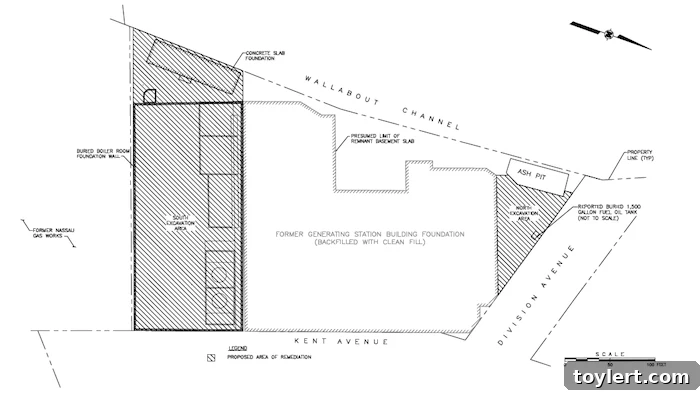
The state’s Department of Environmental Conservation (DEC) has conducted thorough analyses of the former power plant site, revealing the presence of a challenging array of contaminants. These include hazardous substances such as asbestos, arsenic, PCBs (polychlorinated biphenyls), VOCs (volatile organic compounds) like benzene, and PAHs (polycyclic aromatic hydrocarbons). Additionally, the investigations identified an underground oil storage tank situated on the northern end of the property. A substantial portion of the proposed cleanup plan will involve the careful excavation and removal of this tank, alongside the specialized task of digging up asbestos that remains buried several feet underground. The successful implementation of this plan is paramount for transforming a historically industrial site into a safe, sustainable space for future development and community enjoyment.
A Glimpse into the Past: The Legacy of Kent Avenue Power Generation
The Kent Avenue Generating Station holds a deep-rooted place in Brooklyn’s industrial history, dating back to its construction in 1909. Originally built to fuel the burgeoning transportation network of the era, the plant was instrumental in powering the elevated trains and streetcars operated by the Brooklyn Rapid Transit company. For decades, its massive turbines and generators hummed, providing the essential electricity that drove the borough’s growth and connected its burgeoning neighborhoods.
In 1950, the facility transitioned ownership, being sold to Con Edison, a major utility provider for New York City and Westchester. Con Edison continued to operate the Kent Avenue plant as a vital power generation facility until its eventual retirement in 1999. This decision marked the end of an era for the station, reflecting a broader shift in urban energy infrastructure and an increasing focus on cleaner, more decentralized power sources. Following its retirement, the massive, century-old seven-story power plant stood vacant for nearly a decade, a towering, silent sentinel on the Williamsburg waterfront. The impressive structure, once a symbol of industrial might, was finally demolished by Con Edison in 2008, paving the way for eventual site remediation and a new chapter for the prime waterfront property.
Understanding the Contamination: A Complex Environmental Challenge
The Kent Avenue site’s long history as an industrial power plant inevitably left a complex legacy of environmental contamination. The substances identified by the DEC are characteristic of older industrial operations and pose significant risks if not properly managed. Understanding each contaminant is key to appreciating the scope and necessity of the state’s cleanup efforts.
Asbestos: A Silent Threat from the Industrial Past
Asbestos, a naturally occurring fibrous mineral, was once widely used in construction and industry due to its heat resistance and insulating properties. Power plants, including the Kent Avenue station, historically relied heavily on asbestos for insulation in pipes, boilers, and other equipment. While Con Edison undertook an initial, crucial asbestos abatement project prior to the plant’s demolition in 2008, safely removing all visible asbestos from the structure, subsequent investigations revealed that some asbestos-containing materials remain buried a few feet underground. Inhaling asbestos fibers can lead to serious respiratory diseases, including asbestosis, lung cancer, and mesothelioma, underscoring the critical need for its complete and safe removal from the site.
Arsenic: A Lingering Toxin in Industrial Soil
Arsenic is a toxic metalloid that can be found naturally in the environment but also as a byproduct of various industrial processes, including coal combustion and smelting, which were prevalent in early 20th-century power generation. Its presence in the soil at the Kent Avenue site raises concerns due to its potential for both acute and chronic health effects on humans and ecosystems. The remediation plan will address arsenic-contaminated soil to prevent its migration and reduce exposure risks.
PCBs (Polychlorinated Biphenyls): Persistent Organic Pollutants
PCBs are synthetic organic chemicals that were extensively used in industrial and commercial applications, particularly in electrical equipment like transformers and capacitors, as well as in hydraulic fluids and lubricants. Their remarkable chemical stability made them ideal for these applications but also contributes to their persistence in the environment. PCBs are known as persistent organic pollutants (POPs) because they resist degradation and can accumulate in the food chain. Exposure to PCBs has been linked to a range of adverse health effects, including impacts on the immune, nervous, and endocrine systems, and they are classified as probable human carcinogens. Their discovery at the Kent Avenue site necessitates specialized containment and disposal methods.
VOCs (Volatile Organic Compounds) & Benzene: Hidden Hazards
Volatile organic compounds (VOCs) are organic chemicals that have a high vapor pressure at ordinary room temperature. Many VOCs, including benzene, are human-made chemicals used and produced in the manufacture of paints, pharmaceuticals, and refrigerants. Benzene, specifically, is a common component of petroleum and was likely present due to fuel storage and use at the power plant. It is a known carcinogen, and exposure to high levels can lead to a variety of health problems. The volatile nature of these compounds means they can readily evaporate into the air or leach into groundwater, making their detection and remediation crucial for both air quality and water safety.
PAHs (Polycyclic Aromatic Hydrocarbons): Products of Incomplete Combustion
Polycyclic aromatic hydrocarbons (PAHs) are a group of chemicals that occur naturally in coal, crude oil, and gasoline. They are also formed when coal, oil, gas, wood, garbage, or other organic substances are burned incompletely. Given the coal and oil-fired history of the Kent Avenue Generating Station, the presence of PAHs is unsurprising. Many PAHs are suspected carcinogens and can also cause other adverse health effects. Remediation strategies must account for their presence in soil and potential for leaching.
The Underground Oil Storage Tank: A Source of Ongoing Risk
The discovery of an underground oil storage tank on the site’s north end represents another critical aspect of the cleanup. Older underground storage tanks are prone to corrosion and leaks, which can lead to significant soil and groundwater contamination. Leaking oil can spread through the subsurface, posing risks to nearby water bodies, local ecosystems, and potentially extending contamination off-site. The excavation and safe removal of this tank, along with any surrounding contaminated soil, will be a priority in the remediation process.
The Remediation Blueprint: A Path to Environmental Health
The cleanup plan detailed by the New York State Department of Environmental Conservation is a multi-phased, comprehensive strategy designed to mitigate all identified environmental risks. This ambitious undertaking aims to restore the Kent Avenue site to a condition suitable for safe future use, aligning with public health and environmental protection standards.
Excavation and Safe Disposal of Contaminants
A core component of the remediation effort will involve extensive excavation. This includes the careful digging up and removal of the buried asbestos-containing materials. Given the hazardous nature of asbestos, specialized protocols will be strictly followed to prevent fiber release into the air during excavation, transportation, and disposal. Similarly, the underground oil storage tank will be unearthed, emptied of any residual contents, and removed. All contaminated materials—be it asbestos, petroleum-impacted soil, or other hazardous waste—will be transported off-site to licensed hazardous waste facilities for appropriate treatment and disposal, ensuring permanent isolation from the environment.
Soil and Groundwater Remediation
Beyond the removal of specific sources like the oil tank and buried asbestos, the plan will also address broader soil contamination across the site. Depending on the extent and type of contamination, various soil remediation techniques may be employed. This could range from further excavation and off-site disposal of heavily contaminated soil to in-situ (on-site) treatment methods such as bioremediation, where microorganisms break down pollutants, or soil washing, which separates contaminants from soil particles. Additionally, given the potential for groundwater contamination from a former industrial site, robust groundwater monitoring programs will be implemented. Should groundwater contamination be detected above acceptable levels, targeted remediation strategies, such as pump-and-treat systems or permeable reactive barriers, may be deployed to restore water quality.
Ensuring Public Safety and Community Trust
Crucially, the state’s plan emphasizes rigorous oversight and adherence to strict safety protocols throughout the cleanup process. The Department of Environmental Conservation will closely monitor all activities, ensuring that contractors comply with environmental regulations and employ best practices to protect workers and the surrounding community. Air quality monitoring will be continuous, particularly during excavation phases, to detect and prevent the spread of airborne contaminants. This commitment to transparency and safety is vital for building and maintaining community trust.
Addressing Community Concerns and Future Prospects
The public meeting at the Brooklyn Navy Yard provided an essential forum for dialogue, where local residents voiced understandable concerns regarding the historical impact of the power plant and the potential for contamination during the cleanup. Many neighbors expressed apprehension about having potentially breathed contaminated dust from the site over the years, especially during and after the demolition of the main structure.
State officials offered reassurance, explaining that Con Edison had performed an initial asbestos abatement before the 2008 demolition, safely removing a significant portion of the hazardous material. Furthermore, after the old electric power plant was pulled down, Con Edison backfilled the ground with clean soil. Officials clarified that the remaining contaminants, including the recently discovered buried asbestos and other pollutants, are located several feet below ground level, significantly reducing the risk of airborne exposure under normal conditions. The state’s ongoing monitoring and strict adherence to safety protocols during the remediation aim to prevent future exposure and address public health concerns proactively.
Looking ahead, the successful decontamination of the Kent Avenue Generating Station site represents more than just an environmental cleanup; it symbolizes a remarkable opportunity for urban revitalization along the Brooklyn waterfront. Once fully remediated, this prime piece of real estate, strategically located in a rapidly developing area, will be ripe for thoughtful redevelopment. Potential future uses could include a mix of public parkland, providing much-needed green space for Williamsburg residents, alongside residential or commercial developments that could bring new vitality and economic opportunities to the neighborhood. The transformation of this former industrial brownfield into a safe, productive, and aesthetically pleasing space will stand as a testament to diligent environmental stewardship and a commitment to enhancing the quality of life for New Yorkers.