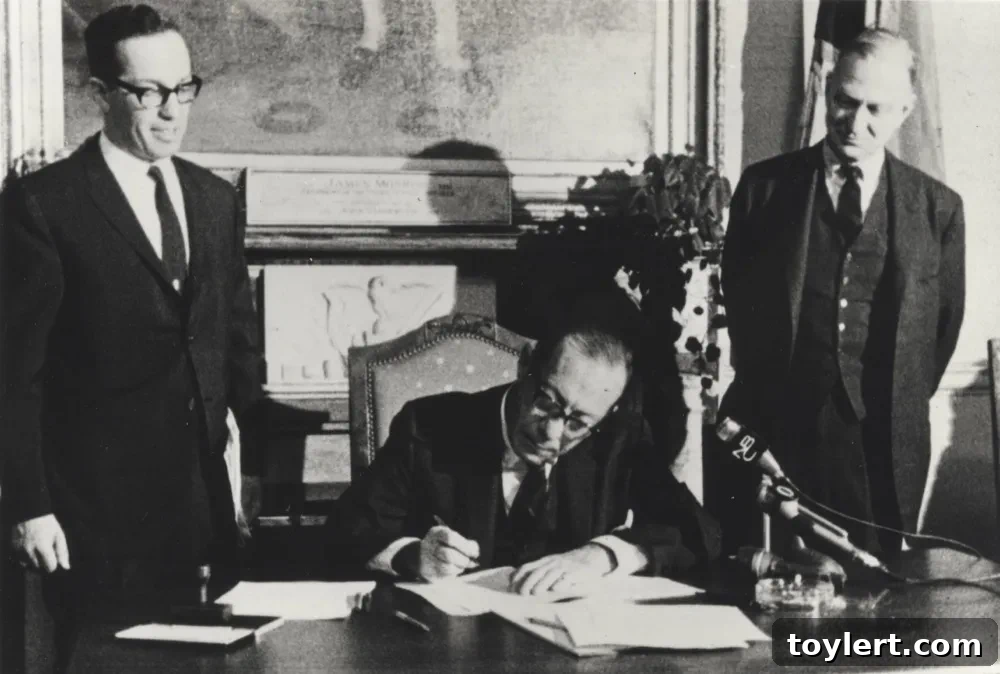
Fifty years ago, a pivotal moment in New York City’s history unfolded with the passage of the Landmarks Law. Had this groundbreaking legislation not come into existence, the vibrant metropolis we inhabit today would be irrevocably altered, lacking much of the architectural grandeur and historical depth that define its unique character.
This profound premise forms the cornerstone of “Saving Place: 50 Years of New York City Landmarks,” a compelling exhibition currently gracing the halls of the Museum of the City of New York. Unveiled last month, this critically acclaimed exhibit embarks on an immersive journey, meticulously tracing the ascendance of the preservation movement, delving into the foundational origins of this pioneering law, charting its dynamic evolution over half a century, and ultimately assessing its transformative impact on the very fabric of the city.
The Genesis of Preservation: A City on the Brink
Before the passage of the Landmarks Law in 1965, New York City was undergoing a period of rapid and often ruthless modernization. Iconic structures, symbols of the city’s rich past, were being dismantled at an alarming rate to make way for new developments. The most infamous casualty of this era was the majestic Pennsylvania Station, a Beaux-Arts masterpiece whose demolition in 1963 ignited a fierce public outcry. This act of architectural vandalism served as a powerful catalyst, galvanizing an impassioned citizenry and giving birth to a grassroots preservation movement determined to protect New York’s irreplaceable heritage from the wrecking ball.
The loss of Penn Station was not merely the loss of a building; it was the loss of a shared public space, a gateway to the city, and a tangible connection to a bygone era. The public outrage that followed highlighted a fundamental shift in consciousness: New Yorkers began to realize that their city’s identity was inextricably linked to its physical environment, and that this environment needed active protection. Out of this growing awareness, a coalition of civic leaders, architects, historians, and concerned citizens banded together, lobbying tirelessly for legislation that would safeguard the city’s architectural, historical, and cultural treasures for future generations. The Landmarks Law was, in essence, a direct response to this collective realization, a legislative triumph born from the ashes of architectural loss.
“Saving Place”: A Journey Through History at MCNY
The Museum of the City of New York, a venerable institution dedicated to chronicling the city’s past, present, and future, is the ideal venue for an exhibition of this magnitude. “Saving Place” offers visitors an unparalleled opportunity to explore the intricacies of the preservation movement through a rich tapestry of archival materials, historical photographs, architectural drawings, and engaging narratives. The exhibition masterfully weaves together the story of how the Landmarks Law came to be, not just as a piece of legislation, but as a living, breathing testament to civic engagement and collective will.
It meticulously details the legislative battles, the early preservation victories, and the tireless efforts of individuals and organizations who championed the cause. Beyond its historical roots, the exhibit also illuminates the law’s ongoing evolution, demonstrating how its scope has expanded over the decades to encompass a broader array of sites, from individual architectural gems to vast historic districts, and even interior and scenic landmarks. Visitors gain insight into the nuanced decisions made by the New York City Landmarks Preservation Commission (LPC), the agency charged with administering the law, and understand the profound impact these decisions have had on shaping the city’s urban landscape. The exhibition serves as both a celebration of past achievements and a timely reminder of the continuous effort required to maintain and protect New York’s distinctive character.
Brooklyn’s Pivotal Role and Enduring Legacy
While the Landmarks Law protects treasures across all five boroughs, Brooklyn holds a particularly significant place in its narrative, a fact beautifully underscored within the “Saving Place” exhibition. Visitors will discover a dedicated section that highlights the instrumental role played by Brooklyn Heights in the law’s creation. As one of the city’s earliest and most architecturally distinguished neighborhoods, Brooklyn Heights became a hotbed of preservation activism long before the official law was enacted. Its residents, deeply proud of their pre-Civil War brownstones and tree-lined streets, were acutely aware of the threats posed by uncontrolled development. Their early, organized efforts to protect their neighborhood served as a powerful model and inspiration for the citywide movement, ultimately influencing the very language and structure of the Landmarks Law. Brooklyn Heights was, fittingly, designated as New York City’s very first historic district in 1965, cementing its legacy as a pioneer in urban preservation.
The exhibition further enriches its narrative with captivating images and stories of numerous Brooklyn buildings, illustrating the law’s diverse applications and impact. These include:
- The Demolished Brooklyn Savings Bank: A poignant reminder of what was lost before comprehensive protection was in place, highlighting the urgent necessity of the law. Its grandeur, now visible only in photographs, underscores the irreplaceable nature of historic architecture.
- The New Skating Rink in Prospect Park: This example showcases how modern design can thoughtfully integrate within a beloved, landmarked landscape. Prospect Park itself, designed by Olmsted and Vaux, is a scenic landmark, and new additions demonstrate a careful balance between contemporary needs and historic context. The exhibit likely explores the approval process and design considerations that allowed this new development to coexist harmoniously with the park’s historic fabric.
- The Renaissance and Alhambra Apartments in Bedford-Stuyvesant: These buildings exemplify the power of adaptive reuse and the social benefits of preservation. Originally grand apartment houses, their conversion into affordable housing demonstrates that historic preservation is not solely about aesthetics but can also serve vital community needs, providing quality housing while maintaining the architectural integrity of a culturally rich neighborhood. Bedford-Stuyvesant’s architectural heritage, from its iconic brownstones to its stately apartment buildings, is a testament to the district’s vibrant past.
- Additions to the Pratt Institute Architecture School: Pratt, a world-renowned institution for art and design, operates within a campus that boasts significant historical buildings. The exhibit explores how contemporary additions to its architecture school demonstrate sensitive integration of new structures with existing historic ones, reflecting a forward-thinking approach to preservation that allows for growth and innovation.
- Park Slope’s Poly Prep: A historic educational institution nestled within one of Brooklyn’s most celebrated historic districts. The display likely touches upon the unique challenges and opportunities of maintaining and adapting such a campus within a protected urban environment, showcasing how preservation contributes to the distinct character of neighborhoods like Park Slope.
- The Jehovah’s Witness Library in Brooklyn Heights: Located in a prominent historic district, this building, like many others formerly owned by the Jehovah’s Witnesses, possesses a unique architectural character and a distinct place in the neighborhood’s history. Its inclusion highlights the diverse range of structures that fall under the law’s purview and the various stories they tell about Brooklyn’s evolution.
These specific Brooklyn examples, collectively, paint a vivid picture of how the Landmarks Law has not only saved individual structures but has also preserved the unique streetscapes, economic vitality, and distinct community identities that make Brooklyn such an extraordinary borough. From safeguarding grand public spaces to protecting residential blocks, the law’s footprint across Brooklyn is undeniable and deeply celebrated within the “Saving Place” exhibition.
The Evolution and Enduring Impact of a Landmark Law
Over the past five decades, the New York City Landmarks Law has not remained static; it has evolved to meet the changing needs and understandings of urban preservation. Initially focused primarily on individual architectural masterpieces, its scope expanded significantly to encompass historic districts, interior landmarks (such as the opulent interiors of grand theaters and banks), and even scenic landmarks like Prospect Park and Central Park. This evolution reflects a growing appreciation for the interconnectedness of urban spaces and the understanding that preservation is about more than just buildings; it’s about safeguarding entire environments and the collective memories they hold.
The Landmarks Preservation Commission (LPC), established to administer the law, plays a crucial role in this ongoing process. Comprised of architects, historians, urban planners, and other experts, the LPC is responsible for researching, designating, and regulating New York City’s landmarks. Their work involves a careful balancing act between protecting historic resources and accommodating the demands of a dynamic, growing city. While the law has faced challenges and controversies—often related to property rights, economic development pressures, and the ever-present debate over what constitutes “historic”—its overall impact has been overwhelmingly positive.
The law has demonstrably preserved thousands of buildings and hundreds of historic districts, maintaining New York’s iconic skyline and streetscapes. This preservation has not only enriched the city aesthetically and culturally but has also contributed significantly to its economic vitality. Historic neighborhoods often become tourist destinations, attracting visitors and boosting local businesses. Property values in landmarked districts frequently appreciate, demonstrating the economic value inherent in historic preservation. More importantly, the law has fostered a deep sense of community identity and pride, allowing New Yorkers to maintain a tangible connection to their past while building for their future. It stands as a testament to the idea that a modern metropolis can thrive without sacrificing its soul.
Beyond 50 Years: The Future of Preservation
As the New York City Landmarks Law steps into its next half-century, the challenges and opportunities for preservation continue to evolve. Contemporary discussions often center on expanding the definition of what constitutes a “landmark” to include sites that tell a more inclusive and diverse story of New York’s history, recognizing the contributions of underrepresented communities. There’s also an increasing focus on the role of preservation in sustainable urban development, exploring how historic buildings can be adapted for modern uses while minimizing environmental impact.
The future of preservation will undoubtedly require ongoing public awareness, robust community engagement, and a continued commitment from city leadership to uphold the principles of the Landmarks Law. It is a continuous dialogue, a delicate balance between progress and heritage, innovation and tradition. The “Saving Place” exhibition serves as a powerful reminder of this enduring mission, underscoring that the protection of New York City’s architectural and cultural legacy is an ongoing endeavor that benefits all who live in and visit this remarkable city.
Conclusion
The celebration of the New York City Landmarks Law’s 50th anniversary is more than just a commemoration of a piece of legislation; it is a recognition of the collective foresight and dedication that shaped the very character of one of the world’s greatest cities. The “Saving Place” exhibition at the Museum of the City of New York offers an essential and illuminating perspective on this journey, from the dire threats that prompted its creation to the enduring legacy it has forged across all boroughs, particularly Brooklyn.
The law ensures that New York remains a city of layers, where history is not merely recounted in books but is visible, tangible, and vibrant in its streets, buildings, and neighborhoods. It invites us all to look up, to appreciate the intricate details of our urban environment, and to understand that our shared past is an indispensable foundation for our collective future. We are indeed living in a much richer, more beautiful, and historically grounded New York because of the pivotal decision made fifty years ago to save its place.