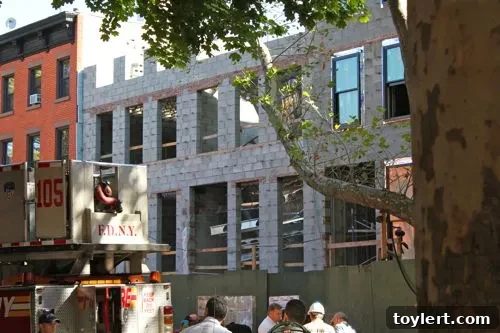
Tragedy Strikes: Building Collapse at Carlton Mews Townhouses Shakes Fort Greene
On a sobering day in September 2012, the vibrant community of Fort Greene, Brooklyn, was thrust into an unexpected crisis. The construction site of the eagerly anticipated Carlton Mews Townhouses, located at 231 Carlton Avenue, became the scene of a catastrophic building collapse. What was meant to be a symbol of urban renewal and modern living quickly transformed into a landscape of twisted metal and shattered dreams, igniting immediate concerns about construction safety and the welfare of those working on such projects.
The incident unfolded with terrifying speed and destructive force. According to initial reports gathered on site, the primary cause was attributed to excessive weight, which led to the roof’s catastrophic failure. This structural breach initiated a devastating chain reaction, causing the lower floors to buckle and collapse in quick succession. While the exterior side walls and the facade remarkably remained standing, much of the internal framework was reduced to a hazardous pile of debris, signaling a major setback for the project and a profound shock for the community.
The Immediate Aftermath: A Race Against Time and the Human Cost
In the wake of the collapse, chaos quickly gave way to a massive, coordinated emergency response. The sounds of sirens filled the air as fire department units, police officers, and paramedics converged on 231 Carlton Avenue. Carlton and DeKalb Avenues, typically bustling with daily life, were immediately shut down, cordoned off by rescue workers scrambling to assess the situation and search for potential victims. The urgent priority was to determine if anyone was trapped within the precarious wreckage.
Relief mingled with apprehension as information emerged that two construction workers had been present at the time of the collapse and were successfully pulled from the dangerous debris. However, the severity of their injuries quickly became a grave concern. NY1 reported that both individuals were in critical condition, highlighting the brutal impact of the structural failure. The initial hope for a full recovery was tragically overshadowed when a subsequent update from CBS Local confirmed the heartbreaking news: one of the injured workers had succumbed to their injuries. This devastating loss underscored the ultimate human cost of construction accidents, transforming a local news story into a profound tragedy for the victim’s family, friends, and the wider construction community.
Unraveling the Cause: Excessive Weight and Structural Integrity Concerns
While official investigations are meticulous and often lengthy, preliminary observations from the scene offered critical insights into the likely cause of the Carlton Mews collapse. The prevailing theory centered on “excessive weight.” An observant tipster, whose insights were shared shortly after the incident, remarked, “Note also how warped the roof frame (of aluminum) is to the left of the one that gave; they probably overloaded the one on the right.” This crucial observation suggested a fundamental issue with load bearing and structural capacity during the construction phase.
The concept of excessive weight in a construction environment can manifest in various ways. It could mean an improper accumulation of heavy building materials such as lumber, steel, or concrete blocks on a temporary support structure that was not designed to handle such concentrated loads. Alternatively, it might involve heavy machinery being positioned incorrectly, or even the combined weight of multiple workers and their equipment exceeding the safe working load of a specific area of the evolving structure. Structural integrity is the bedrock of safe construction, and any miscalculation, oversight, or deviation from engineered plans can have catastrophic consequences. The visible warping in the adjacent roof frame further served as a grim indicator of stress points and potential weaknesses that might have gone unnoticed or unaddressed, underscoring the indispensable need for rigorous engineering, continuous on-site monitoring, and strict adherence to safety protocols at every stage of a building project.
The Broader Landscape of Construction Safety in Urban Development
The collapse at Carlton Mews Townhouses, while a singular incident, resonated far beyond Fort Greene, serving as a stark reminder of the inherent risks within the construction industry, particularly in densely populated urban areas. Building sites are dynamic, complex, and inherently hazardous environments, characterized by heavy machinery, intricate structural components, and a constant flow of materials and personnel. In a rapidly developing city like New York, where projects often operate under tight deadlines and budget constraints, the pressure to accelerate work can sometimes inadvertently lead to compromises in safety, with devastating potential outcomes.
Beyond the immediate theory of excessive weight, construction collapses can stem from a multitude of factors. These include fundamental flaws in architectural or structural designs, the use of substandard or unapproved building materials, inadequate or improperly installed temporary shoring and bracing systems, and insufficient supervision by qualified engineers and project managers. Human error, a lack of proper training for workers on specific tasks, and a disregard for established safety protocols—such as the consistent use of personal protective equipment (PPE) or robust fall protection systems—are also significant contributors to accidents. Moreover, external environmental factors like extreme weather conditions, including high winds or heavy rainfall, can exacerbate existing structural vulnerabilities in a partially completed building.
Ensuring safety on construction sites demands a comprehensive and collaborative approach involving all stakeholders. Developers are responsible for engaging reputable and competent contractors and engineering firms. Contractors, in turn, must implement robust safety plans, conduct regular and thorough site inspections, provide continuous safety training and equipment for their workforce, and strictly adhere to all local and federal regulations, including those mandated by the Department of Buildings (DOB) and the Occupational Safety and Health Administration (OSHA). Architects and engineers are tasked with designing structures that can safely withstand all anticipated loads and environmental stresses. Crucially, workers themselves must be empowered to identify and report unsafe conditions without fear of reprisal. The tragedy in Fort Greene underscored that vigilance, strict compliance with safety standards, and a proactive safety culture are not merely bureaucratic requirements but essential safeguards for human life and the successful execution of urban development projects.
Investigations, Accountability, and the Path to Prevention
Following any major construction accident, a thorough and impartial investigation is paramount. The Department of Buildings (DOB) typically spearheads such inquiries, meticulously examining every detail from initial building permits and approved blueprints to contractor licenses, daily work logs, material procurement records, and on-site practices. The fundamental objective is not merely to assign blame but to uncover the precise sequence of events and any underlying systemic failures or omissions that directly contributed to the catastrophe. The insights gleaned from these investigations are invaluable, often leading to crucial enhancements in building codes, stricter enforcement mechanisms, and improved industry best practices, all aimed at preventing similar future occurrences.
Accountability is a cornerstone of maintaining public trust and fostering a robust culture of safety within the construction industry. If negligence, code violations, or criminal acts are identified during the investigative process, appropriate legal and punitive actions may be pursued against individuals or corporate entities found responsible. Beyond the legal ramifications, such incidents can severely tarnish a developer’s and contractor’s reputation, potentially leading to substantial financial losses, project delays, and difficulties securing future contracts. However, the most profound and enduring impact is undoubtedly on the families directly affected by the loss or injury of a loved one, a sobering reminder that safety is not a negotiable aspect of any construction project.
The enduring lessons from the Carlton Mews collapse resonate deeply throughout the construction industry. They serve as a powerful testament to the fact that while progress and urban development are vital for a city’s prosperity, they must never be pursued at the expense of worker safety or the structural integrity of a building. Every beam erected, every wall raised, and every floor poured must be executed with utmost precision, unwavering adherence to sound engineering principles, and an unwavering commitment to the highest safety standards. Only through such dedicated vigilance can we ensure that future building projects contribute positively and safely to their communities, without inflicting such devastating human and economic costs. For additional visual documentation and reports from the time, reputable sources such as Gothamist provided extensive coverage.