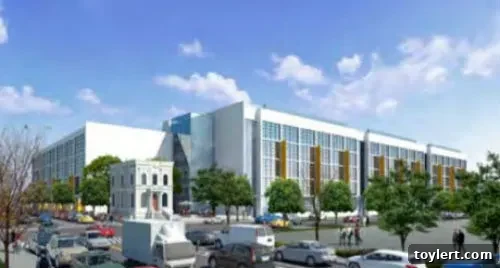
Community Vision vs. Corporate Ambition: The Future of the Gowanus Whole Foods Site
The urban landscape of Brooklyn, particularly neighborhoods undergoing significant transformation like Gowanus, is often a battleground where commercial interests clash with community aspirations. One such pivotal conflict has centered around a proposed Whole Foods Market development at the intersection of 3rd Street and 3rd Avenue. As the Board of Standards and Appeals (BSA) prepared to render a crucial decision on Whole Foods Market’s application for a zoning variance—an essential permit to construct a store larger than current regulations allow—a local think tank, the Gowanus Institute, stepped forward with an innovative and community-centric “alternative development plan” for the very same site. This ambitious proposal has sparked considerable debate, highlighting the complex dynamics of urban growth, community empowerment, and the pursuit of sustainable development in one of Brooklyn’s most rapidly evolving districts.
The Heart of the Matter: Whole Foods’ Vision and Community Concerns
For years, the Gowanus Canal area, once a thriving industrial hub, has been a focal point for redevelopment and revitalization. Its unique character, a blend of gritty industrial past and burgeoning artistic and entrepreneurial spirit, makes it a highly desirable location. Whole Foods Market, a prominent national grocer known for its high-quality, natural, and organic products, identified a prime opportunity at 3rd Street and 3rd Avenue. Their initial proposal involved constructing a substantial retail space, a move intended to cater to the growing demand from local residents and new influx of inhabitants. However, the proposed scale of their development necessitated a zoning variance, a request that triggered a thorough review by the Board of Standards and Appeals.
The need for a variance immediately raised flags within the Gowanus community. Residents and local advocacy groups often view such requests with skepticism, fearing that oversized developments could disrupt the neighborhood’s character, strain existing infrastructure, and exacerbate issues like traffic congestion and parking shortages. Concerns also revolved around the potential for further gentrification and the displacement of local businesses and long-time residents. The debate over the Whole Foods project became emblematic of a larger conversation about who gets to shape the future of Gowanus and whether development prioritizes corporate profits over genuine community needs.
A Bold Alternative: The Gowanus Institute’s Vision for Collaborative Growth
Amidst this simmering tension, the Gowanus Institute, a local organization dedicated to fostering sustainable and equitable development in the area, presented its “alternative development plan.” This plan, meticulously dissected by local blogs like Gowanus Your Face Off, offered a refreshing departure from conventional commercial development models. Instead of solely focusing on a large-scale retail outlet, the Institute envisioned a multi-faceted campus designed to cultivate local talent, support burgeoning businesses, and celebrate Gowanus’s rich industrial heritage.
Key Pillars of the Alternative Development Plan:
The Gowanus Institute’s proposal centers around several key components, each designed to inject vitality and opportunity directly into the community:
- Vocational Training and Business Incubation: At the core of the plan are two significant new buildings dedicated to “vocational training, business incubation, and support services for entrepreneurs in the culinary and creative industries.” This visionary approach aims to create a dynamic ecosystem where local aspiring chefs, artisans, designers, and innovators can hone their skills, access resources, and launch their ventures. Imagine state-of-the-art kitchens for culinary entrepreneurs, workshops for local crafters, and collaborative spaces for creative professionals. This component directly addresses the need for local job creation and economic empowerment, providing pathways for residents to thrive within the evolving neighborhood economy.
- A “Foodie” Hub of Innovation: The proposal evocatively describes the space as “a Foodie version of the Old Can Factory combined with the Brooklyn Creative League and the 3rd Ward.” This analogy is particularly insightful. The Old Can Factory, Brooklyn Creative League, and 3rd Ward (before its closure) were renowned for fostering vibrant communities of artists, makers, and small businesses. By applying this successful model to the culinary and creative sectors, the Gowanus Institute seeks to establish a unique hub where food production, culinary education, and artistic expression converge. This would not only attract talent but also draw visitors, creating a lively destination that benefits local commerce.
- A Strategic Role for Whole Foods Market: Recognizing the reality of Whole Foods’ ownership of the site, the alternative plan doesn’t seek to entirely exclude the grocer. Instead, it proposes a symbiotic relationship: Whole Foods would be allocated 75,000 square feet of space. This dedicated area would serve a dual purpose – a food production facility and a storefront. This allows Whole Foods to maintain a significant presence in Gowanus, contributing to the local food economy, while simultaneously integrating its operations into a larger, community-focused development. It represents a potential compromise, offering a retail presence alongside significant community benefits.
- The Museum of Industry: A cornerstone of the proposal, and a nod to Gowanus’s enduring identity, is the transformation of a distinctive little brick landmark on 3rd Avenue into a “‘Museum of Industry’ to highlight industrial innovation.” Preserving this historical building and repurposing it as a museum would serve multiple functions. It would act as a powerful reminder of Gowanus’s rich manufacturing past, educate current and future generations about the area’s heritage, and provide a cultural anchor for the entire development. Such a museum could host exhibits on the canal’s history, local manufacturing processes, and the innovators who shaped Brooklyn’s industrial landscape.
Benefits of a Community-Focused Development
The Gowanus Institute’s alternative plan offers a compelling array of benefits, positioning it as a potentially superior model for urban development:
- Economic Empowerment and Local Job Creation: By focusing on vocational training and business incubation, the plan directly supports local entrepreneurs and creates sustainable job opportunities for Gowanus residents, fostering a more inclusive economic environment.
- Preservation of Heritage and Character: The transformation of the landmark brick building into a Museum of Industry ensures the preservation of Gowanus’s unique industrial heritage, counteracting the risk of losing historical identity in the face of rapid modernization.
- Vibrant Community Hub: The proposed “foodie” creative hub would create a dynamic, multi-purpose space that serves as a focal point for community interaction, learning, and cultural exchange, enhancing the overall quality of life in the neighborhood.
- Sustainable Growth: This approach promotes a more thoughtful, integrated form of urban development that considers the long-term social and economic well-being of the community, rather than purely short-term commercial gains.
- Collaborative Planning Model: The plan itself stands as a testament to the power of community engagement, demonstrating how local organizations can proactively shape urban development dialogue and offer constructive alternatives.
The Realities of Implementation: Challenges and Opportunities
While the Gowanus Institute’s alternative plan is undoubtedly innovative and appealing from a community perspective, its implementation faces significant hurdles. The most prominent challenge lies in the fundamental fact that Whole Foods Market currently owns the site. A private corporation’s primary objective is typically to maximize profit and shareholder value. Adopting a plan that potentially alters their initial vision and perhaps requires a different financial model could be a difficult proposition for them.
Negotiation and compromise would be key. For the alternative plan to succeed, it would require Whole Foods Market to see the long-term value in a development that, while perhaps less immediately profitable, could offer unparalleled community goodwill, positive public relations, and a unique brand integration into a genuinely local ecosystem. It would also demand flexibility from both the corporation and the community, facilitated by regulatory bodies like the BSA, to find a middle ground that serves diverse interests.
The BSA’s decision on the variance looms large over this entire discussion. A denial of the variance could push Whole Foods to reconsider its options, potentially making the alternative plan a more attractive path forward. Conversely, approval might embolden Whole Foods to proceed with its original, larger-scale vision, though even then, community pressure and the allure of a truly integrated development could still influence their final approach.
Beyond Gowanus: A Blueprint for Urban Transformation
The conflict and the subsequent alternative proposal in Gowanus serve as a powerful case study for urban development across cities experiencing rapid change. It underscores the critical importance of community involvement in planning processes and the value of local think tanks in proposing viable, community-centric solutions. As urban areas continue to densify and evolve, the balance between corporate investment and local character will remain a perpetual challenge.
The Gowanus Institute’s plan offers a compelling vision: one where development isn’t just about constructing buildings, but about building community, fostering local talent, preserving history, and creating spaces that truly resonate with the spirit of the neighborhood. Whether Whole Foods Market ultimately embraces this alternative future or pursues its original path, the conversation ignited by the Gowanus Institute has undoubtedly enriched the dialogue about what sustainable, equitable, and truly community-beneficial urban development can look like.
The outcome of this “Whole Foods War” will not only shape the future of a crucial Gowanus site but may also offer valuable lessons for communities grappling with similar development dilemmas nationwide.
The Whole Foods War: Alternative Building Proposal [Gowanus Your Face Off]