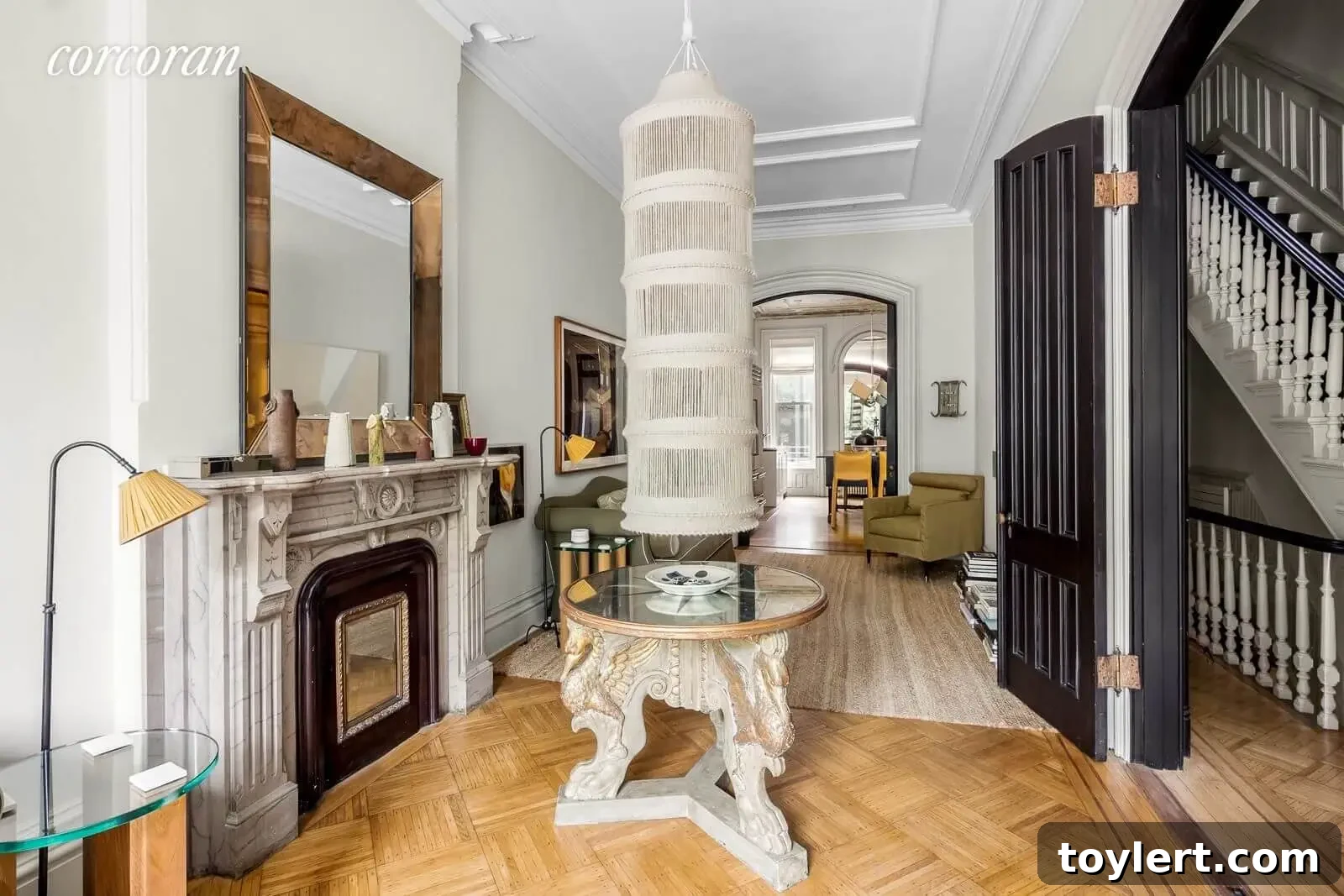
Historic Elegance Reimagined: A Neo-Grec Brownstone in Clinton Hill
Nestled within the prestigious Clinton Hill Historic District, a remarkable 1870s brownstone at 331 Washington Avenue stands as a testament to timeless architecture and modern design. This magnificent residence has undergone a meticulous renovation, skillfully blending its inherent historic character with contemporary designer style. Perfectly situated directly across from the serene Underwood Park and a stone’s throw from the vibrant campus of Pratt Institute, this home offers an unparalleled urban living experience, combining historical charm with unparalleled convenience in one of Brooklyn’s most coveted neighborhoods.
The allure of brownstones in Brooklyn is undeniable, and this property exemplifies why these iconic structures continue to capture the imagination of homeowners. With their distinctive facades, grand proportions, and rich history, brownstones represent a coveted piece of New York City’s architectural heritage. The recent renovation of 331 Washington Avenue wasn’t merely an update; it was a sensitive transformation designed to honor its past while catering to the demands of modern luxury living. Every detail, from the carefully preserved original elements to the newly integrated high-end finishes, reflects a deep appreciation for both its historical roots and its future as a sophisticated urban sanctuary.
Architectural Heritage: The Legacy of Parfitt Brothers and Neo-Grec Design
This distinguished brownstone is one of a harmonious row of three Neo-Grec houses constructed in 1878 for the original owner, William C. Bowers. The entire row is a significant architectural landmark, credited to the renowned Parfitt Brothers. According to historical designation reports, the architectural practice of the brothers, which began around 1875, was still in its nascent stages when these homes were designed. This group of brownstones, therefore, represents an exceptional example of their early work, providing valuable insight into their developing style before the firm achieved widespread recognition for the opulent mansions they would design throughout the 1880s and beyond.
The Neo-Grec architectural style, popular in the late 19th century, drew inspiration from ancient Greek and Roman forms but reinterpreted them with a distinctly modern (for its time) and often more angular aesthetic. It marked a departure from the more ornate Italianate style that preceded it, favoring cleaner lines, geometric precision, and a robust, monumental quality. Characterized by elements such as incised decoration, flat pilasters, and strong horizontal bands, Neo-Grec buildings exude a sense of permanence and classical dignity. This particular row of brownstones showcases these characteristics beautifully, providing a tangible connection to the architectural trends and aesthetic preferences of the era.
Distinctive Features of a Clinton Hill Gem
Measuring just over 17.5 feet wide, these brownstones exhibit a series of meticulously crafted architectural details that define their Neo-Grec identity. At the ground level, molded brownstone bands provide a sturdy and visually appealing base, emphasizing the building’s horizontal lines and creating a sense of grounded elegance. Above, the parlor level is distinguished by pedimented lintels, framing the windows with classical grace and adding a layer of architectural sophistication that draws the eye upward. The main entrance, often the focal point of a brownstone façade, features a pedimented and keystoned doorsurround – a clear nod to classical temple architecture, adapted for an urban residential context with intricate carving and robust presence. Capping the entire structure is a finely crafted bracketed cornice, offering an elegant finish and contributing to the building’s commanding street presence. These elements collectively narrate a story of exceptional craftsmanship and period design, meticulously preserved through its recent renovation.
Beyond the stylistic specifics, the choice of brownstone as a primary building material itself speaks volumes about its time. Popularized in the mid-19th century, brownstone, a type of sandstone, was prized for its warm, reddish-brown hue and its relative ease of carving. It lent a sense of gravitas and luxury to the urban landscape, becoming synonymous with upscale residential architecture in burgeoning cities like New York. Its durability, coupled with its aesthetic appeal and the ability of skilled masons to shape it into intricate details, ensured its enduring popularity and cemented its place in Brooklyn’s rich architectural legacy.
A Glimpse into the Past: Early Inhabitants and Home Evolution
By 1883, No. 331 Washington Avenue had become the cherished home of Edward D. and Mary W. Burt. Edward Burt was a prominent figure in the flourishing shoe business of the era, operating a successful retail store, E. D. Burt & Co., in bustling Downtown Brooklyn. His company was known for its innovative marketing strategies, famously proclaiming in 1875 the motto “The best is the cheapest” – a forward-thinking approach to consumer value and quality that resonated with the burgeoning middle class. The Burt family’s entrepreneurial spirit extended further, as some of the shoes sold in Edward’s store were manufactured by a family enterprise, Edwin C. Burt & Co., skillfully managed by his cousin, illustrating a network of family commerce common in 19th-century Brooklyn.
When the Burts acquired the house, it would have embodied the height of contemporary luxury and comfort for its time. An advertisement from 1879 vividly described new brownstones in the area as being “handsomely finished,” equipped with desirable features such as elegant paneling, a sophisticated marble sink in the bathroom or pantry, cutting-edge sanitary plumbing (a significant advancement for the era, signaling improved health and hygiene), and practical clothes presses for organized living. These amenities, while standard in today’s homes, represented considerable advancements in domestic comfort and convenience during the late 19th century, reflecting the upward mobility and refined tastes of affluent Brooklyn families like the Burts.
The Burt family resided in this elegant home for many years, contributing to the rich tapestry of its history, until Edward’s passing in 1897. During their tenure, they not only enjoyed the home’s original grandeur but also made practical enhancements to suit their evolving needs. Records indicate at least one notable modification: the addition of a two-story brick extension in 1889. Such extensions were common practice for brownstone owners seeking to expand their living space, often for additional bedrooms, an expanded kitchen, a larger formal dining area, or even a servant’s quarters, reflecting the changing dynamics of family life and entertainment in prominent Brooklyn brownstones.
Modern Transformation: Blending Heritage with Contemporary Luxury
The recent renovation of 331 Washington Avenue exemplifies the pinnacle of historic preservation blended with modern living. The designers approached the project with immense respect for the building’s 19th-century origins, meticulously restoring intricate details such as plaster moldings, original fireplace mantels, and grand staircases, while seamlessly integrating state-of-the-art amenities and design elements. This careful balance ensures that the home retains its soul and historic integrity, offering residents a unique connection to Brooklyn’s past, all within a supremely comfortable and functional contemporary setting. This type of thoughtful renovation is crucial in preserving the architectural legacy of districts like Clinton Hill, ensuring these magnificent structures remain relevant and luxurious for generations to come.
Key Aspects of a High-End Brownstone Renovation
Modern brownstone renovations, especially those aiming for a blend of historic charm and contemporary luxury, typically focus on several key areas to achieve this harmonious blend:
- Structural Integrity: Reinforcing foundations, updating roofing, replacing outdated joists, and ensuring the overall stability of the entire structure are paramount for a long-lasting renovation that withstands the test of time.
- System Upgrades: Outdated electrical, plumbing, and HVAC systems are entirely replaced with modern, energy-efficient counterparts, enhancing comfort, safety, and significantly reducing utility costs. This often includes advanced smart home technology integration, allowing for effortless control of lighting, climate, entertainment, and security systems from a single interface.
- Layout Optimization: While preserving the grandeur of original parlors and formal dining rooms, designers often strategically open up rear sections of the home to create expansive, light-filled kitchens and informal dining areas that flow seamlessly into serene outdoor spaces, maximizing natural light and functionality.
- Material Selection: The finest materials are chosen for every surface, from custom millwork and wide-plank hardwood floors to exquisite marble or quartzite countertops, bespoke cabinetry, and designer fixtures, ensuring durability, luxurious feel, and timeless aesthetic appeal.
- Historical Preservation: Original architectural details such as ornate plaster moldings, period-appropriate fireplace mantels, intricate banisters, and original window frames are painstakingly restored by skilled artisans, serving as captivating focal points that celebrate the home’s rich heritage.
- Energy Efficiency and Sustainability: Modern insulation, high-performance windows, and energy-efficient appliances are incorporated to create a sustainable and comfortable indoor environment, reducing the home’s carbon footprint while maintaining optimal temperature control.
The renovation of this Washington Avenue brownstone undoubtedly touched upon all these aspects, resulting in a residence that is not only visually stunning but also incredibly practical, sustainable, and ready for 21st-century living.
Living in Clinton Hill: A Coveted Brooklyn Neighborhood
Clinton Hill itself is a highly desirable neighborhood, celebrated for its tree-lined streets, stunning and diverse architecture (ranging from brownstones to grand mansions), and vibrant community spirit. Its designation as a Historic District ensures the diligent preservation of its unique character, making it a living museum of Brooklyn’s gilded age and a testament to urban planning. Residents enjoy immediate access to Underwood Park, a tranquil green oasis perfect for leisurely strolls, morning jogs, or simply unwinding amidst nature’s beauty right outside their doorstep. The proximity to Pratt Institute further enriches the area with an artistic and academic energy, contributing to a diverse, intellectual, and dynamic local culture. Independent boutiques, acclaimed restaurants, and charming cafes line the avenues, offering a sophisticated yet laid-back urban lifestyle that attracts a discerning demographic.
The strategic location of 331 Washington Avenue also provides excellent connectivity to the rest of Brooklyn and Manhattan, with various public transportation options readily available, including subway lines and bus routes within easy walking distance. This makes it an ideal residence for those seeking the tranquility and charm of a historic neighborhood without sacrificing the conveniences and excitement of city living. The blend of serene park views, academic vibrancy, a thriving local scene, and unparalleled architectural grandeur makes this brownstone an exceptional opportunity to own a cherished piece of Brooklyn’s history, beautifully adapted and enhanced for the 21st century’s demands and aesthetics.
Conclusion: A Harmonious Blend of Past and Present
This meticulously renovated 1870s Neo-Grec brownstone at 331 Washington Avenue is more than just a house; it is a meticulously curated home that celebrates its rich past while embracing the comforts and aesthetics of contemporary design. From its origins as an early architectural masterpiece by the distinguished Parfitt Brothers and its history as the cherished home of the enterprising Burt family, to its current incarnation as a beacon of modern luxury and design, this property offers a unique opportunity to experience the very best of Clinton Hill living. It stands as a profound testament to thoughtful preservation and innovative design, proving that true elegance, history, and comfort can indeed coexist in perfect harmony.