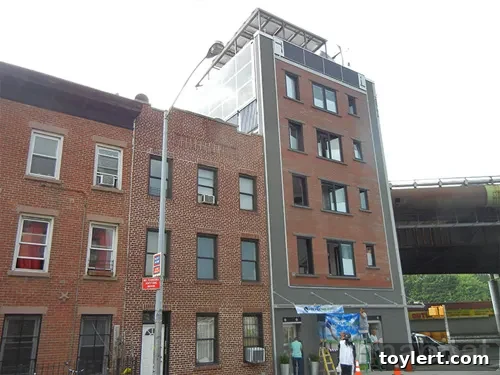
The Delta: Unveiling New York City’s Pioneering Self-Powered House in Carroll Gardens
A landmark achievement in sustainable urban development has emerged in the vibrant landscape of Brooklyn. New York City proudly introduces its first entirely self-powered house, aptly named “The Delta,” located at the prominent corner of Hamilton Avenue and 9th Street in the picturesque Carroll Gardens neighborhood. This revolutionary structure, meticulously designed to operate completely off the energy grid, is not merely a residential property; it’s a living testament to the future of eco-conscious urban living and a beacon of innovation that promises to redefine how we conceive energy consumption in densely populated areas.
Developed by the visionary firm Voltaic Solaire, The Delta is poised to open its doors to guests, functioning as a unique Bed & Breakfast starting next month. This offers an unparalleled opportunity for visitors to experience firsthand the comforts and advantages of living in a net-zero energy environment. Whether seeking a cozy retreat or an expansive urban escape, guests can choose from thoughtfully designed accommodations: the intimate studio apartment begins at an accessible $150 per day, while the spacious triplex offers an elevated experience at $275 per day. Each unit within The Delta is a showcase of intelligent design, featuring vibrant colored tile work, ingenious space-saving furniture such as elegant Murphy beds, integrated built-in storage solutions, and state-of-the-art energy-efficient appliances. Every detail has been considered to maximize both comfort and sustainability.
The Visionaries Behind The Delta: Voltaic Solaire’s Commitment to Green Development
The realization of The Delta marks a significant milestone for Voltaic Solaire, a company at the forefront of sustainable building practices. As previously highlighted by various urban development reports, Voltaic Solaire is simultaneously advancing another groundbreaking solar-powered building project in Park Slope, further cementing their reputation as pioneers in the field. The ethos driving their work is eloquently articulated by Ron Faia, Voltaic Solaire’s chief financial officer. “If we can develop a building that powers itself, on an unusual triangular lot in one of the most code-heavy cities in the world, our hope is to serve as a model, and inspire other developers around the world to do the same,” Faia stated. This powerful declaration underscores the immense challenges overcome and the profound aspirations embedded within The Delta project. It’s a bold statement that sustainable architecture can thrive even amidst complex urban planning and stringent regulations, offering a scalable blueprint for global green development.
Carroll Gardens: The Perfect Setting for a Sustainable Landmark
Nestled in the heart of Carroll Gardens, The Delta benefits from its location in one of Brooklyn’s most charming and community-oriented neighborhoods. Known for its tree-lined streets, historic brownstones, and vibrant local businesses, Carroll Gardens provides an idyllic backdrop for a project of this magnitude. The strategic placement at the intersection of Hamilton Avenue and 9th Street offers excellent connectivity while integrating seamlessly into the existing urban fabric. This neighborhood, with its strong sense of identity and appreciation for quality of life, serves as an ideal living laboratory for demonstrating the viability and desirability of net-zero energy homes. Residents and visitors alike can enjoy the blend of historic charm and modern innovation that The Delta brings to the area, further enhancing Carroll Gardens’ appeal as a forward-thinking community.
The Technology Driving Net-Zero Energy Living
At the core of The Delta’s self-powered capability lies a sophisticated array of renewable energy technologies and energy-saving strategies. While specific technical details are proprietary to Voltaic Solaire, the principles of net-zero energy buildings typically involve several key components. High-efficiency solar photovoltaic (PV) panels, strategically positioned to maximize sunlight capture, are undoubtedly the primary source of electricity. These panels convert sunlight directly into usable energy, significantly reducing reliance on the conventional power grid.
Beyond generation, effective energy storage systems are crucial. Advanced battery solutions store excess solar energy produced during peak sunlight hours, ensuring a continuous supply of power even during the night or on cloudy days. This eliminates intermittency issues and guarantees true energy independence. Furthermore, the building’s design incorporates passive solar principles, superior insulation, high-performance windows, and airtight construction to minimize heat loss in winter and heat gain in summer. Coupled with energy recovery ventilation (ERV) systems and smart home technologies that optimize lighting, heating, and cooling, The Delta achieves an exceptionally low energy footprint, often producing more energy than it consumes over a year.
Thoughtful Interiors: Marrying Aesthetics with Efficiency
The interior design of The Delta is a harmonious blend of modern aesthetics and pragmatic functionality, reflecting a deep understanding of urban living and sustainable principles. The use of “colored tile” throughout the apartments is not merely a design choice for visual appeal; it likely contributes to the longevity and ease of maintenance of the spaces, common features in eco-friendly building materials. These durable surfaces can withstand daily wear and tear, reducing the need for frequent renovations and replacements, thereby minimizing waste and resource consumption.
“Space-saving furniture such as Murphy beds and built-in storage” addresses a critical challenge in urban environments where space is at a premium. Murphy beds elegantly fold away, transforming bedrooms into versatile living areas during the day, maximizing the utility of smaller footprints without sacrificing comfort. Integrated storage solutions, such as custom cabinetry and hidden compartments, keep living spaces uncluttered and organized, promoting a sense of calm and efficiency. This intelligent use of space not only enhances the living experience but also exemplifies sustainable design by making the most of every square foot, reducing the need for larger, resource-intensive structures.
Crucially, the “energy-efficient appliances” are integral to The Delta’s net-zero mission. From refrigerators and dishwashers to laundry machines and HVAC systems, every appliance is carefully selected for its minimal energy consumption. This directly translates into lower operational costs for the B&B and a reduced environmental impact, completing the cycle of sustainable living from energy generation to daily usage.
The Delta as a Unique Bed & Breakfast Experience
Operating as a B&B, The Delta offers more than just accommodation; it provides an immersive educational experience in sustainable living. Guests are not only enjoying the comforts of a thoughtfully designed space but are also directly participating in and observing the benefits of net-zero energy operations. This hands-on exposure can inspire individuals to adopt more sustainable practices in their own lives, making their stay a meaningful contribution to environmental awareness.
The tiered pricing structure—studio at $150 per day and triplex at $275 per day—makes this unique experience accessible to a range of travelers. Whether a solo adventurer, a couple seeking a romantic getaway, or a small family needing more space, The Delta caters to diverse needs while upholding its core values of sustainability. It represents a new paradigm for hospitality, where luxury and environmental responsibility coexist seamlessly. Bookings are expected to fill quickly as travelers increasingly seek out eco-conscious and authentic experiences.
Inspiring a Greener Future: The Delta’s Broad Impact
Ron Faia’s vision for The Delta extending beyond its physical boundaries is already taking root. This self-powered house serves as a potent demonstration project, proving that sustainable building is not just an aspirational concept but a tangible, achievable reality, even within the complex regulatory and logistical landscape of New York City. The challenges of building on an “unusual triangular lot” further highlight Voltaic Solaire’s ingenuity and commitment, showcasing how innovative design can overcome site-specific constraints.
The ripple effect of such a project is immense. The Delta can inspire other developers, architects, and policymakers globally to reconsider conventional building practices. It provides a real-world case study for the economic viability, environmental benefits, and enhanced quality of life offered by net-zero energy structures. As urban populations continue to grow, the demand for resilient, sustainable, and energy-independent buildings will only intensify. The Delta stands as a critical benchmark, encouraging a wider adoption of green building standards and accelerating the transition towards a more sustainable urban future. Its success in NYC, a city renowned for its stringent building codes and high costs, sends a clear message that sustainable development is not just possible, but essential, anywhere in the world.
Beyond Energy: The Holistic Benefits of Sustainable Architecture
The advantages of buildings like The Delta extend far beyond energy independence. Sustainable architecture inherently fosters healthier indoor environments. Materials chosen for their low volatile organic compound (VOC) emissions, combined with advanced ventilation systems, contribute to superior indoor air quality, reducing respiratory issues and improving overall well-being for occupants. The integration of natural light, often a byproduct of thoughtful passive design, also enhances mood and productivity.
Economically, self-powered homes offer significant long-term savings. While the initial investment might be higher for advanced solar and energy storage systems, these costs are typically offset over time by drastically reduced or even eliminated electricity bills. This financial resilience is particularly appealing in an era of fluctuating energy prices, providing homeowners and operators with greater stability and predictability. Furthermore, properties with robust sustainability features often command higher market values and attract environmentally conscious tenants or buyers, offering a competitive edge in the real estate market.
The Delta in Carroll Gardens is more than just a house; it is a profound statement. It signifies a pivotal moment in New York City’s journey towards a greener, more sustainable future, challenging conventional wisdom and setting a new standard for urban development. Through the pioneering efforts of Voltaic Solaire, this self-powered B&B invites us all to imagine, and ultimately live in, a world where our built environment harmonizes with nature, providing comfort, efficiency, and a truly independent energy future.