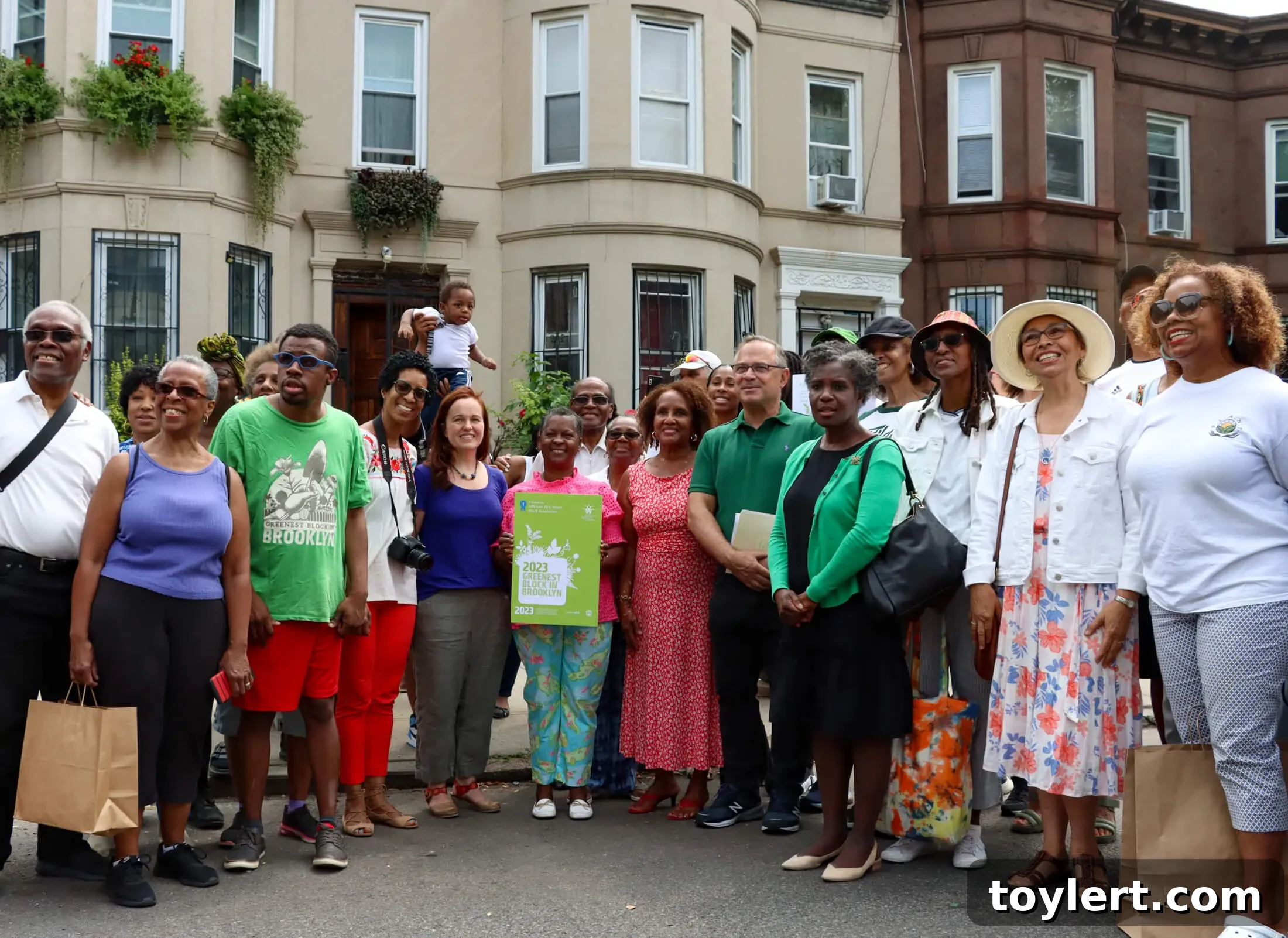
Rich With Tropical Plants, Flatbush’s East 25th Street Named Greenest Block in Brooklyn
Nestled within the vibrant heart of Flatbush, a specific stretch of East 25th Street has once again captured the admiration of Brooklyn, earning the prestigious title of “Greenest Block in Brooklyn” for the current year. This remarkable achievement, bestowed upon the block between Clarendon Road and Avenue D, is no mere coincidence. A stroll along its sidewalks immediately reveals a breathtaking display of lush front gardens, an abundance of tropical flowers, meticulously manicured hedges, and a comforting canopy of leafy overhead trees. It’s an urban oasis, a testament to dedicated community effort and a vibrant example of what can be achieved when residents unite in a shared vision for beauty and environmental stewardship.
The annual Greenest Block in Brooklyn competition, spearheaded by the Brooklyn Botanic Garden in partnership with the Brooklyn Borough President, has been a cornerstone of civic beautification for decades. It’s more than just a contest; it’s a celebration of community pride, horticultural excellence, and the transformative power of urban greenery. Each year, neighborhoods across Brooklyn vie for this coveted award, showcasing their commitment to creating healthier, more beautiful, and more sustainable streetscapes. The judging criteria are rigorous, encompassing factors such as the diversity and health of plant life, maintenance practices, creativity in garden design, use of sustainable techniques, and, crucially, the level of resident involvement and collaboration.
East 25th Street: A Verdant Masterpiece in Flatbush
What sets East 25th Street apart as Brooklyn’s greenest gem? The answer lies in a harmonious blend of botanical diversity, meticulous care, and unwavering resident commitment. The block is famed for its rich tapestry of tropical plants, an unexpected flourish in the urban landscape. Visitors are greeted by a vibrant palette of exotic blooms—hibiscus in fiery reds and oranges, the dramatic foliage of elephant ears, graceful canna lilies, and sometimes even smaller palms or bromeliads, all thriving under the watchful care of their cultivators. These aren’t just random plantings; they are often carefully chosen species that add a unique, almost resort-like ambiance to the street, transporting passersby from the bustling city to a tranquil, verdant paradise.
Beyond the tropical allure, the street boasts an impressive array of traditional garden elements. From perfectly shaped boxwood hedges to fragrant rose bushes and hardy perennials, each front garden contributes to a collective masterpiece. The integration of native plants also plays a vital role, supporting local ecosystems and providing habitats for essential pollinators like bees and butterflies. This thoughtful blend of exotic and indigenous flora creates a dynamic and resilient landscape that is both visually stunning and ecologically responsible.
The Art of Sustained Urban Horticulture
Achieving and maintaining such a high standard of greenery in an urban environment requires significant dedication. The term “manicured hedges” only hints at the hours of pruning, weeding, mulching, and watering that residents undertake. Every plant appears to be meticulously tended, reflecting a deep passion for gardening and a commitment to horticultural excellence. Soil health is paramount, with many residents likely employing organic composting and soil enrichment techniques to ensure their plants receive optimal nutrients. Water conservation is also a key consideration, especially for tropical species that require consistent moisture. Smart irrigation practices, rainwater harvesting, and drought-tolerant plant choices likely contribute to the block’s sustainable approach.
Moreover, the presence of “leafy overhead trees” provides essential shade, creating a cooler microclimate that benefits both residents and plants. These mature trees, often lining the street, not only enhance the aesthetic appeal but also contribute significantly to improved air quality, noise reduction, and a sense of natural tranquility. They form a crucial part of the block’s green infrastructure, demonstrating a holistic approach to urban landscaping that extends beyond individual garden plots.
Community as the Root of Success
While individual efforts are undoubtedly impressive, the true secret to East 25th Street’s success lies in its vibrant community spirit. This isn’t just a collection of beautiful gardens; it’s a testament to collective action and shared vision. Residents often share gardening tips, exchange cuttings, and offer assistance to neighbors, fostering a strong sense of camaraderie. Block association meetings or informal gatherings might revolve around seasonal planting schedules, pest management strategies, or planning for the next blooming spectacle. This collaborative spirit ensures that the entire block maintains a consistent standard of beauty and care, preventing any single garden from detracting from the overall appeal.
The pride residents take in their block is palpable. Winning the Greenest Block in Brooklyn award is not just an individual honor but a collective triumph that strengthens neighborhood bonds and instills a deeper sense of belonging. This shared achievement often motivates residents to continue their efforts, inspiring them to explore new planting schemes, sustainable practices, and innovative garden designs year after year. It’s a self-perpetuating cycle of beautification driven by passion and community engagement.
Beyond Aesthetics: The Multifaceted Benefits of Urban Greenery
The lush landscapes of East 25th Street offer far more than just visual pleasure. Urban greenery, particularly at this scale, provides a myriad of environmental, social, and even economic benefits that profoundly impact the quality of life for residents and the wider Flatbush community. Environmentally, these gardens act as vital green lungs for the city. Plants absorb carbon dioxide and release oxygen, contributing to cleaner air. They also filter pollutants and particulate matter, improving respiratory health for those living nearby. The extensive foliage helps mitigate the urban heat island effect, keeping the block cooler during scorching summer months and reducing energy consumption for air conditioning.
Furthermore, urban gardens support biodiversity, providing essential habitats and food sources for local wildlife, including birds and crucial pollinators like bees and butterflies. Thoughtful landscaping also aids in stormwater management, as plants and soil absorb rainfall, reducing runoff into overloaded sewer systems and minimizing the risk of localized flooding.
Socially, green spaces are known to reduce stress and improve mental well-being. Walking through a beautifully maintained, verdant street can have a calming and uplifting effect. The collaborative effort involved in creating and maintaining the Greenest Block fosters stronger community bonds, encouraging neighbors to interact, share, and support each other. This increased social cohesion often leads to safer, more vibrant neighborhoods where residents feel a greater sense of ownership and responsibility. Economically, well-maintained green spaces can enhance property values and make a neighborhood more attractive to prospective residents and visitors, potentially boosting local commerce.
Flatbush’s Commitment to Green Living
East 25th Street’s recognition also shines a spotlight on the broader Flatbush neighborhood, a diverse and historic area of Brooklyn known for its beautiful architecture and established residential communities. While Flatbush embraces its urban character, pockets of intense greenery like this block demonstrate a deep-seated commitment among its residents to nurture nature within the city. It underscores a growing trend across Brooklyn and other metropolitan areas to prioritize sustainable living and integrate natural elements into the urban fabric. This dedication to greening exemplifies a modern approach to city living where environmental consciousness and community well-being are paramount.
Inspiring Other Blocks: Cultivating Your Own Green Haven
The success of East 25th Street serves as a powerful inspiration for other blocks and communities aspiring to enhance their own streetscapes. While winning an award might seem daunting, the journey begins with small, consistent steps. Here are a few tips inspired by Brooklyn’s Greenest Block:
- Start Small, Think Big: Even a single window box or a small container garden can make a difference. Encourage neighbors to join in, even if it’s just with one plant each.
- Choose Wisely: Select plants that are well-suited to your local climate and light conditions. Incorporate native species for ecological benefits and resilience. Consider drought-tolerant options for water conservation.
- Community Collaboration: Form a block association or a gardening committee. Organize planting days, shared workshops, or simply swap gardening tips and tools. A collective effort yields the best results.
- Sustainable Practices: Embrace composting to enrich your soil naturally. Look into rainwater harvesting for irrigation. Avoid chemical pesticides and opt for organic solutions to protect local wildlife.
- Consistent Care: Regular watering, pruning, and weeding are crucial. A well-maintained garden is a healthy and beautiful garden.
- Add Creative Touches: Don’t be afraid to experiment with different plant textures, colors, and heights. Consider garden art, benches, or decorative lighting to enhance the appeal.
A Lasting Legacy of Green
Flatbush’s East 25th Street stands as a vibrant testament to the power of community, dedication, and a love for nature. Its recognition as Brooklyn’s Greenest Block is not just an award for a single year but a symbol of ongoing commitment and a beacon of inspiration for urban greening initiatives everywhere. It reminds us that even in the densest urban environments, with passion and collective effort, we can transform concrete into captivating landscapes, fostering healthier environments, stronger communities, and a more beautiful Brooklyn for all.