Navigating Tomorrow: The Future of Transportation in Brooklyn
Brooklyn, a borough pulsating with life, culture, and innovation, is renowned for its vibrant neighborhoods and ever-growing population. From the bustling streets of Williamsburg to the serene avenues of Bay Ridge, millions rely on a diverse array of transportation options daily. Whether it’s the iconic subway, ubiquitous buses, scenic bike paths, private cars, expanding ferry services, or simply walking, getting around Brooklyn today offers a tapestry of choices. However, as urban landscapes evolve and the imperative for sustainable, efficient, and accessible transit intensifies, a critical question arises: What will transportation in Brooklyn look like a decade from now? Let’s embark on a visionary journey to explore the exciting possibilities and transformative projects shaping the future of mobility in this dynamic borough, aiming for a more connected and efficient Brooklyn.
Embracing Innovation: The Need for Forward-Thinking Transit
The challenges facing Brooklyn’s transportation network are multifaceted. Rapid population growth strains existing infrastructure, daily commutes can be lengthy and frustrating, and environmental concerns demand a significant shift towards greener alternatives. The sheer volume of commuters and the increasing demand for seamless travel necessitate a proactive approach, fostering innovation and significant investment in advanced transit solutions. The goal is not merely to alleviate current bottlenecks but to create a seamless, integrated, and sustainable mobility ecosystem that serves all Brooklynites effectively, making daily life easier and more enjoyable.
Future-Forward Projects: Pioneering New Connections Across Brooklyn
Several ambitious projects and conceptual designs are currently being discussed or are in various stages of planning, each promising to redefine how residents and visitors experience Brooklyn. These initiatives aim to bridge geographical divides, enhance intra-borough and inter-borough connectivity, and introduce novel modes of transport, all while considering the unique character of Brooklyn’s diverse communities.
The East River Skyway: A Vision in the Sky for NYC Transportation
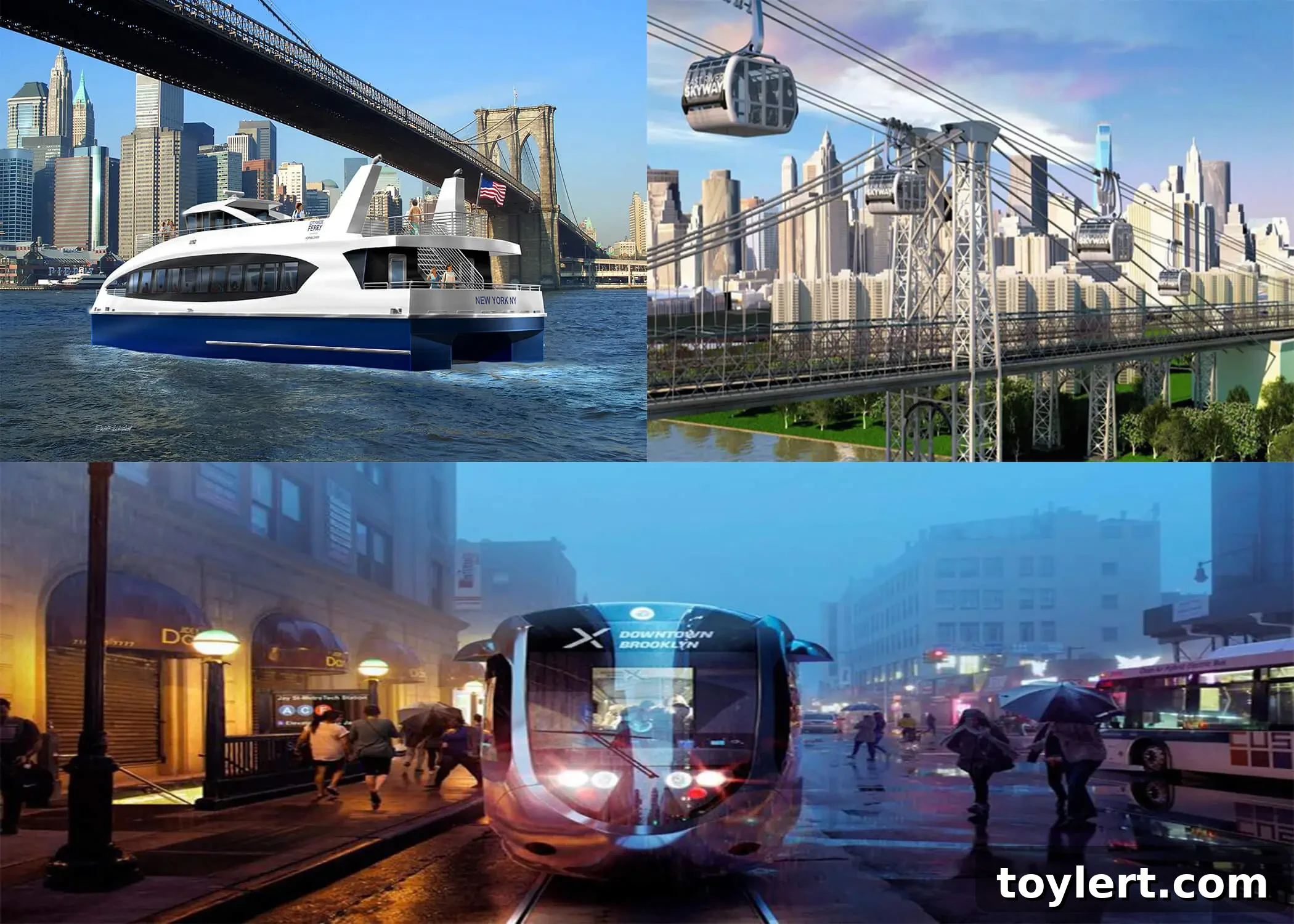
One of the most imaginative and frequently discussed proposals for New York City’s future transportation is the East River Skyway. This ambitious project envisions a modern aerial gondola system, akin to ski lifts but specifically adapted for high-capacity urban transit, soaring gracefully above the East River. Connecting key points in Brooklyn, such as strategic hubs in Williamsburg, Dumbo, and Downtown Brooklyn, directly to Manhattan, the Skyway offers a revolutionary alternative to overcrowded subways and traffic-clogged bridges.
Imagine gliding effortlessly across the East River, enjoying breathtaking panoramic views of the Manhattan skyline, the Brooklyn Bridge, and the vibrant Brooklyn waterfront, all while effortlessly bypassing surface congestion. Proponents argue that the Skyway could significantly reduce commute times for thousands of daily travelers, providing a fast, reliable, and environmentally friendly mode of transport. Its potential benefits extend beyond mere travel time; it could unlock new development opportunities in previously less accessible areas, boost local economies by increasing the flow of people, and undoubtedly become a unique and iconic tourist attraction in its own right, offering unparalleled vistas of the city.
The Skyway’s design emphasizes efficiency and sustainability. Electric-powered gondolas would operate quietly, contributing zero direct emissions to the city’s air, aligning with Brooklyn’s commitment to environmental stewardship. With a relatively small footprint required for its stations compared to traditional rail infrastructure, it presents a compelling solution for dense urban environments where space is at a premium. While significant challenges such as securing substantial funding, navigating complex regulatory approvals, addressing potential visual impact concerns, and ensuring broad public acceptance remain, the East River Skyway represents a bold and innovative step towards a multi-modal future where the sky itself becomes a viable and attractive transportation corridor for Brooklyn residents.
Expanding and Modernizing Brooklyn’s Subway System
While new technologies like the Skyway capture headlines, the backbone of Brooklyn’s transportation will undoubtedly remain its extensive subway system. The next decade is expected to bring significant investments in modernization, aimed at improving reliability, increasing capacity, and enhancing overall accessibility. These crucial updates will ensure the subway continues to be the most efficient way to travel for millions. Projects might include:
- Signal Upgrades: Implementing advanced Communication-Based Train Control (CBTC) systems across more lines, allowing trains to run closer together safely, dramatically increasing capacity, and significantly reducing frustrating delays.
- Station Enhancements: Modernizing aging subway stations with new, brighter lighting, real-time digital information displays, improved wayfinding, and critical accessibility features like elevators and ramps to comply with ADA standards, making stations welcoming for everyone.
- Potential New Lines or Extensions: While ambitious and requiring long-term planning, discussions around extending existing lines or creating new inter-borough connections continue, driven by evolving population centers and the pressing need to relieve pressure on heavily used routes like the L and F lines.
- Automated Train Operations: Exploring the possibility of automated train operations on certain lines, particularly during off-peak hours or on shuttle services, further enhancing efficiency, safety, and operational flexibility.
These comprehensive enhancements are crucial for supporting Brooklyn’s continued growth and ensuring that the subway remains a cornerstone of efficient, high-capacity urban transit, adapting to the needs of a modern city.
Innovations in Bus and Surface Transportation for Brooklyn
Buses serve as a vital link for countless Brooklyn neighborhoods, especially those not directly served by the subway network, providing crucial last-mile connections and serving unique local routes. The future holds immense promise for significant improvements in bus services, transforming them into a more rapid and enjoyable mode of transport:
- Bus Rapid Transit (BRT): Expanding dedicated bus lanes, implementing prioritized traffic signals, and introducing off-board fare collection to create robust BRT corridors that mimic the speed and efficiency of light rail. This would drastically cut travel times and improve schedule reliability, making buses a competitive option.
- Electric Bus Fleets: A complete and accelerated transition to an all-electric bus fleet, significantly reducing noise pollution, improving local air quality, and contributing positively to a healthier urban environment across Brooklyn.
- Smart Bus Shelters: Incorporating real-time tracking information, interactive digital screens, secure charging stations, and even free Wi-Fi into modern bus shelters to dramatically enhance the passenger waiting experience.
- On-Demand Microtransit: Piloting and expanding flexible, on-demand microtransit services in less dense areas or during off-peak hours, utilizing smaller, more nimble vehicles to efficiently connect residents to major transit hubs and local destinations.
These innovative initiatives aim to make bus travel more attractive, efficient, and environmentally friendly, ensuring it continues to play a central role in Brooklyn’s diverse transportation portfolio.
The Rise of Active Transportation: Cycling and Walking in Brooklyn
Brooklyn has long been at the forefront of the active transportation movement, with its vibrant cycling culture and pedestrian-friendly streets. This positive trend is set to accelerate further in the coming decade. The future will likely see:
- Expanded Protected Bike Lane Networks: A significant increase in the mileage of fully protected, separated bike lanes, creating safer, more continuous, and more appealing routes for cyclists across the entire borough and connecting seamlessly to Manhattan.
- Enhanced Bike Share Programs: The evolution and expansion of services like Citi Bike, potentially including electric bikes as a standard and widely available option, expanding fleet size, and strategically increasing the density of docking stations in underserved areas.
- Pedestrian-Priority Zones: More areas designated as pedestrian-only or pedestrian-priority, particularly around bustling commercial districts, educational institutions, and major transit hubs, making walking safer, more enjoyable, and encouraging vibrant public spaces.
- Greenways and Waterfront Paths: Further development and completion of scenic greenways along the Brooklyn waterfront and within its many beautiful parks, offering both recreational and increasingly viable commuter routes that combine functionality with natural beauty.
Fostering and investing in active transport modes not only promotes public health and well-being but also significantly reduces traffic congestion and carbon emissions, contributing to a greener and more livable Brooklyn.
Harnessing the Waterways: Enhanced Ferry Services for NYC
Brooklyn’s extensive waterfront along the East River and New York Harbor offers a natural and underutilized advantage for waterborne transportation. The NYC Ferry system has already proven immensely popular since its inception, and its strategic expansion is highly anticipated for the future:
- New Ferry Routes and Stops: Introducing additional routes that connect underserved coastal neighborhoods, like southern Brooklyn areas, to key job centers in Manhattan and other boroughs, providing vital alternative pathways.
- Increased Frequency and Capacity: Upgrading the existing ferry fleet with larger, more efficient, and potentially greener vessels, and significantly increasing service frequency, especially during peak commuter hours, to meet rising demand.
- Integrated Ticketing: Seamless integration of ferry fares with the MTA’s OMNY payment systems for a unified, convenient, and truly public transit experience across all modes.
Water transit offers a scenic, often less congested, and inherently unique alternative for inter-borough travel, contributing to a more diversified and resilient transportation network for Brooklyn.
Emerging Technologies and Smart Mobility Hubs in Brooklyn
Beyond traditional and near-future modes, Brooklyn could embrace even more futuristic and integrated concepts to enhance urban mobility:
- Autonomous Vehicles (AVs): While widespread personal AV ownership might be further off, pilot programs for autonomous shuttles in controlled environments or dedicated routes could emerge, particularly for efficient first-mile/last-mile connections to transit hubs.
- Micro-Mobility Integration: Better integration of electric scooters, advanced e-bikes, and other personal micro-mobility options with public transit networks, providing convenient and flexible solutions for short to medium distances within neighborhoods.
- Mobility Hubs: Developing sophisticated, integrated transportation hubs strategically located where various modes converge – subway, bus, ferry, bike-share, and even ride-share pickups – offering seamless transfers and amenities like charging stations, secure lockers, and local retail. These hubs would serve as vital nerve centers for Brooklyn’s future mobility network, optimizing efficiency and user experience.
These innovations highlight a commitment to smart urban planning and leverage technology to create a truly connected Brooklyn.
Challenges and the Path Forward for Brooklyn’s Transit Future
Realizing this ambitious vision for Brooklyn’s transportation future comes with its share of significant challenges. Securing adequate and sustained funding from federal, state, and local sources is paramount, requiring political will and sustained investment. Navigating complex regulatory frameworks, gaining broad public acceptance for new technologies and infrastructure projects, and addressing potential equity concerns to ensure all communities benefit will require robust planning, transparent communication, and extensive community engagement. Furthermore, ensuring that all new developments are resilient to the impacts of climate change and consistently contribute to a more sustainable urban environment is a critical and ongoing consideration.
However, the opportunities far outweigh the hurdles. A modernized, integrated, and sustainable transportation system will not only dramatically improve the daily lives of millions of Brooklyn residents but also enhance economic vitality, foster stronger community connections, and solidify Brooklyn’s reputation as a forward-thinking, innovative, and highly livable city on the global stage.
Conclusion: A Connected, Sustainable, and Accessible Brooklyn
The next decade promises a transformative era for transportation in Brooklyn. From the innovative East River Skyway offering breathtaking aerial commutes to an expanded and thoroughly modernized subway system, and from ubiquitous electric buses traversing dedicated rapid transit corridors to thriving networks of protected bike lanes and enhanced ferry services connecting diverse waterfront communities, the borough is poised for a significant leap forward in mobility. By embracing cutting-edge technologies, prioritizing environmental sustainability, and fostering comprehensive, community-focused planning, Brooklyn can forge a transportation future that is efficient, equitable, accessible, and truly serves its dynamic and growing population. The journey towards a more connected, greener, and ultimately more enjoyable Brooklyn is already underway, promising a smoother, more sustainable, and enriching ride for everyone who calls this vibrant borough home or chooses to visit its iconic neighborhoods.