The Enduring Allure of the Bathroom: From Ancient Innovation to Modern Sanctuary
Editor’s note: This article expands upon an original series published in 2012, delving deeper into the fascinating evolution of the bathroom. For historical context, you can explore the foundational articles: Part 1, Part 2, Part 3, Part 4, and Part 5.
Few rooms hold as much significance and inspire as much investment in a home as the bathroom. Often second only to the kitchen in terms of renovation budgets and homeowner desires, the modern bathroom has transcended its purely functional roots to become a true sanctuary. Today, 21st-century homeowners across America, and particularly in historic areas like Brooklyn, deeply cherish their bathrooms. We don’t just want one; we desire multiple: full baths, half baths, convenient powder rooms, luxurious en-suite baths, expansive master baths, and even indulgent steam rooms and saunas. This pervasive appreciation for personal hygiene and comfort is, surprisingly, a relatively recent phenomenon in the grand sweep of human history, especially considering that sophisticated plumbed bathrooms existed millennia ago.
The Modern Bathroom: A Haven of Comfort and Style
The contemporary bathroom is more than just a utility space; it’s a personal retreat, a place for rejuvenation and self-care. This shift in perception has fueled an explosion in modern bathroom design, making bathroom renovations one of the most impactful home improvement projects. Homeowners are increasingly seeking luxury bathroom features, from spa-like showers with multiple heads and integrated sound systems to freestanding soaking tubs and smart toilets. The desire for both aesthetic appeal and optimal functionality drives these trends, impacting home value significantly.
Each type of bathroom serves a distinct purpose, reflecting our varied needs and lifestyles. A master bathroom, often connected to the primary bedroom, is typically the largest and most appointed, designed for comfort and privacy. En-suite bathrooms offer convenience and a touch of luxury in secondary bedrooms. Full baths cater to general family needs, while half baths and powder rooms provide essential facilities for guests without occupying too much space. This diverse array highlights how deeply integrated modern sanitation and personal comfort are into our daily lives, a stark contrast to much of history.
A Journey Through Time: Ancient Plumbing Marvels
It’s truly remarkable to consider that sophisticated plumbed bathrooms, complete with latrines and drainage systems, were a reality in the ancient world. Civilizations like the Indus Valley (Mohenjo-Daro and Harappa, circa 2500 BCE) showcased incredibly advanced urban planning, including private bathrooms in homes with complex sewage and water supply systems. The Minoans of Crete also had flush toilets and sophisticated drainage around the same period.
Later, the Romans were legendary for their public baths (thermae), which were not merely places for bathing but vibrant social centers. These elaborate complexes featured heated pools, cold plunges, steam rooms, and private latrines, all fed by intricate aqueduct systems and drained by large sewers like the Cloaca Maxima. Roman engineering prowess ensured a level of ancient plumbing and sanitation history that would not be paralleled for over a thousand years. The knowledge and infrastructure required for such systems were monumental, yet with the fall of these empires, much of this invaluable expertise was tragically lost or abandoned.
The Long Dark Ages of Sanitation: A Stagnant Era
Following the decline of the Roman Empire, Europe plunged into centuries of rudimentary, often nonexistent, sanitation practices. For a significant period, from late antiquity through the medieval and early modern eras, the concept of indoor plumbing virtually vanished. People relied on chamber pots, which were frequently emptied into streets or rivers, leading to appallingly unsanitary conditions. Public health suffered immensely, with cities becoming breeding grounds for diseases.
This period, characterized by a lack of proper waste disposal, contributed significantly to widespread epidemics like the Black Death. The understanding of hygiene was limited, and the connection between filth and disease was not widely recognized until much later. The notion of a dedicated, private space for personal hygiene, let alone an integrated plumbing system within a home, was largely alien. This prolonged hiatus in medieval sanitation practices underscores just how revolutionary the return of the plumbed bathroom would be.
The Victorian Revival: Plumbing the Path to Modernity (Post-1850s)
Incredibly, after millennia of dormancy, the plumbed indoor bathroom did not make a widespread return to Western homes until the mid-19th century, around the 1850s. This resurgence was not a sudden burst of innovation but rather the culmination of several crucial factors:
- The Industrial Revolution: Advances in manufacturing allowed for mass production of pipes, fixtures, and ceramics, making plumbing components more accessible and affordable.
- Urbanization and Public Health Crises: Rapid growth of cities like London and New York led to unprecedented population density and dire public health conditions. Epidemics of cholera and typhoid, often linked to contaminated water and poor sanitation, spurred public demand and governmental action for reform.
- Emergence of Germ Theory: Although still rudimentary, the growing understanding that disease was caused by microscopic organisms (germs) rather than “bad air” (miasma theory) provided a scientific basis for improving sanitation and hygiene.
- Technological Breakthroughs: Key innovations like the U-bend trap (patented by Alexander Cummings in 1775 and improved by Joseph Bramah in 1778) and later the s-trap by Thomas Crapper in the 1880s, effectively sealed off sewer gases, making indoor toilets safer and more practical. Cast iron pipes replaced less durable materials, improving longevity and reliability.
The Victorian bathroom history began with basic, functional installations, often tucked away in less prominent parts of the house due to lingering social perceptions about modesty and waste. Early Victorian plumbing was a marvel of its time, transforming homes from potential disease vectors into havens of cleanliness. This period marked the true birth of modern residential sanitation, profoundly impacting public health and daily life.
Evolving Elegance: The Victorian Bathroom Aesthetic (1850s-Early 1900s)
As the 19th century progressed, the bathroom evolved from a purely utilitarian space into one that reflected the era’s decorative sensibilities. While initial installations were simple, the later Victorian design embraced ornamentation and quality materials. Homeowners, particularly those in thriving urban centers like Brooklyn, began to view the bathroom as a statement of wealth and modernity.
Key features of the developing Victorian bathroom included:
- Fixtures: The iconic clawfoot tub became a popular centerpiece, often made of cast iron with an enamel finish, offering a luxurious soaking experience. Pedestal sinks emerged, replacing simpler washstands. Toilets, or “water closets,” ranged from basic low-tank models to more elaborate high-tank versions with pull chains, often encased in decorative wood.
- Materials: Porcelain, ceramic tiles, and even marble were used for surfaces, providing durability and an air of sophistication. Brass fittings became common, often polished to a high sheen.
- Integration into Homes: Initially, bathrooms might have been conversions of existing rooms or additions. However, as plumbing became more standardized, new homes were designed with dedicated bathroom spaces. The development of municipal water and sewer systems in cities like Brooklyn was crucial, providing reliable access to clean water and efficient waste removal, making widespread indoor plumbing feasible.
The historic bathrooms of this era, especially those preserved in Brooklyn architecture, offer a fascinating glimpse into a period of rapid technological and social change. They demonstrate a balance between newfound functionality and the ornate aesthetics characteristic of the Victorian era, contributing significantly to the Victorian charm we still admire today.
Brooklyn’s Brownstones and the Bathroom Revolution
Brooklyn, with its rich tapestry of historic homes, particularly the iconic brownstones, played a pivotal role in the adoption and evolution of the indoor bathroom in America. As these elegant townhouses were built or updated during the late 19th and early 20th centuries, integrating modern plumbing became a crucial aspect of their design and appeal.
Owners of Brooklyn brownstone bathrooms often faced unique challenges and opportunities. Many older brownstones were initially built without dedicated indoor bathrooms, requiring creative retrofitting as plumbing technology advanced. This led to compact yet ingeniously designed spaces, often utilizing existing nooks or small extensions. The preservation of original fixtures, such as mosaic tile floors, wainscoting, and even early porcelain sinks, is a testament to the enduring quality and design of these rooms.
Historic home renovation in Brooklyn frequently involves a delicate balance: upgrading plumbing systems to meet modern standards while retaining the period-appropriate aesthetic. Restoring a Victorian bathroom in a brownstone today means meticulous attention to detail, sourcing reproduction fixtures, or carefully preserving original elements to honor the home’s heritage. This ensures that these spaces not only provide contemporary comfort but also tell a story of technological progress and evolving domestic life, preserving the unique Brooklyn Victorian charm.
Beyond Victorian: The 20th Century and Modernization
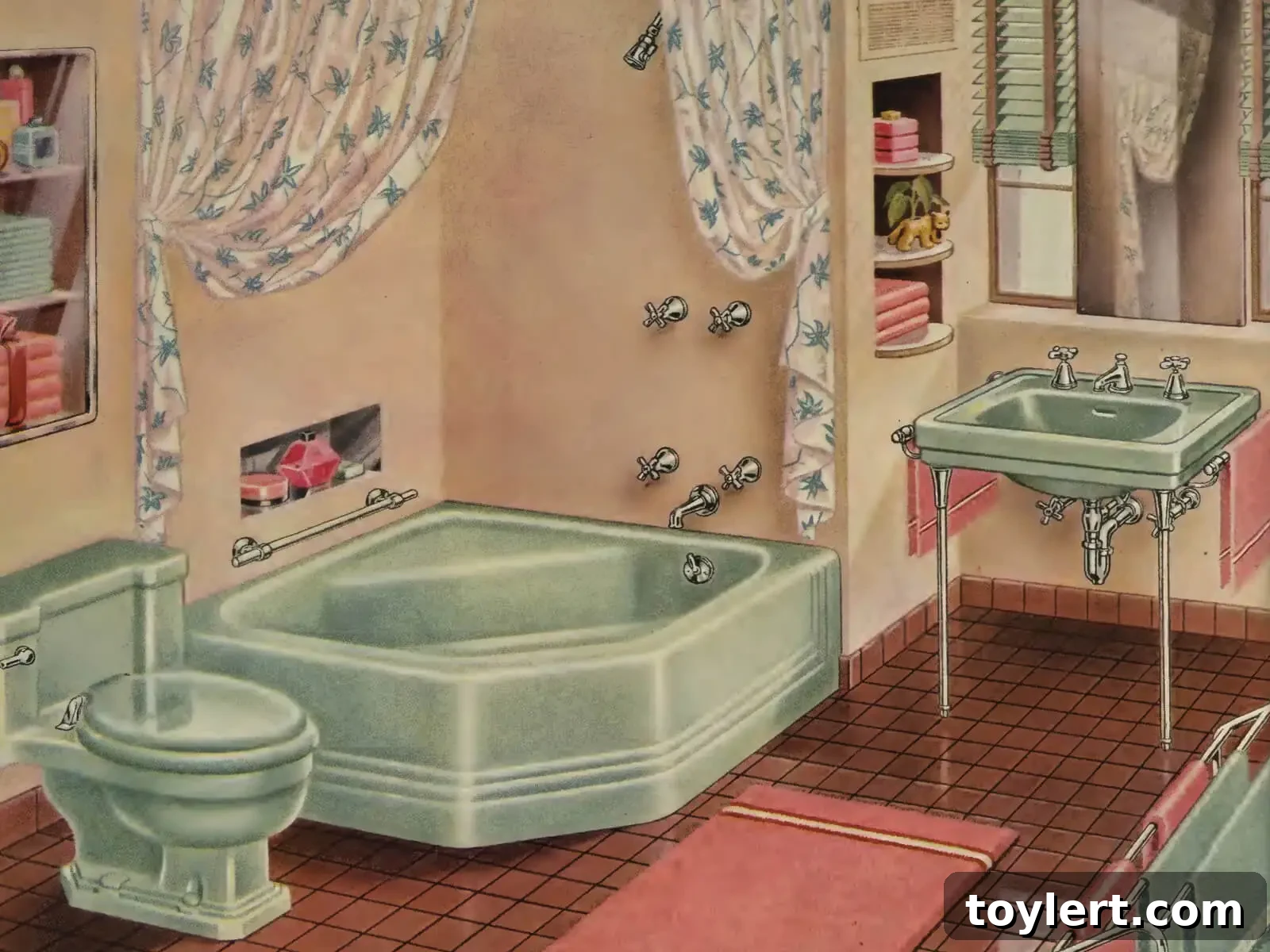
The 20th century saw the bathroom continue its rapid evolution. From the early 1900s onwards, the focus shifted towards greater efficiency, standardization, and a streamlined aesthetic. Built-in fixtures replaced freestanding pieces, showers became increasingly common, and materials like ceramic tile and chrome gained popularity for their hygiene and ease of cleaning. The mid-century modern era brought bold colors and sleek lines, while subsequent decades introduced more compact designs for smaller homes and apartments.
Today’s modern bathroom trends emphasize smart technology, sustainable practices, and personalized design. From touchless faucets and low-flow toilets to integrated lighting and heated floors, the bathroom continues to adapt, offering unparalleled comfort and convenience. The journey from ancient communal baths to the private, high-tech sanctuaries of today is a testament to humanity’s continuous quest for improved hygiene, comfort, and well-being.
Conclusion: The Enduring Importance of a Private Oasis
The transformation of the bathroom from a non-existent or rudimentary facility to the sophisticated, cherished space it is today is a remarkable saga of human ingenuity and societal progress. What began with early attempts at ancient plumbing, faded into centuries of neglect, and was dramatically revived by Victorian plumbing innovations, has culminated in our contemporary obsession with bathroom comfort and style.
Whether in a sprawling suburban home or a meticulously renovated Brooklyn brownstone, the bathroom remains a cornerstone of modern living. It is a vital space that marries essential function with personal sanctuary, constantly evolving to meet our desires for hygiene, relaxation, and aesthetic pleasure. The bathroom’s journey, from a forgotten ancient luxury to an indispensable part of home comfort, truly reflects the ongoing bathroom evolution and its profound impact on our daily lives.