Navigating the Urban Landscape: Unpacking NYC’s Billboard Dilemma After a BQE Collapse
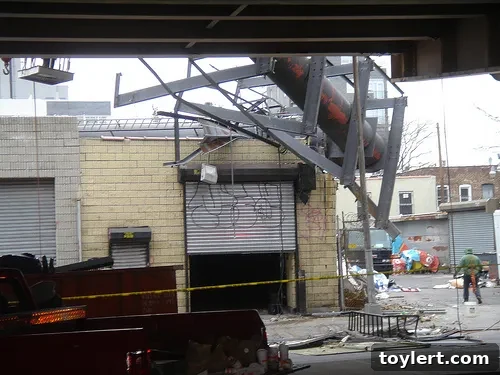
Last Friday, the collapse of a massive billboard onto the bustling Brooklyn-Queens Expressway (BQE) in Greenpoint sent shockwaves through New York City. This harrowing incident, which thankfully resulted in no severe injuries, has thrust the long-standing and often murky issue of billboard legality and maintenance into the spotlight. The event served as a stark reminder of the potential dangers posed by aging urban infrastructure and the complex legal frameworks governing outdoor advertising in one of the world’s most dynamic cities. The immediate aftermath saw the New York Times delve deep into the legal gray areas that many of these towering structures occupy, prompting a city-wide conversation about public safety, urban aesthetics, and the powerful financial interests at play.
The Greenpoint Incident: A Wake-Up Call on the BQE
The dramatic collapse occurred at a critical juncture, bringing traffic to a standstill on a major artery. Eyewitnesses described a sudden, terrifying crash as the enormous advertising structure detached and plummeted onto the highway below. While the damage to vehicles was reported, the absence of major casualties was a stroke of fortune, highlighting the inherent risks that such structures can pose to daily commuters and the surrounding urban environment. The Greenpoint area, known for its rapid development and prime visibility for advertisers, has long been a hotspot for billboards, making this incident particularly poignant for local residents and city officials alike.
Investigators immediately converged on the scene to determine the cause of the failure. Preliminary findings pointed towards structural deficiencies, raising serious questions about the maintenance protocols and inspection regimes for such large-scale advertisements. This event was not merely an isolated incident of structural failure; it quickly became a potent symbol of broader issues concerning regulatory oversight and the enforcement of existing safety standards across the city’s vast network of billboards.
NYC’s Enduring Struggle with Outdoor Advertising: A Historical Perspective
New York City has a complicated history with billboards, marked by a constant tension between commercial interests and the desire to preserve the city’s visual integrity and ensure public safety. As far back as 1940, the city enacted a ban on billboards erected within 200 feet of highways. This pioneering legislation was primarily driven by concerns over driver distraction, the aesthetic impact of visual clutter on urban landscapes, and the nascent understanding of structural safety hazards. Over the decades, this ban has been intermittently enforced, leading to periods of strict crackdowns followed by instances where a proliferation of signs reappeared, often skirting the letter of the law.
The initial ban reflected a forward-thinking approach to urban planning, aiming to protect the scenic corridors of its burgeoning highway system. However, the allure of substantial advertising revenue has always presented a formidable challenge to strict enforcement. Despite periodic efforts by successive administrations to rein in the number of illegal billboards, many have managed to persist, evolving into what has been described as a “murky world” of exceptions and legal interpretations. This ongoing battle underscores the complex interplay between urban policy, economic drivers, and public welfare in a dense metropolitan area like New York City.
The Origins of Regulation: Visual Integrity and Public Safety
The foundational regulations governing billboards in NYC were not merely about aesthetics; they were deeply rooted in public safety. The city recognized early on the potential for large, static advertisements to distract drivers, contributing to accidents on high-speed roadways. Furthermore, the sheer size and weight of these structures meant that their structural integrity was paramount. A collapse, even in the mid-20th century, posed a significant threat to life and property. The 1940 ban sought to mitigate these risks by creating clear zones where such hazards were deemed unacceptable. Over time, as materials and construction techniques evolved, so too did the complexities of ensuring these structures remained safe and compliant, leading to an intricate web of permits, inspections, and ongoing legal challenges that continue to shape the city’s skyline.
The Labyrinth of Loopholes: Navigating NYC’s Billboard Laws
Despite the decades-old ban, billboards have continued to dot New York City’s highways, largely due to a few crucial loopholes in the legislation. The primary exceptions allow billboards to operate legally under two main conditions: first, if they advertise a business that is physically located at their base (on-premises advertising); and second, if they promote a “noncommercial” nonprofit or charity. These exceptions, initially conceived to allow legitimate businesses to identify themselves and support charitable causes, have inadvertently created significant gray areas that are frequently exploited by advertisers and billboard owners. The ambiguity surrounding what truly constitutes “noncommercial” has been a particular point of contention, leading to numerous legal battles and enforcement challenges for the city’s Department of Buildings (DOB).
The interpretation of these loopholes allows many billboards to stand legally, even near major highways, by carefully crafting their advertisements or associating with specific types of entities. This legal maneuvering often puts city regulators in a difficult position, requiring them to constantly evaluate individual cases against broad, sometimes ill-defined, legal precedents. The proliferation of signs that seemingly fall into these categories has led to a landscape where the spirit of the original 1940 ban is often overshadowed by clever legal interpretations, complicating the city’s efforts to control outdoor advertising.
Decoding “Non-Commercial”: The Lottery’s Legal Quandary
The collapsed billboard itself became a prime example of this legal ambiguity. On one side, it prominently featured an advertisement for the lottery, while the other side displayed an ad for Dunkin’ Donuts. The billboard’s owner swiftly argued that the structure was legal because the lottery, as a state-sponsored entity, qualified as a “noncommercial” entity. This claim immediately sparked debate, highlighting the contentious nature of the loophole. While the lottery might serve a public function and contribute to state revenue, its advertising often carries a distinctly commercial tone, promoting a product for profit.
The Department of Buildings (DOB), however, was quick to counter this defense. A spokesman for the DOB stated that the billboard’s owner would be receiving citations on two counts: first, for not properly maintaining the structure, indicating a failure to ensure public safety; and second, for having the Dunkin’ Donuts ad on one side, which unequivocally constitutes commercial advertising and directly violates the spirit and letter of the highway ban. This particular case perfectly encapsulated the struggle between property owners’ interpretations and the city’s regulatory intent, underscoring the urgent need for clearer definitions and more robust enforcement mechanisms.
Beyond the Ad: Structural Integrity and Public Safety Concerns
The incident on the BQE brought the critical issue of structural integrity to the forefront. Large billboards, often exposed to harsh weather conditions, including high winds and heavy precipitation, require diligent maintenance to remain safe. A collapse, as witnessed last Friday, can have catastrophic consequences, ranging from severe property damage to life-threatening injuries or even fatalities for those caught beneath. The dangers extend beyond the immediate impact zone, as debris can scatter, creating further hazards on busy thoroughfares.
In response to the collapse, the DOB announced a comprehensive plan to inspect other billboards located near highways across the city. The objective is to proactively identify any other structures that might be structurally unsound or pose similar risks. This initiative aims to reassure the public and prevent future incidents by ensuring that all existing billboards meet stringent safety standards. However, the sheer number of such structures and the logistical challenges of thorough, ongoing inspections mean that this is an enormous undertaking, requiring significant resources and sustained commitment from the city. The proactive inspections are a necessary step, but they also highlight a systemic challenge in managing the safety of a vast urban landscape filled with aging and often neglected infrastructure.
A Call to Action: Political Pressure and Community Voices
The Greenpoint incident also galvanized political will. Councilman Stephen Levin, whose district includes the area near the collapsed billboard, was among the first to voice strong concerns. He was quoted emphasizing that the city must actively seek to dismantle billboards, particularly “if some of these signs are getting in under permits that may be fraudulent.” This statement points to a deeper issue: the potential for illegal or improperly obtained permits to allow non-compliant structures to remain standing, posing a continued risk to the public.
Community voices have also grown louder, with many residents and advocacy groups calling for a complete overhaul of billboard regulations. Concerns about visual pollution, safety hazards, and the perceived encroachment of corporate advertising on public spaces have long been debated. The BQE collapse provided a tangible and undeniable reason for these concerns to be taken more seriously, pushing for a reevaluation of the balance between commercial interests and the quality of urban life for New Yorkers. Local politicians are now facing increased pressure to not only enforce existing laws but to advocate for new legislation that can definitively address the loopholes and ensure public safety.
The High Stakes of High Advertising: The Economics Driving the Industry
Perhaps the most illuminating detail to emerge from the aftermath of the collapse was the sheer financial power driving the billboard industry. The New York Times report revealed that the lottery was paying a staggering $12,923 a month for the ad space on just one side of the collapsed billboard. This figure, representing only a fraction of the structure’s potential revenue (given its two sides and prime location), underscores the immense profitability of outdoor advertising in a market as lucrative as New York City. For billboard owners, these structures represent significant income streams, creating a powerful incentive to maintain them, often pushing the boundaries of legal interpretation to keep them operational.
The advertising industry views these strategic locations as invaluable, offering unparalleled visibility to millions of commuters and residents daily. This high demand translates into premium prices for ad space, making the fight to keep billboards standing a fierce one. The economic reality explains why owners are willing to engage in protracted legal battles and navigate complex regulatory landscapes. The tension between this powerful economic incentive and the city’s regulatory efforts to ensure public safety and preserve urban aesthetics is a central theme in the ongoing billboard saga. The numbers clearly illustrate why simply removing a non-compliant billboard is rarely a straightforward process, often involving significant legal and financial battles.
Enforcement Challenges: Why Illegal Billboards Persist
The persistence of illegal or non-compliant billboards in New York City is not due to a lack of regulations, but rather the significant challenges in their enforcement. Identifying and prosecuting violations requires substantial resources from the Department of Buildings, including dedicated inspectors, legal teams, and administrative staff to process citations and appeals. The legal process itself can be lengthy and complex, with billboard owners often employing sophisticated legal strategies to challenge citations, delay demolition orders, or argue for novel interpretations of existing laws. Furthermore, the fluid nature of ownership and advertising content can complicate enforcement efforts, as companies may change hands or modify their ads to appear compliant. This creates a bureaucratic labyrinth that can frustrate even the most determined city officials, allowing many problematic structures to remain standing for extended periods, despite being in violation.
Charting a Path Forward: Towards Clearer Regulations and Safer Streets
The Greenpoint billboard collapse has undeniably intensified calls for more stringent regulations and clearer definitions within New York City’s outdoor advertising laws. There is a growing consensus that the existing loopholes, particularly around the “noncommercial” classification, need to be re-examined and potentially closed to prevent future circumvention of the highway ban. City officials, community activists, and urban planners are now engaging in discussions about potential solutions, including stricter permitting processes, more frequent and rigorous structural inspections, and significantly higher fines for non-compliance. The aim is to strike a better balance between allowing legitimate advertising and safeguarding public spaces and the safety of residents.
Ultimately, the path forward will require a multi-faceted approach. This includes legislative reform to clarify ambiguities, increased funding for enforcement agencies, and a commitment from all stakeholders to prioritize public safety over commercial gain. The incident serves as a powerful reminder that while billboards can generate revenue, their unchecked proliferation and inadequate maintenance pose unacceptable risks that a responsible city must address decisively. The future of NYC’s skyline, and the safety of its citizens, depends on it.
Conclusion: Rebuilding Trust in NYC’s Skyline
The collapse of the billboard on the BQE in Greenpoint was more than just a structural failure; it was a potent symbol of New York City’s ongoing struggle with balancing commercial interests, urban aesthetics, and public safety. The incident laid bare the complex legal landscape, the financial incentives driving the billboard industry, and the persistent challenges faced by regulatory bodies. As the city moves forward, it faces the critical task of not only enforcing its existing laws more rigorously but also reevaluating and strengthening its regulations to prevent such dangerous incidents from recurring. The conversation ignited by this event is a crucial step towards ensuring that the iconic skyline of New York City remains both vibrant and, above all, safe for everyone.
Collapse Casts Light on the Murky World of Billboards [NY Times]
Photo by Aviator Rob