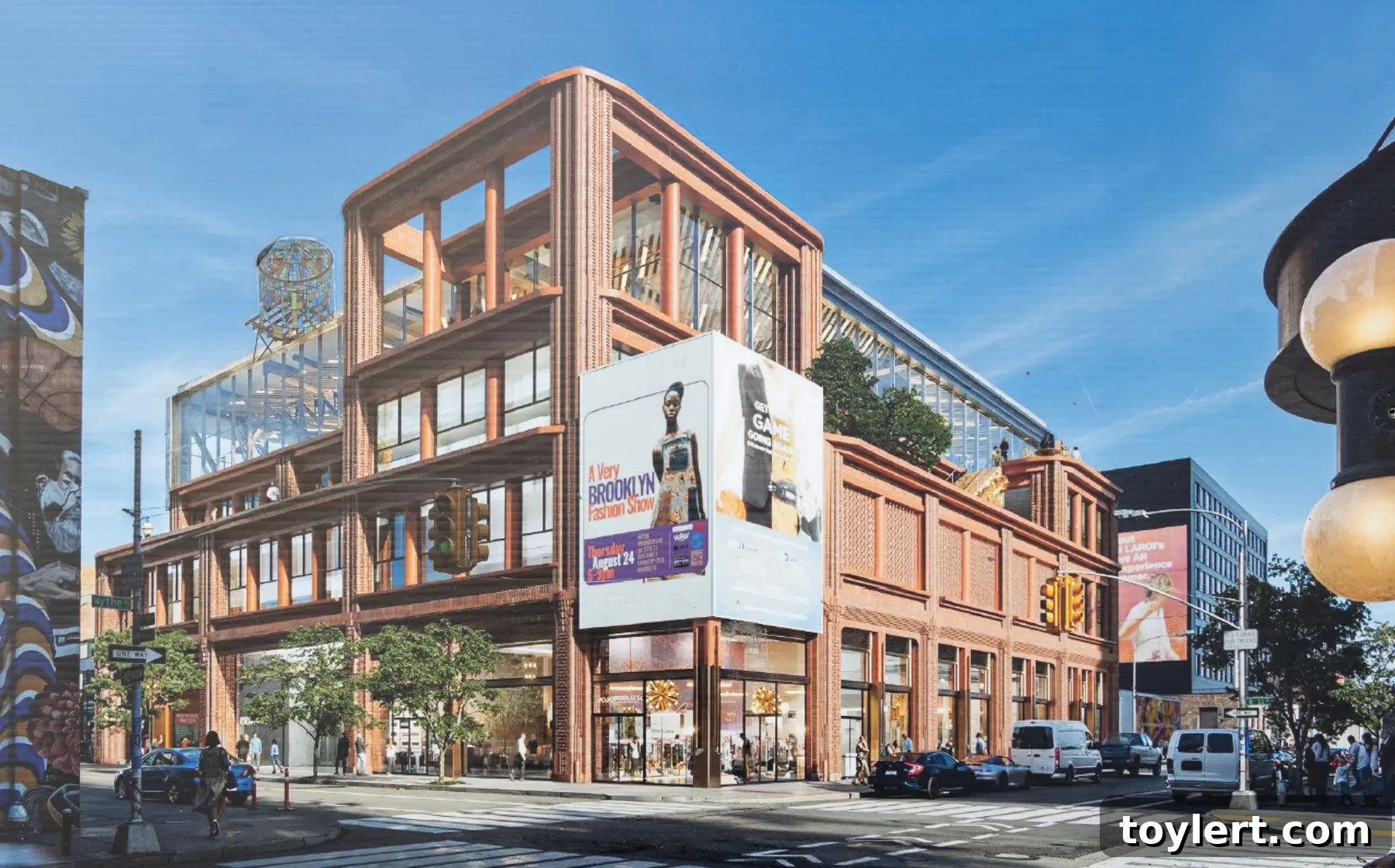
A Visionary Blend: New Commercial Building Set to Transform Williamsburg’s Wythe Avenue
Williamsburg, Brooklyn, a neighborhood renowned for its dynamic blend of historic charm and cutting-edge modernity, is poised to welcome a distinctive new commercial building. Renderings unveil plans for a four-story structure at the corner of 83 Wythe Avenue and North 10th Street, designed to occupy a currently vacant lot. This ambitious project promises to be more than just another building; it’s an architectural statement, artfully fusing the robust character of 19th-century commercial design with the sleek, fragmented aesthetics of postmodernism. The design’s striking originality lies in its ability to bridge eras, presenting a fresh perspective on urban development that respects the past while boldly stepping into the future.
The proposed building’s design philosophy is evident in its multi-layered facade. The lower floors are conceived with a profound nod to the architectural heritage of New York City, particularly the robust commercial buildings that defined its industrial and mercantile boom in the 1800s. Clad in warm orange brick, these sections evoke a sense of permanence and classic urbanity. Intricate ornamentation, reminiscent of traditional craftsmanship, is meticulously incorporated, emphasizing the building’s substantial presence. Round poles further punctuate the ground level, adding a tactile, classical element that grounds the structure in its historical inspirations. This base creates a sturdy, inviting street-level interaction, fostering a sense of familiarity and connection with Williamsburg’s rich past as a bustling industrial waterfront.
In dramatic contrast, the upper stories ascend into a realm of contemporary design, showcasing a postmodern sensibility characterized by deliberate voids and expansive glassy sections. The pinnacle of this modern expression is a dramatic glass and steel top-story overhang, cantilevered outward to create a breathtaking architectural flourish. This upper-level design speaks to a desire for lightness, transparency, and a dynamic interaction with the urban skyline, offering expansive views and bringing abundant natural light into the commercial spaces within. The juxtaposition of the earthy, ornamented brick base with the ethereal glass and steel crown creates a compelling visual narrative, making the building a captivating focal point in the rapidly evolving landscape of Williamsburg.
The Return of Ornamentation: A Thoughtful Departure from Post-War Minimalism
One of the most remarkable and conceptually significant aspects of this new development is its embrace of applied ornament. For decades following World War II, architectural trends largely favored unadorned, functionalist designs, often stripping buildings of decorative elements in favor of minimalist forms. This project, however, consciously deviates from that convention, reintroducing intricate detailing as an integral part of its identity. The design features Art Deco-inspired rosettes and zig-zags, masterfully worked into the brickwork. These decorative motifs are not merely superficial additions; they are strategically employed to accentuate the building’s inherent vertical and horizontal lines, lending it a sense of grandiosity and refined detail. They also serve to highlight the building’s tall, elegant windows, drawing the eye upwards and enhancing its overall architectural sophistication. This thoughtful application of ornament enriches the facade, offering a tactile and visually engaging experience for pedestrians and adding a layer of historical dialogue often absent in contemporary constructions.
The decision to incorporate such intricate detailing speaks volumes about a growing trend in urban architecture: a desire to infuse modern structures with character and uniqueness that resonate with a specific sense of place and history. By blending Art Deco-ish elements—a style that itself embraced both modernism and lavish decoration—with a contemporary form, the building achieves a timeless quality. It refuses to be pigeonholed into a single era, instead offering a nuanced interpretation of architectural evolution that will likely inspire future designs in the borough.
Location and Local Context: 83 Wythe Avenue at North 10th Street
The chosen site at 83 Wythe Avenue, at the prominent intersection of North 10th Street, is particularly significant. Wythe Avenue has become a pulsing artery of Williamsburg, known for its creative businesses, popular eateries, and dynamic cultural venues. This corner lot, currently awaiting development, represents a canvas for further enhancing the neighborhood’s vibrant commercial ecosystem. A recent visit to the site revealed a preliminary rendering affixed to the green construction fence, offering a tantalizing glimpse into the future. Intriguingly, someone had even adorned the fence with a sticker of a Tom Fruin-style water tower, a playful nod to local artistry and a subtle reminder of Williamsburg’s eclectic spirit and its distinct skyline dotted with Fruin’s iconic stained-glass water towers.
The development of this vacant lot signifies more than just the erection of a new building; it represents continued urban revitalization and economic growth in one of Brooklyn’s most sought-after neighborhoods. The influx of new commercial spaces, particularly those with a distinctive architectural identity, contributes significantly to the local economy by attracting new businesses, fostering job creation, and providing additional amenities for residents and visitors alike. This project is set to become a landmark, anchoring its corner and contributing to the architectural dialogue of a neighborhood constantly redefining itself.
Navigating the Development Process: From Renderings to Reality
The journey from an architectural rendering to a completed structure is a complex process, particularly in a dense urban environment like New York City. The current status of the 83 Wythe Avenue project indicates that a new-building permit was applied for in August but has not yet been officially issued. This stage is critical; it involves rigorous review by the Department of Buildings (DOB) to ensure compliance with all zoning regulations, building codes, and safety standards. While no physical work was observed taking place on the lot during the recent visit, the issuance of the permit is the crucial next step that would pave the way for groundbreaking and the commencement of foundation work. Potential developers often spend months, if not years, in this pre-construction phase, meticulously planning every detail and securing the necessary approvals.
The anticipation surrounding such projects is often palpable within the community. Renderings play a vital role in this phase, serving as visual blueprints that allow the public, local community boards, and stakeholders to envision the future impact of the development. They spark discussions, gather feedback, and help shape the final outcome, ensuring that new constructions align with the aesthetic and functional needs of the neighborhood. The detailed nature of these initial designs, showcasing the unique blend of historic and modern elements, underscores the developer’s commitment to creating a building that is both functional and architecturally significant.
The Broader Impact: Architecture as a Catalyst for Urban Identity
The proposed commercial building at 83 Wythe Avenue exemplifies several compelling trends in contemporary urban architecture. Its ability to seamlessly integrate diverse architectural periods—from the industrial elegance of the 19th century to the playful deconstruction of postmodernism—reflects a sophisticated understanding of urban context. This design philosophy moves beyond mere functionality, aiming to create structures that contribute aesthetically and culturally to their surroundings. By reintroducing applied ornamentation, the building also challenges the prevailing minimalist paradigms, advocating for a return to craftsmanship and visual richness in urban facades.
Such developments are critical for preserving the unique character of neighborhoods while simultaneously fostering their growth. A building that stands out not just for its size but for its thoughtful design can become a source of local pride and a beacon for future architectural innovation. For Williamsburg, a neighborhood constantly balancing its industrial roots with its status as a global trendsetter, this new commercial hub will undoubtedly contribute to its evolving identity, offering state-of-the-art facilities wrapped in a visually engaging and historically informed package. It’s a testament to the idea that modern commercial spaces can be both efficient and beautiful, functional and inspiring, ultimately enriching the urban experience for everyone.
As Brooklyn continues its remarkable transformation, projects like 83 Wythe Avenue underscore the borough’s commitment to thoughtful, design-forward development. This building is not just a commercial space; it’s a testament to architectural artistry, a blend of heritage and innovation, and a vibrant new chapter for one of New York City’s most dynamic neighborhoods. Its anticipated completion will mark a significant milestone, adding another layer to Williamsburg’s rich architectural tapestry and solidifying its reputation as a hub for both commerce and creativity.