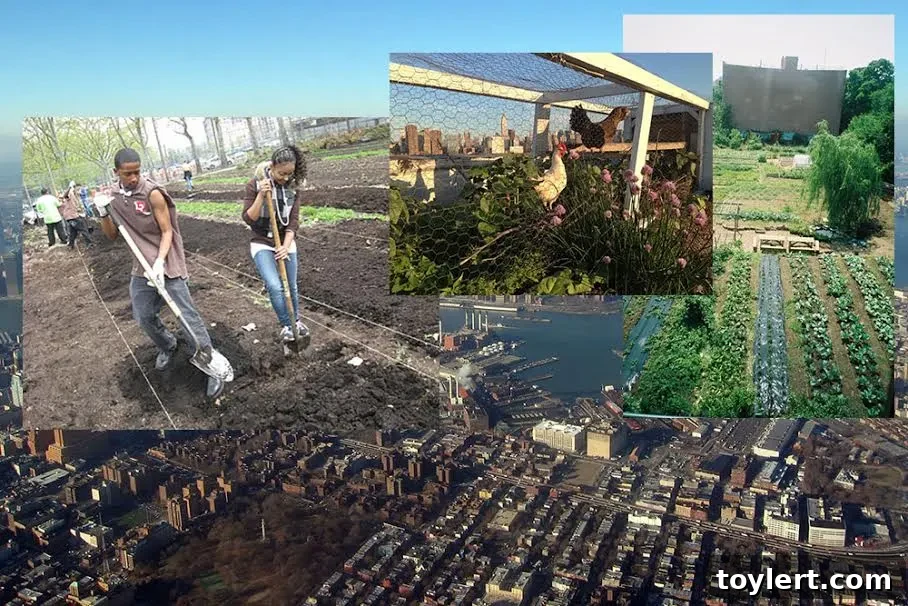
Unearthing Green Havens: Brooklyn’s Thriving Urban Farms
Brooklyn, New York’s most populous borough, is a vibrant tapestry woven with diverse cultures, iconic landmarks, and an undeniable pulse of creativity. It’s the birthplace of hip-hop, home to the historic Coney Island, revered for its legendary cheesecake, and a cultural mecca defined by the Brooklyn Nets and world-class arts scenes. However, when one thinks of Brooklyn, the image of working farms often doesn’t immediately spring to mind. Yet, nestled amidst its bustling streets, industrial zones, and residential neighborhoods, a silent revolution in urban agriculture is taking root.
Defying conventional expectations, working farms are indeed flourishing across Brooklyn. These green oases are not merely patches of land; they are vibrant hubs of innovation, sustainability, and community spirit. Driven by ingenuity, a deep commitment to environmental stewardship, and the tireless efforts of dedicated volunteers and passionate farmers, these urban farms are redefining Brooklyn’s landscape. They contribute significantly to local food security, foster community engagement, and inject a unique flavor into Brooklyn’s dynamic economy, proving that agriculture can thrive even in the heart of a metropolis. They serve as powerful examples of how urban spaces can be repurposed to address contemporary challenges like food deserts, climate change, and community disconnection.
Join us as we explore five remarkable working farms in Brooklyn, each demonstrating a distinct approach to cultivation, community building, and sustainable living, collectively enriching the borough in profound ways.
1. The Brooklyn Grange: Pioneering Rooftop Agriculture
Perched atop industrial buildings in the Navy Yard and Sunset Park, The Brooklyn Grange stands as a testament to audacious urban innovation. As one of the largest rooftop soil farms in the world, it transforms once-barren cityscapes into incredibly productive agricultural land. More than just a farm, it’s a living laboratory for sustainable practices, demonstrating how green infrastructure can thrive in an urban environment. Their mission extends beyond growing food; they aim to build resilient social and environmental systems.
Specializing in a wide array of organic vegetables, herbs, and even honey from their resident apiaries, The Brooklyn Grange supplies fresh, seasonal produce directly to local restaurants, community members through CSA (Community Supported Agriculture) programs, and their own farm stands. The ecological benefits are substantial: these green roofs help mitigate the urban heat island effect, absorb stormwater runoff, improve air quality, and provide crucial habitats for pollinators. Beyond cultivation, The Brooklyn Grange serves as an educational beacon, offering workshops on urban farming, beekeeping, and sustainable living, inviting the community to connect with their food source directly above the city streets.
2. Red Hook Community Farm: Cultivating Community and Justice
In the vibrant, resilient neighborhood of Red Hook, the Red Hook Community Farm (a project often associated with organizations like Added Value Farms) embodies the spirit of food justice and youth empowerment. This ground-level farm, which has overcome significant challenges including the devastation of Hurricane Sandy, stands as a powerful symbol of community resilience and self-sufficiency. Its core mission is to create a more equitable food system by providing healthy, affordable food and empowering local residents, especially youth, through hands-on agricultural education and employment.
The farm grows an impressive variety of vegetables, fruits, and herbs, chosen often for their cultural relevance to the diverse Red Hook population. Produce is distributed through a bustling farmers market and a highly successful CSA program, ensuring fresh, nutritious options are accessible to neighbors. For many years, the farm has also run robust youth empowerment programs, employing local teenagers to learn about sustainable farming, business operations, and leadership. These programs not only teach valuable vocational skills but also instill a deep sense of connection to the land and community, fostering a new generation of environmental stewards and local leaders.
3. Bushwick Growers Collective: Grassroots Food Sovereignty
The Bushwick Growers Collective represents the heart of grassroots urban farming, transforming neglected vacant lots into vibrant, productive community gardens and farms. Born from a collective desire to combat food deserts and empower residents, this network of micro-farms in Bushwick is a testament to community-driven food sovereignty. Their approach is deeply rooted in local participation, encouraging neighbors to take ownership of their food system and build strong social networks.
With a focus on culturally appropriate crops and sustainable growing methods, the Collective provides fresh, organic produce directly to its members and the wider community, often through free distribution or low-cost exchanges. Beyond cultivation, the Bushwick Growers Collective is a hub for education, hosting workshops on gardening techniques, composting, seed saving, and healthy cooking. It’s a space where intergenerational knowledge is shared, where newcomers learn from seasoned gardeners, and where the simple act of growing food becomes a powerful tool for community building and fostering self-reliance against systemic inequalities. These sites are not just farms; they are crucial community anchors.
4. Flatbush Urban Harvest: The Future of Indoor Farming
Stepping into the future of agriculture, Flatbush Urban Harvest operates within a converted warehouse in the Flatbush area, pioneering advanced indoor farming techniques. This innovative farm utilizes hydroponic and aeroponic systems to grow an impressive volume of produce year-round, regardless of external weather conditions. By controlling environmental factors such as light, temperature, and humidity, Flatbush Urban Harvest achieves remarkable efficiency in resource use, significantly reducing water consumption and eliminating the need for pesticides.
Their primary focus is on high-value, fast-growing crops like leafy greens, microgreens, and various herbs, which are delivered fresh to local grocery stores, restaurants, and directly to consumers. The advantages are manifold: ultra-fresh produce with minimal food miles, consistent supply, and a drastically reduced environmental footprint compared to traditional farming methods. Flatbush Urban Harvest serves as an important model for how technology can integrate with urban living to provide sustainable, hyper-local food options, showcasing a path toward greater food security and resilience in densely populated areas. It’s a blend of cutting-edge technology and a commitment to nourishing the local community.
5. Greenpoint Edible Schoolyard: Sowing Seeds of Knowledge
Integrated directly into the curriculum of a local Greenpoint school, the Greenpoint Edible Schoolyard (often inspired by initiatives like the Edible Schoolyard Project) is more than just a farm; it’s an outdoor classroom where students connect with nature, food, and health. This unique educational farm provides K-12 students with hands-on experiences in planting, cultivating, harvesting, and cooking. It transforms abstract scientific concepts into tangible, real-world lessons and fosters a deeper appreciation for where food comes from.
Students actively participate in every stage of the growing process, from preparing the soil to composting kitchen scraps, understanding ecological cycles firsthand. The produce harvested, often a colorful array of seasonal vegetables and fruits, is then used in school cafeteria meals or cooking classes, teaching children about healthy eating, culinary skills, and the joy of sharing food they’ve grown themselves. The Greenpoint Edible Schoolyard instills valuable lessons in environmental stewardship, teamwork, and nutrition, nurturing not only crops but also the minds and bodies of future generations, making sustainable choices second nature from a young age.
Brooklyn’s Green Future: A Testament to Urban Resilience
The existence and proliferation of these five working farms in Brooklyn—and many others like them—offer a powerful counter-narrative to the common perception of urban life. They demonstrate that even in one of the world’s most bustling cities, there is ample space and profound need for green initiatives that reconnect people with their food, their environment, and each other. From the innovative heights of rooftop agriculture to the deep roots of community gardens, these farms are cultivating far more than just produce.
They are building stronger, more resilient communities, combating food insecurity, fostering environmental consciousness, and creating unique economic opportunities. They embody a collective vision for a more sustainable, equitable, and healthy Brooklyn, proving that with creativity, collaboration, and a little bit of dirt, anything can grow. Supporting these farms, whether by volunteering, purchasing their produce, or advocating for urban agricultural policies, is an investment in Brooklyn’s vibrant green future and a testament to the enduring human connection to the land, even amidst the concrete jungle.