By Meaghan McGoldrick O’Neil, Brooklyn Paper
Jane Walentas Way: Honoring the Visionary Behind Dumbo’s Transformation
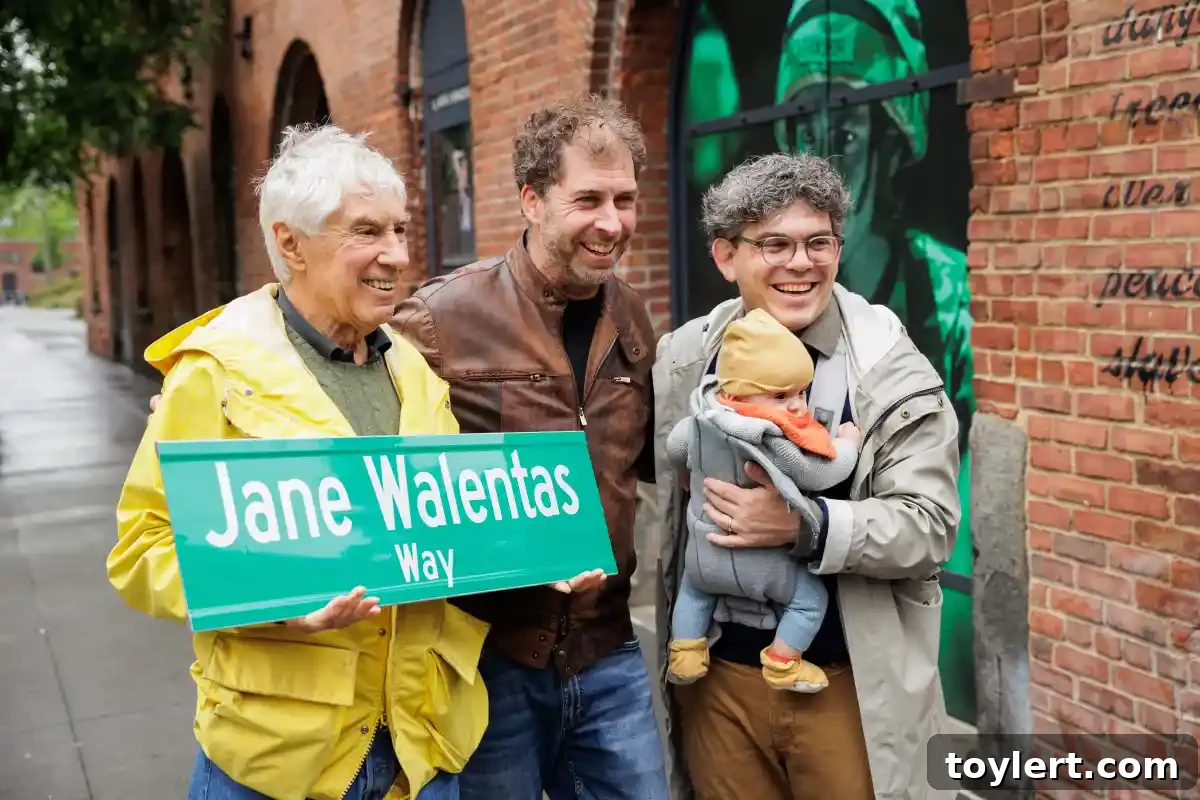
In a deeply touching tribute, a significant corner of Dumbo, Brooklyn, now officially bears the name “Jane Walentas Way.” Just steps from the iconic Jane’s Carousel, a project she lovingly championed, this renaming immortalizes the extraordinary woman who played an instrumental role in transforming a once-neglected industrial waterfront into the vibrant cultural and economic hub it is recognized as today. The dedication ceremony, held on May 6th at the intersection of Old Dock Street and Water Street, marked a poignant moment, coinciding with what would have been Jane Walentas’s 81st birthday. Friends, family, and prominent community leaders gathered to celebrate her profound legacy, reflecting on her enduring impact as an artist, philanthropist, and visionary whose passion reshaped a significant portion of Brooklyn.
A Legacy Forged in Brooklyn’s Waterfront
Jane Walentas was much more than an artist; she was a true patron of urban revitalization, with a particular focus on public spaces and the integration of art into everyday life. Alongside her husband, developer David Walentas, she embarked on an ambitious journey to reimagine Dumbo (Down Under the Manhattan Bridge Overpass) during the late 20th and early 21st centuries. While David spearheaded the large-scale real estate development, Jane’s unique artistic sensibility and unwavering commitment to community enrichment provided the soul and character that truly defined Dumbo’s rebirth. Her vision extended beyond bricks and mortar, aspiring to create a neighborhood where art thrived, public access was paramount, and historical integrity was carefully preserved. The co-naming of a street in her honor is not merely a formality but a profound recognition of her invaluable, hands-on contributions that breathed new life into an entire district.
From Gritty Industrial Past to Cultural Beacon
To truly appreciate Jane Walentas’s impact, one must first understand Dumbo’s origins. For decades, Dumbo was a largely forgotten industrial zone, characterized by cavernous warehouses, cobblestone streets, and a waterfront disconnected from the public. It was a place of fading factories and dormant docks, a far cry from the bustling, sought-after destination it is today. When the Walentases began acquiring properties in the 1970s and 80s, their vision was met with skepticism. However, they saw beyond the decay, recognizing the immense potential in Dumbo’s unparalleled views, historic architecture, and strategic location between two iconic bridges. Jane Walentas, with her keen eye for beauty and community, was particularly drawn to the artistic possibilities inherent in the vast, open spaces of the old industrial buildings and the dramatic backdrop of the East River.
Jane’s influence was pivotal in fostering an environment conducive to creativity and community engagement. She championed initiatives that attracted artists to the burgeoning neighborhood, understanding that a vibrant arts scene would be the heart of Dumbo’s cultural transformation. Her advocacy helped establish artist studios, galleries, and performance spaces, creating a magnetic pull for creative individuals seeking affordable space and an inspiring atmosphere. This deliberate cultivation of an artistic ecosystem laid the groundwork for Dumbo to evolve from an industrial relic into a celebrated hub for contemporary art, design, and innovation.
Jane’s Carousel: A Beloved Symbol of Her Passion
Perhaps no single project encapsulates Jane Walentas’s spirit and dedication more perfectly than Jane’s Carousel. This meticulously restored 1922 historic carousel, now housed in a magnificent glass pavilion in Brooklyn Bridge Park, stands as a testament to her vision and perseverance. Jane discovered the dilapidated carousel in storage in Youngstown, Ohio, in 1984. She spent over two decades personally overseeing its painstaking restoration, treating each of the 48 intricately carved horses and two chariots as individual works of art. This monumental task was a labor of love, reflecting her deep appreciation for craftsmanship, history, and the simple joy that such a timeless piece could bring to the community.
The decision to install the carousel on Dumbo’s waterfront, within a custom-designed, climate-controlled glass structure by architect Jean Nouvel, was a stroke of genius. It transformed a piece of historical Americana into a dynamic public art installation and a beloved community landmark. Jane’s Carousel is more than just a ride; it is a symbol of Dumbo’s revitalization, a beacon of joy, and a constant reminder of Jane Walentas’s personal commitment to enriching public spaces with beauty and wonder. Its proximity to “Jane Walentas Way” is no coincidence; it highlights the deep connection between her personal passion projects and the broader transformation of the neighborhood she so dearly loved.
Designing Public Spaces with People in Mind
Beyond the carousel, Jane Walentas was a driving force in shaping the public realm of Dumbo. Her aesthetic informed the design of numerous public spaces, ensuring they were not only functional but also beautiful and inviting. She understood that a thriving urban environment requires accessible and engaging areas where people can gather, relax, and connect. This philosophy guided decisions regarding landscaping, seating, and the integration of art into plazas and pedestrian zones. Her influence helped ensure that Dumbo’s development was not solely focused on commercial or residential gains but also prioritized the quality of life for its residents and visitors. The seamless integration of historic cobblestones with modern amenities, the thoughtful placement of green spaces, and the preservation of waterfront access are all subtle yet profound reflections of her touch.
The Dumbo neighborhood today stands as a testament to this holistic approach. Its charming streets, unique boutiques, world-class restaurants, and stunning views are all part of an urban fabric carefully woven with Jane Walentas’s artistic vision. The success of Dumbo is often cited as a model for urban renewal, demonstrating how strategic investment combined with an appreciation for culture and community can breathe new life into forgotten spaces.
An Enduring Impact on Urban Development
Jane Walentas’s legacy extends far beyond the physical transformation of Dumbo. Her approach to urban development, which prioritized art, public spaces, and community well-being alongside economic growth, has left an indelible mark on how cities envision their future. She proved that development doesn’t have to be sterile; it can be vibrant, engaging, and deeply rooted in local culture and history. Her work in Dumbo set a precedent for marrying ambitious real estate projects with thoughtful artistic and philanthropic endeavors, demonstrating that these elements are not mutually exclusive but rather complementary, leading to more sustainable and beloved communities.
The “Jane Walentas Way” street co-naming ceremony was a powerful affirmation of her lasting contributions. It brought together those who knew her personally and those who have benefited from her work, all united in celebrating a woman whose vision changed a significant part of New York City. Speakers at the event shared anecdotes highlighting her dedication, creativity, and the unwavering belief in Dumbo’s potential. They spoke of her generosity, her sharp wit, and her ability to inspire those around her to see beauty and possibility where others saw only decline.
Dumbo’s Future Shaped by Her Vision
As Dumbo continues to evolve, Jane Walentas’s foundational work remains a guiding principle. The neighborhood’s identity as a creative hub, a family-friendly destination, and a beacon of urban innovation is deeply ingrained with her influence. The countless visitors who flock to Brooklyn Bridge Park, ride Jane’s Carousel, or simply stroll through the picturesque streets are, in a way, experiencing her vision every day. Her legacy ensures that Dumbo will continue to be a place where art is celebrated, public spaces are cherished, and community thrives. The renaming of a street in her honor serves as a constant, tangible reminder of the extraordinary woman who helped sculpt Dumbo into the iconic place it is today, ensuring her name and her spirit will forever be intertwined with the cobblestone streets and breathtaking views of this remarkable Brooklyn neighborhood.