Prospect Park: Brooklyn’s Enduring Masterpiece of Landscape Architecture
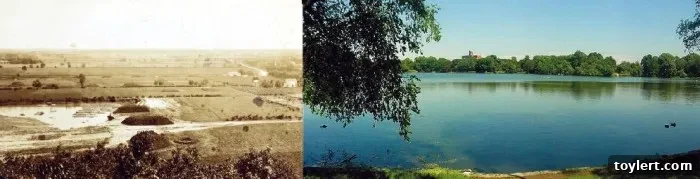
A Journey Through Time: Unveiling Brooklyn’s Iconic Prospect Park, Then and Now.
For nearly 150 years, Prospect Park has graced the heart of Brooklyn, presenting itself as a timeless natural landscape, an illusion perfected through meticulous design and execution. To the casual observer unaware of its intricate past, the park might appear to be a naturally occurring expanse, merely enhanced with a few paths, bridges, and well-maintained lawns. Yet, this perception couldn’t be further from the truth. Much like the enchanting Wizarding World of Harry Potter at Universal Studios, which simulates a deeply ingrained history and permanence, Prospect Park is a triumph of constructed reality. Every vista, every curve of a path, every body of water, and every cluster of trees was painstakingly conceived and crafted to evoke a sense of untouched, sublime nature. This deliberate artistry ensures that while both the park and Hogwarts School feel inherently real and enduring, their every aspect is the product of profound foresight and meticulous engineering.
The Visionaries: Crafting a Democratic Oasis in Brooklyn
The creation of Prospect Park stands as a testament to the genius of Frederick Law Olmsted and Calvert Vaux, the preeminent landscape architects of their time. Following their groundbreaking success with Manhattan’s Central Park, they were tasked with transforming a disparate collection of swamps, farms, and rocky terrain in Brooklyn into a verdant urban sanctuary. Their vision was radical for the mid-19th century: to create a “democratic park” accessible to all citizens, offering respite from the urban grind and opportunities for both active recreation and serene contemplation. They believed that exposure to nature had a restorative effect on the human spirit, a principle that guided every aspect of Prospect Park’s design.
Olmsted and Vaux’s philosophy extended beyond mere aesthetics. They aimed to create a sequence of experiences within the park, moving visitors through distinct landscapes designed to evoke different emotions. From the pastoral expansiveness of the Long Meadow to the wild, rustic beauty of the Ravine, and the more formal elegance around the Grand Army Plaza, Prospect Park was engineered to be a living, breathing work of art. This intricate planning ensured that despite its artificial origins, the park felt organic and boundless, a seamless escape into nature’s embrace.
Engineering Nature: The Grand Construction of Prospect Park
The scale of the Prospect Park project was monumental. Construction began in 1866 and spanned several years, involving thousands of laborers, massive earth-moving operations, and the strategic planting of hundreds of thousands of trees and shrubs. The terrain itself presented formidable challenges. What is now the sprawling, picturesque Prospect Park Lake, for instance, was originally a swampy area fed by polluted streams. Olmsted and Vaux’s ambitious plan involved draining, excavating, and shaping the land to create the desired contours and features.
This process of “artificial naturalism” meant that nothing was left to chance. Hills were sculpted, valleys were carved, and waterways were rerouted and dammed to create the illusion of naturally occurring features. The famed Long Meadow, a vast expanse of green stretching over a mile, was not a natural clearing but a meticulously graded and planted landscape designed to offer uninterrupted views and a sense of open freedom. Similarly, the dense, winding paths of The Ravine were engineered to mimic the wildness of a primeval forest, providing a dramatic contrast to the park’s more open areas.
The construction also involved sophisticated civil engineering, including the creation of a complex drainage system to manage rainwater and groundwater, ensuring the park’s health and stability for generations to come. Bridges were not just functional crossings but ornamental elements, each designed to complement its specific surroundings and contribute to the overall aesthetic narrative of the park.
The Heartbeat of the Park: The Magnificent Prospect Park Lake
Central to Prospect Park’s design and undoubtedly one of its most defining features is Prospect Park Lake. Far from being a natural body of water, the lake is a masterful creation, a testament to Olmsted and Vaux’s ability to bend nature to their will. Its serpentine shape, dotted with islands and winding around the park’s southern edge, was carefully crafted to maximize aesthetic appeal and recreational potential. The lake serves multiple purposes: it acts as a visual anchor, defines the park’s boundaries on one side, and provides a crucial habitat for diverse wildlife.
Historically, the lake quickly became a beloved recreational hub. In warmer months, it teemed with rowboats, paddle boats, and even Venetian gondolas, offering Brooklynites a serene escape on the water. Its shores provided perfect spots for leisurely strolls, picnics, and quiet contemplation. When winter arrived, the frozen surface of the lake transformed into a bustling ice-skating rink, drawing crowds from across the borough. These activities underscore the park designers’ intent: to create a space that catered to both passive enjoyment and active engagement with nature.
Over the decades, the lake has seen various enhancements and ecological restoration efforts. Maintaining its water quality and supporting its ecosystem—which includes fish, turtles, and numerous bird species—is an ongoing commitment. Modern efforts ensure that the lake remains a vibrant and healthy component of the park, continuing to offer both natural beauty and recreational opportunities for current and future generations.
An Enduring Legacy: Prospect Park Through the Ages
From its inception, Prospect Park was envisioned as a living, evolving entity, adapting to the changing needs of Brooklyn. Throughout its long history, the park has served myriad roles. During times of social upheaval and economic hardship, it provided a vital space for solace and community gathering. During the World Wars, portions of the park were even used for victory gardens and community events supporting the war effort, demonstrating its adaptability and civic importance.
The park has also weathered periods of neglect and urban decay, particularly during the mid-20th century. However, dedicated community efforts and significant public and private investment led to its revitalization. Restoration projects have focused on preserving Olmsted and Vaux’s original design intent while simultaneously upgrading facilities to meet contemporary standards. This includes rehabilitating historical structures like the Boathouse and the Picnic House, restoring pathways, and undertaking extensive ecological management to ensure the health of its diverse plant and animal life.
These ongoing preservation efforts highlight the deep appreciation Brooklynites hold for their park. It is not just a patch of green; it is a cherished historical landmark, a testament to visionary urban planning, and a continuous source of pride for the borough.
A Living Landmark: Prospect Park Today and Its Timeless Allure
Today, Prospect Park continues to thrive as a vibrant cultural and recreational center, embodying the spirit of Brooklyn. It is a daily destination for thousands, serving as a backyard for residents of surrounding neighborhoods like Park Slope, Windsor Terrace, and Flatbush. Its sprawling grounds host an incredible array of activities and attractions:
- Recreation: The Long Meadow remains a prime spot for frisbee, sunbathing, and impromptu sports. The LeFrak Center at Lakeside offers ice skating in winter and roller skating/boating in summer, carrying forward the lake’s recreational legacy. Running, cycling, and walking paths crisscross the entire park, providing crucial routes for daily exercise.
- Nature & Wildlife: The park is a haven for birdwatchers, with hundreds of species recorded throughout the year. The Prospect Park Zoo, located within the park, offers educational experiences focused on conservation and wildlife. The adjacent Brooklyn Botanic Garden, though separate, complements the park’s natural offerings with its stunning themed collections.
- Culture & Community: From free summer concerts at the Bandshell to farmers’ markets and the famous Smorgasburg food festival, Prospect Park is a hub of community activity. Children’s playgrounds, including the imaginative Imagination Playground, ensure that younger visitors are well-catered for. The park also serves as a popular venue for protests, rallies, and celebrations, reflecting its role as a true public square.
- Historical Significance: Visitors can explore various historical points of interest, including the majestic Grand Army Plaza with its iconic Soldiers’ and Sailors’ Arch, and the historic Lullwater Bridge.
The park’s continuous evolution, coupled with a deep respect for its historical roots, ensures its relevance in contemporary urban life. It offers an indispensable retreat from the city’s concrete jungle, fostering physical health, mental well-being, and a strong sense of community.
The Magic Continues: What Makes Prospect Park Timeless
The enduring appeal of Prospect Park lies in its masterful deception – its ability to feel utterly natural while being entirely man-made. This engineered wilderness provides a crucial ecological lung for Brooklyn and a much-needed psychological balm for its residents. Olmsted and Vaux’s vision, realized through immense effort and ingenious design, created a space that transcends mere functionality, elevating it to an art form. It is a place where the past gracefully intertwines with the present, and where the promise of nature is always just a few steps away, even amidst the clamor of a bustling metropolis.
As Brooklyn continues to grow and evolve, Prospect Park stands firm as a reminder of the power of thoughtful urban planning and the timeless human need for connection with the natural world. Its meticulously crafted landscapes continue to inspire, rejuvenate, and provide a vibrant backdrop for the lives of millions, cementing its status as one of America’s greatest urban parks.