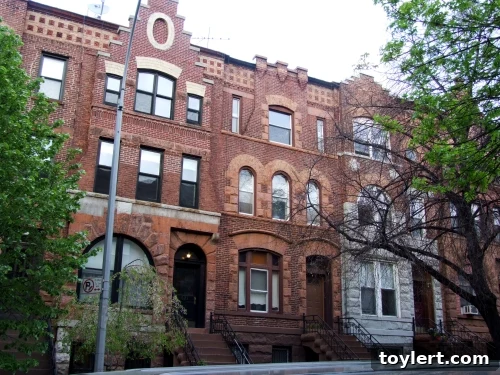
Discovering the Enduring Charm of Brooklyn’s Historic Row Houses: A Journey Through Carroll Street
Brooklyn, one building at a time, tells a story of unparalleled architectural heritage and community spirit. Among its most cherished treasures are the magnificent row houses that line its historic streets, each structure a testament to a bygone era of craftsmanship and design. These iconic residences, particularly those gracing picturesque avenues like Carroll Street, encapsulate the very essence of Brooklyn’s enduring appeal, blending historical significance with timeless aesthetic charm.
The Genesis of Brooklyn’s Row House Legacy
The concept of the row house arrived in Brooklyn as a practical and elegant solution to rapid urban expansion in the 19th century. As New York City’s population boomed, Brooklyn emerged as a desirable residential alternative, offering space and a more tranquil environment. Developers quickly adopted the row house model, constructing blocks of identical or similar homes to maximize land use while providing comfortable, stylish residences for the burgeoning middle and upper classes. This systematic development shaped countless neighborhoods, creating the distinct, cohesive streetscapes that define much of Brooklyn today.
From the mid-1800s through the early 20th century, thousands of these attached homes were built, transforming farmland into vibrant urban communities. Each row house, though sharing walls with its neighbors, often boasted unique decorative elements, materials, and internal layouts, allowing for individual expression within a harmonious street facade. This legacy of thoughtful urban planning and architectural consistency is what makes strolling through areas like Carroll Street such a rich and rewarding experience.
Architectural Tapestry: Styles and Details
Brooklyn’s row houses are a living museum of 19th-century American architectural styles. While often broadly referred to as “brownstones” due to the prevalent use of the reddish-brown sandstone, these buildings actually showcase a diverse array of influences. The architectural evolution of these homes reflects the changing tastes and technologies of their respective eras:
- Federal Style (Early 19th Century): Characterized by elegant simplicity, symmetrical facades, and often brick construction with stone lintels.
- Greek Revival (1830s-1850s): Marked by classical elements like stately columns, pediments, and strong geometric forms, often in white marble or painted wood.
- Italianate (1850s-1870s): Highly popular, these homes feature distinctive cornices with heavy brackets, tall arched windows, ornate stoops, and often a more vertical emphasis. Many of Brooklyn’s classic brownstones exhibit strong Italianate features.
- Neo-Grec (1870s-1880s): A more restrained and linear interpretation of classical motifs, often with incised decoration, flat facades, and geometric patterns in stone.
- Queen Anne (1880s-1890s): Known for their picturesque asymmetry, varied textures, turrets, bay windows, and elaborate decorative details, often incorporating a mix of materials like brick, terra cotta, and wood shingle.
- Romanesque Revival (1880s-1890s): Distinguished by round arches, robust masonry, and often rusticated stonework, creating a sense of solidity and grandeur.
These styles are not always found in their pure form; many Brooklyn row houses incorporate elements from multiple periods, creating a unique architectural blend. The stoop, an iconic feature of many row houses, serves not just as an entryway but also as a social space, connecting private homes to the bustling street life. Ornate ironwork, decorative cornices, detailed window lintels, and intricate doorway carvings further contribute to the unique character of each building, making every walk a discovery.
Carroll Street: A Paradigm of Preservation and Elegance
Carroll Street, particularly the stretch between Smith Street and Prospect Park West, stands as a prime example of Brooklyn’s architectural splendor. This tree-lined artery in the heart of brownstone Brooklyn is celebrated for its remarkably preserved row houses, many of which are designated within historic districts. The buildings here largely reflect the Italianate and Neo-Grec styles, with their characteristic brownstone facades, high stoops, and detailed cornices. The street’s gentle curves and mature trees enhance its picturesque quality, creating an inviting and timeless atmosphere.
Walking along Carroll Street, one can truly appreciate the scale and ambition of 19th-century urban development. The uniform setback of the houses, the consistent height, and the rhythmic repetition of architectural elements create a sense of grandeur and cohesion. Yet, subtle variations in doorway design, window frames, and the intricate patterns on the stone provide individual identity to each residence. These homes are not merely structures; they are pieces of art, reflecting the aspirations and aesthetic sensibilities of the era in which they were built.
The Allure of Brownstone Living in Modern Brooklyn
Today, Brooklyn’s row houses remain highly coveted properties, representing a unique blend of history, character, and prime urban living. Owners and residents take immense pride in their homes, often undertaking meticulous restoration projects to preserve original details while integrating modern conveniences. The spacious interiors, high ceilings, and charming backyards offer a rare luxury in New York City, making them ideal for families and individuals seeking a vibrant community feel coupled with historical charm.
The enduring appeal of these homes also lies in their contribution to Brooklyn’s strong neighborhood identity. Unlike high-rise apartments, row houses foster a sense of continuity and community on the street level. Neighbors often interact on their stoops, children play on the sidewalks, and the tree-lined streets invite leisurely strolls, creating a close-knit urban village atmosphere.
Moreover, the investment value of these historic Brooklyn properties has consistently proven robust. Their scarcity, combined with their architectural significance and desirable locations in highly sought-after neighborhoods like Park Slope, Cobble Hill, or Boerum Hill (where Carroll Street often traverses), ensures their lasting value. Preserving these architectural gems is not just about maintaining their physical structures; it’s about safeguarding Brooklyn’s soul and its unique narrative.
Preservation Efforts and Future Generations
The preservation of Brooklyn’s row houses is a continuous effort, championed by local residents, historical societies, and city agencies. Designations as historic districts by the Landmarks Preservation Commission play a crucial role in protecting these buildings from inappropriate alterations or demolition. These regulations ensure that any changes made to the exterior of a row house respect its historical context and architectural integrity, allowing future generations to appreciate the beauty and history embedded in their facades.
From the iconic brownstone facades to the intricate details of their cornices and stoops, each row house contributes to the rich tapestry of Brooklyn’s urban landscape. They stand as enduring symbols of the borough’s growth, architectural prowess, and an unwavering commitment to preserving its unique identity. Whether you’re an architecture enthusiast, a history buff, or simply someone who appreciates timeless beauty, the row houses of Brooklyn, especially those gracing Carroll Street, offer an unforgettable journey into the heart of New York City’s most charming borough.