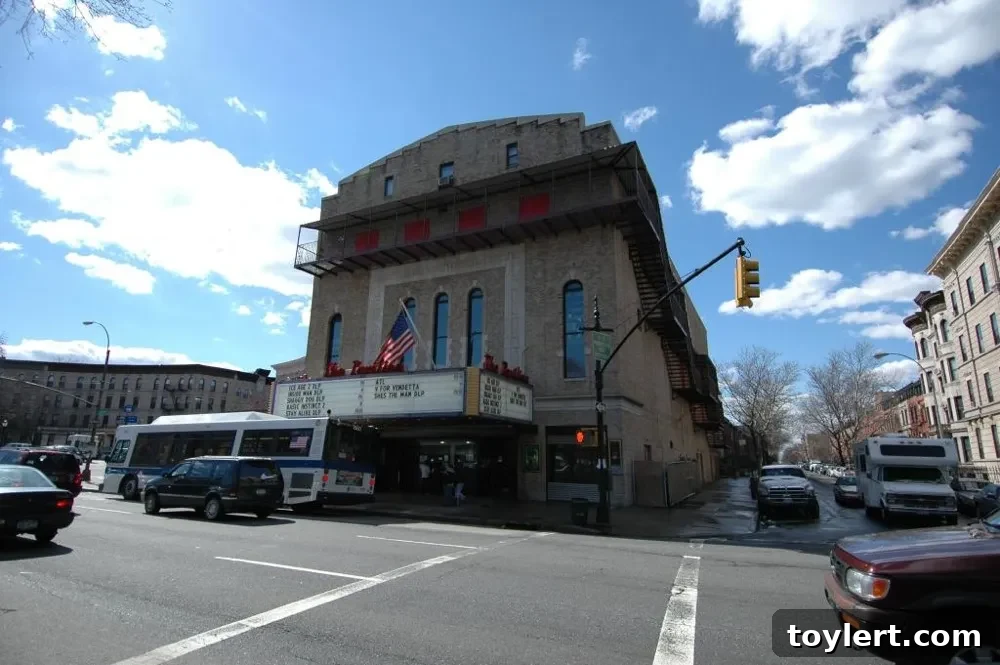
The Future of Park Slope Pavilion: A Community Landmark Faces Condo Conversion
The iconic Park Slope Pavilion movie theater, a cherished cultural fixture nestled at 188 Prospect Park West in Brooklyn, stands at a critical juncture. A developer’s ambitious plan to transform this long-standing entertainment venue into a modern residential complex has ignited a passionate debate within the vibrant Park Slope community. This proposed redevelopment, which envisions a blend of luxury condominiums and commercial retail spaces, is currently under intense scrutiny from local residents, preservationists, and civic organizations. The fate of the Pavilion, a place holding decades of memories for many Brooklynites, is poised to be decided as community stakeholders gather to voice their perspectives on this significant urban transformation.
Developer’s Vision: Unpacking the Proposed Redevelopment
Hidrock Realty, the owner behind the site, formally submitted plans in April for a comprehensive redevelopment project that promises to reshape the footprint of the beloved theater. The developer’s vision outlines the creation of 24 sophisticated condominium units, aiming to cater to the growing demand for upscale residential living in one of Brooklyn’s most sought-after neighborhoods. Beyond the residential component, the plans also include an underground parking garage, designed to accommodate the needs of future residents and potentially alleviate some street parking pressures. Furthermore, approximately 8,000 square feet of dedicated retail space is part of the proposal, intended to bring new commercial vitality to the area. This multifaceted plan represents a significant shift from the site’s historical use, moving away from public entertainment to private residential and commercial endeavors.
The architectural design for the proposed apartments, reportedly crafted by a reputable firm such as Adjmi, suggests a contemporary aesthetic that aims to integrate with, yet distinctly stand out from, the existing neighborhood architecture. While developers often emphasize the economic benefits and modern amenities these projects bring, including job creation during construction and increased tax revenue, such conversions invariably spark discussions about neighborhood character, infrastructure strain, and the irreplaceable loss of community gathering spaces. The blend of residential, parking, and retail components highlights a common urban development strategy: maximizing the potential of prime real estate in densely populated areas.
A Glimpse into History: The Park Slope Pavilion’s Legacy
To fully grasp the magnitude of the proposed conversion, one must appreciate the rich history and cultural significance of the Park Slope Pavilion. For generations, this movie theater has been more than just a place to catch the latest blockbusters; it has been a cornerstone of the Park Slope community. Opening its doors decades ago, the Pavilion quickly became a local institution, a place where families created traditions, friends gathered, and countless cinematic stories unfolded. Its distinct facade and marquee served as a recognizable landmark along Prospect Park West, a visual anchor in the ever-evolving streetscape.
Throughout its operational years, the Pavilion witnessed numerous shifts in the entertainment industry, adapting from single-screen grand cinemas to multi-screen complexes. Despite these changes, its essence as a community hub persisted. For many, the theater symbolizes a bygone era, a tangible link to Park Slope’s past that contributes immensely to its unique charm and identity. The potential loss of such a deeply ingrained cultural institution raises profound questions about the value placed on historical continuity versus modern development, and the impact on the collective memory of a neighborhood.
Community Outcry: Preserving Park Slope’s Character
The announcement of the proposed condo conversion was met with immediate and significant concern from various community organizations, most notably the Park Slope Civic Council. This esteemed community group, along with countless residents, has been at the forefront of advocating for the preservation of the Pavilion and the broader character of Park Slope. Their concerns are multi-faceted, extending beyond mere nostalgia to fundamental issues of urban planning and neighborhood integrity. Chief among their worries is the potential loss of a crucial public entertainment venue, a space that serves a diverse demographic and contributes to the cultural vibrancy of the area.
Residents also express apprehension about increased traffic congestion, the strain on existing infrastructure, and the potential for new development to exacerbate gentrification, pricing out long-term residents and small businesses. The introduction of 24 new luxury condominiums, coupled with 8,000 square feet of retail, could fundamentally alter the residential density and commercial landscape of this particular stretch of Park Slope. The community’s arguments often highlight the importance of maintaining a balance between progress and preservation, advocating for adaptive reuse solutions that honor the building’s heritage while serving contemporary community needs, rather than outright demolition or complete transformation into a different use.
The Community Board 6 Landmarks Committee Hearing: A Crucial Forum
The gravity of the situation underscores the importance of the upcoming hearing before the Community Board 6 Landmarks Committee. This committee serves as a vital gatekeeper, tasked with scrutinizing development proposals that impact sites with historical, architectural, or cultural significance within its district. Their role is not merely advisory; their recommendations carry significant weight in the ultimate decision-making process by city agencies. The hearing provides a formal platform for both the developer to present their plans in detail and for the community to articulate their concerns and perspectives.
During the hearing, the committee will evaluate various aspects of the proposal, including its adherence to zoning regulations, its architectural impact on the surrounding historic district (if applicable), and its overall benefit or detriment to the community. Public testimony will be a critical component, allowing residents, preservationists, and local business owners to share their insights, fears, and hopes for the Pavilion site. The committee’s decision will undoubtedly reflect a careful balancing act between supporting economic development and safeguarding the unique heritage and fabric of Park Slope. This process is a testament to participatory democracy in urban planning, where local voices play a pivotal role in shaping their environment.
Broader Implications: Balancing Development and Preservation in NYC
The debate surrounding the Park Slope Pavilion is not isolated; it mirrors similar struggles unfolding across New York City and other major urban centers. As cities continue to grow and evolve, the pressure to redevelop valuable land intensifies, often leading to the conversion of historic buildings and cultural institutions into modern residential or commercial spaces. This trend presents a persistent challenge: how to reconcile the imperatives of economic growth and housing demand with the desire to preserve architectural heritage, cultural identity, and community character.
The Pavilion’s story serves as a powerful case study in the ongoing dialogue about adaptive reuse versus demolition, the role of community activism in urban planning, and the future of independent cultural spaces in an increasingly corporatized landscape. The outcome of this particular hearing and the subsequent review process will not only determine the fate of a beloved Brooklyn theater but could also set a precedent for how similar development proposals are handled in historic neighborhoods across the city. It emphasizes the need for creative solutions that allow for sustainable development without erasing the very essence that makes neighborhoods like Park Slope so desirable and unique.
The Road Ahead: Uncertainty and Advocacy
As the Community Board 6 Landmarks Committee prepares to convene, the future of the Park Slope Pavilion remains uncertain. The developer, Hidrock Realty, will undoubtedly present a compelling case for their modern vision, emphasizing the economic revitalization and contemporary living spaces the project would bring. Conversely, the Park Slope Civic Council and its allies will passionately advocate for the preservation of the theater’s spirit, urging for alternatives that respect its legacy and serve the broader community’s cultural needs. Regardless of the immediate outcome, this ongoing discussion highlights the enduring tension between progress and preservation in a dynamic urban environment. The eyes of Park Slope, and indeed much of Brooklyn, will be on this pivotal hearing, awaiting a decision that will profoundly impact the beloved neighborhood for generations to come.