Discover Timeless Elegance: A Pre-War Co-op in Historic Clinton Hill, Brooklyn
Nestled within the leafy, historic streets of Clinton Hill, Brooklyn, awaits a truly remarkable opportunity to own a piece of New York City’s architectural heritage. This exquisite one-bedroom apartment, situated on the first floor of the distinguished 360 Clinton Avenue, offers a harmonious blend of classic charm and modern potential. Housed in a captivating World War II era building, the residence proudly showcases original wood floors and elegant plaster arches, testaments to its enduring quality and character. Furthermore, its intelligent layout presents a compelling option for conversion into a functional two-bedroom home, catering to evolving lifestyle needs or maximizing investment value in a sought-after locale.
The Allure of Clinton Hill: A Neighborhood Rich in History and Community
Clinton Hill stands as one of Brooklyn’s most cherished and historically significant neighborhoods, a verdant oasis renowned for its grand brownstones, tree-lined streets, and vibrant cultural scene. Living in Clinton Hill means embracing a lifestyle that balances serene residential beauty with easy access to urban conveniences. The neighborhood boasts a diverse array of independent boutiques, charming cafes, and critically acclaimed restaurants that cater to every palate. Residents enjoy proximity to notable institutions like Pratt Institute, contributing to a youthful, artistic energy, while numerous parks and green spaces provide tranquil escapes from city life. Its excellent transportation links, including multiple subway lines, ensure swift and effortless commutes to Manhattan and other Brooklyn hotspots. Clinton Hill truly offers a unique blend of historical grandeur, tight-knit community spirit, and contemporary urban appeal, making it a highly desirable place to call home for singles, couples, and families alike.
360 Clinton Avenue: A Landmark of Colonial Revival Grandeur
The building at 360 Clinton Avenue is more than just an address; it is a significant architectural statement designed by the esteemed Cohn Brothers. This six-story, 96-unit elevator complex stands as a testament to the robust construction and elegant aesthetics prevalent in the early 1940s. Its striking brick facade is adorned with sophisticated Colonial Revival details, a style celebrated for its timeless elegance and symmetry. These intricate features include a welcoming white wooden entrance canopy, gracefully arched windows accented with distinctive keystones, and elegant corner quoining that adds a sense of solidity and classic refinement. These elements collectively contribute to a stately presence that has gracefully withstood the test of time, offering residents a unique living experience within a building that exudes historical charm.
The site itself holds a fascinating historical narrative. Prior to the construction of 360 Clinton Avenue, this prestigious plot was once home to the grand Elliott M. Eldredge mansion, a detail that underscores the esteemed lineage of the property. Plans for the current building were meticulously filed in 1940, amidst the backdrop of a nation gearing up for war, and construction was diligently wrapped by 1941. This timeline speaks to the efficient and high-quality craftsmanship characteristic of the era, ensuring a structure built to last for generations. Living in such a building offers not just a home, but a connection to a rich past, providing a sense of permanence and historical depth that modern constructions often lack. The pre-war designation often translates to larger room sizes, higher ceilings, and superior sound insulation, all contributing to a more comfortable and luxurious living environment.
Inside the Apartment: A Canvas for Modern Living with Historic Roots
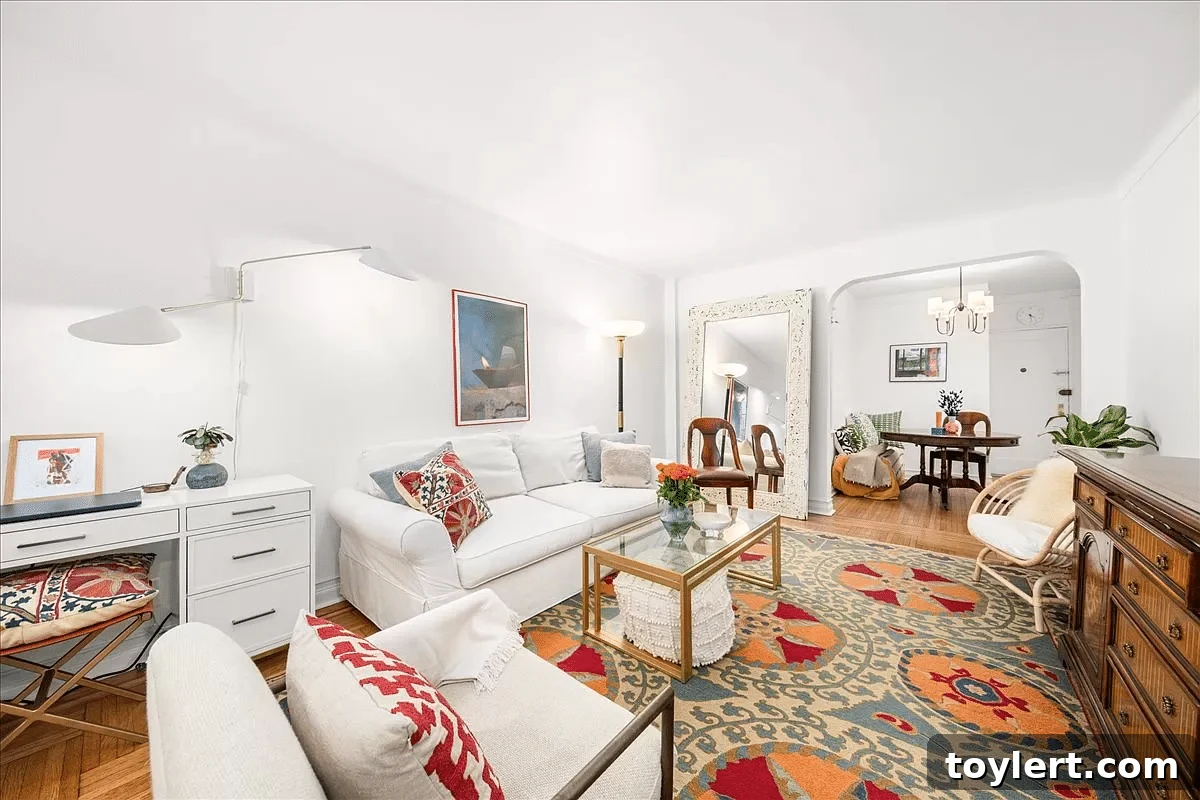
Stepping into this first-floor apartment, one is immediately greeted by a charming foyer that serves as a versatile introductory space. Thoughtfully designed, the foyer features practical built-in shelves and an elegant picture rail, perfect for displaying personal treasures and artwork. Currently utilized as a cozy dining room, this area exemplifies the adaptability of the apartment’s layout. The transition from the foyer to the main living area is marked by a wide, graceful arched opening, a classic architectural detail that enhances the sense of space and flow within the home. This dramatic archway frames the entrance to the expansive living room, creating an inviting and open atmosphere.
The living room itself is a highlight of the apartment, characterized by its impressive coved ceiling that adds an air of sophistication and visual interest. This generously proportioned space is designed to accommodate both formal dining and comfortable lounging areas, providing ample room for entertaining guests or simply relaxing in style. The original wood floors, meticulously preserved, run throughout these main areas, adding warmth, character, and a touch of timeless elegance. These floors are not only beautiful but also incredibly durable, telling a story with every plank. The plaster arches further enhance the architectural integrity, softening transitions between rooms and creating a distinct visual appeal that is truly unique to pre-war construction.
While specific details about the kitchen and bedroom are not explicitly mentioned, one can confidently expect a traditional pre-war layout. This typically includes a separate, often windowed kitchen, offering practical workspace and usually featuring classic cabinetry and fixtures that can be updated to modern tastes while retaining their vintage charm. The bedroom, in line with pre-war standards, would likely be spacious, providing a serene retreat with ample closet space. The bathroom would also reflect the building’s era, often featuring durable tiles and classic fixtures that contribute to the overall authentic appeal of the apartment.
Potential for Conversion: A Smart Investment
One of the most compelling features of this Clinton Hill co-op is its remarkable potential for conversion into a two-bedroom residence. This adaptability offers significant advantages, whether for a growing family needing an additional bedroom, a professional requiring a dedicated home office, or an investor looking to enhance the property’s market value. The spacious footprint and flexible layout inherent in many pre-war apartments often lend themselves well to such modifications, making this a highly attractive option in Brooklyn’s competitive real estate landscape. The ability to reconfigure the space without extensive structural changes adds immense value and caters to a broader spectrum of potential buyers.
Why This Clinton Hill Co-op is an Unmissable Opportunity
Owning an apartment at 360 Clinton Avenue is more than just acquiring property; it’s an investment in a lifestyle and a piece of history. The robust construction and timeless design of pre-war buildings ensure lasting quality and often greater resilience to market fluctuations. The specific Colonial Revival details of this building, combined with the apartment’s original features like wood floors and plaster arches, create an unparalleled sense of character and warmth that is hard to replicate in newer developments. The potential for a two-bedroom conversion makes this unit incredibly versatile and future-proof, allowing it to adapt to evolving needs over time.
Furthermore, the prime first-floor location offers ease of access, a significant convenience for daily living. This position often provides a unique perspective and connection to the building’s communal areas or even the surrounding streetscape, while maintaining a sense of privacy and elevation from the immediate sidewalk. Living in Clinton Hill itself offers an unparalleled experience, blending historical charm with modern vibrancy, cultural richness, and strong community ties. This apartment represents a rare opportunity to embrace elegant pre-war living in one of Brooklyn’s most desirable neighborhoods, promising a truly distinctive home for its next discerning owner. It’s an ideal choice for those who appreciate architectural integrity, seek flexible living spaces, and desire to be part of a dynamic and historically rich community.