Truman Capote’s Brooklyn Heights: Unveiling a Literary Legacy Through “A Personal Memoir”
While often associated with the glamorous literary circles of New York City and the enigmatic true crime narrative of Kansas, the iconic author Truman Capote also spent a significant, albeit lesser-known, period of his life in the charming and historic neighborhood of Brooklyn Heights. Though he began his life in the vibrant streets of New Orleans and ultimately passed away in the sunny expanse of Los Angeles, it was in the late 1950s that the literary genius behind masterpieces like In Cold Blood and Breakfast at Tiffany’s called a residence on Brooklyn Heights’ Willow Street his home. This crucial period, full of creative energy and personal reflection, has been brought back into the spotlight through a remarkable literary and photographic endeavor.
The Allure of Brooklyn Heights: A Mid-Century Literary Hub
In the mid-20th century, Brooklyn Heights was far more than just a scenic residential area across the East River from Manhattan. It was a thriving haven, a sanctuary for artists, writers, and intellectuals seeking both inspiration and a sense of community away from the relentless pace of Manhattan, yet still close enough to its cultural heartbeat. The neighborhood’s picturesque brownstones, tree-lined streets, and stunning views of the Manhattan skyline offered an idyllic backdrop for creative minds. For Capote, a man known for his flamboyant personality and sharp observations, Brooklyn Heights presented a unique blend of quiet charm and understated sophistication, a stark contrast to the more ostentatious environments he often frequented. This unique atmosphere undoubtedly permeated his thoughts and, consciously or unconsciously, influenced his writing during this formative time.
A Sanctuary for Artists and Intellectuals
During the 1950s, Brooklyn Heights harbored a burgeoning bohemian spirit. Its affordable rents (compared to Manhattan), beautiful architecture, and the intellectual vibrancy created by its diverse residents made it a magnet for the artistic avant-garde. Writers, poets, playwrights, and painters found common ground in its cafes, bars, and quaint streets, fostering an environment ripe for creative exchange and contemplation. This rich cultural tapestry provided Capote with a dynamic setting that was both stimulating and conducive to the intense focus required for his craft. The quiet privacy of Willow Street, combined with the accessible cultural energy of the wider neighborhood, offered a perfect balance for the complex and multifaceted personality of Truman Capote.
Truman Capote’s Willow Street Residence: A Glimpse into His World
Capote’s time at 70 Willow Street, a grand yellow Greek Revival house, was a period of immense productivity and personal growth. It was within these walls that he meticulously crafted portions of his seminal non-fiction novel, In Cold Blood, a work that would redefine the genre and solidify his place in literary history. This residence was not merely an address; it was a backdrop to his daily life, his creative process, and his social interactions. The house itself became a character in his later recollections, embodying the essence of his Brooklyn experience. His essay, “A House on the Heights,” originally published in 1959, eloquently details his affection for the home and the distinct flavor of Brooklyn Heights, providing readers with an intimate window into his private world during these years.
The Genesis of “A House on the Heights”
The essay, originally commissioned for a publication, served as Capote’s personal ode to his Brooklyn abode and the surrounding neighborhood. It wasn’t just a descriptive piece; it was a deeply personal reflection on the solace and inspiration he found there. He wrote with his characteristic wit and keen observational skills, painting vivid pictures of his neighbors, the local characters, and the unique rhythm of life in Brooklyn Heights. This essay offers invaluable insight into his state of mind during a crucial creative phase, detailing his routines, his thoughts on writing, and his appreciation for the quiet moments interspersed with the more bustling aspects of his public life. It stands as a testament to the profound impact this particular period and place had on his artistic sensibilities.
David Attie’s Lens: Capturing the Elusive Author
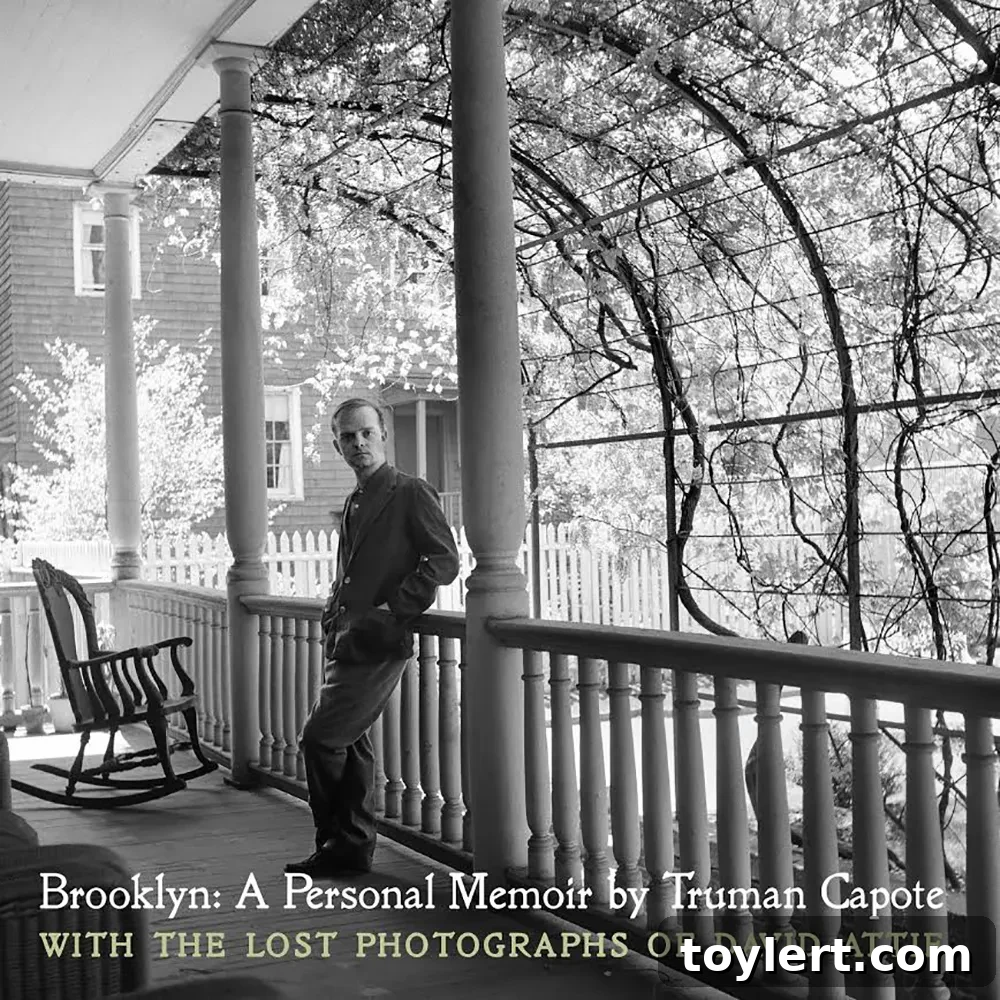
A pivotal element in revisiting Capote’s Brooklyn chapter is the work of photographer David Attie. In 1958, Attie, then a young and promising photographer, was commissioned to capture images of Capote for a magazine feature that was to accompany the author’s essay. These photographs went beyond mere portraiture; they were an attempt to document Capote in his natural environment, offering candid glimpses into his life at the Willow Street residence. Attie’s artistic eye and subtle approach allowed him to capture the multifaceted personality of Capote – the introspective writer, the socialite, and the enigmatic figure – often showing him in moments of quiet contemplation or engaged in domestic scenes. The resulting images are a poignant visual record, providing a rare and intimate look at the author during a significant period of his life.
The Mystery of the “Lost Photographs”
For decades, many of David Attie’s remarkable photographs of Truman Capote were considered lost or, at the very least, largely unseen by the public. While a few images might have appeared alongside Capote’s original essay, the majority of the negatives and prints remained tucked away, unseen treasures waiting to be rediscovered. The reasons for their obscurity are varied, ranging from editorial decisions at the time to the passage of time itself. This long period of being “lost” only added to their mystique, making their eventual rediscovery all the more significant. Their re-emergence now offers a fresh perspective on Capote’s Brooklyn years, allowing a new generation to connect with the author through Attie’s timeless visual artistry. Their rediscovery has been a major boon for literary enthusiasts and historians alike, filling in crucial visual gaps in Capote’s biography.
Brooklyn: A Personal Memoir – A Rediscovered Treasure
The recent publication of Brooklyn: A Personal Memoir represents a truly significant literary event. This beautifully compiled book finally reunites Capote’s original 1958 essay, “A House on the Heights,” with a comprehensive collection of David Attie’s “lost” photographs. The synergy between Capote’s evocative prose and Attie’s candid imagery creates a powerful and immersive experience for the reader. The book serves as a meticulously preserved capsule of a bygone era, allowing us to step back in time and witness Capote’s daily life, his creative sanctuary, and the vibrant atmosphere of Brooklyn Heights through both his words and Attie’s lens. It’s a testament to the enduring power of both written and visual storytelling, bringing a fresh dimension to Capote’s already legendary narrative.
The Power of Reconnection: Essay and Images United
The true brilliance of Brooklyn: A Personal Memoir lies in its ability to present a holistic view of Capote’s time in Brooklyn Heights. The essay, rich with Capote’s characteristic wit and descriptive flair, gains an unparalleled depth when paired with Attie’s visual narrative. Readers can now not only read about Capote’s specific living room or his interactions with the neighborhood but can actually see him in those very settings, engaging with the very environment he so eloquently described. This harmonious reunion elevates the material, transforming what might have been disparate fragments into a cohesive and captivating story. It allows for a more profound understanding of the author, his creative process, and the profound influence his surroundings had on his work during this pivotal chapter of his life.
Capote’s Brooklyn Influence and Enduring Legacy
While Capote’s time in Brooklyn Heights may have been a relatively short chapter compared to his entire lifespan, its impact on his literary output and personal development was undeniably profound. It was a period of intense focus, quiet contemplation, and significant progress on projects that would later define his career. The experience of living in Brooklyn, observing its unique characters, and absorbing its distinct atmosphere likely enriched his already keen understanding of human nature and societal intricacies, themes that are central to his most celebrated works. The rediscovery of this specific period, through both his words and Attie’s photographs, solidifies Brooklyn Heights’ place in the broader narrative of Truman Capote’s remarkable and complex life, offering valuable context to his genius.
Exploring Brooklyn Heights Today: Tracing Capote’s Footsteps
Today, Brooklyn Heights remains a destination of historical and architectural significance, continuing to attract visitors and residents alike with its timeless charm. While the neighborhood has evolved, much of its historic character, including the very brownstones Capote admired, has been meticulously preserved. Walking down Willow Street, one can still envision the author strolling past elegant facades, perhaps contemplating his next literary phrase. The publication of Brooklyn: A Personal Memoir has reignited interest in this particular facet of Capote’s biography, encouraging literary enthusiasts to visit the neighborhood and experience the ambiance that once inspired one of America’s most celebrated writers. It serves as a tangible link between the past and present, allowing us to connect with literary history in a very real way.
Conclusion: A Timeless Literary Snapshot
Truman Capote’s sojourn in Brooklyn Heights, often overshadowed by the more dramatic episodes of his life, emerges as a vital period of artistic incubation and personal reflection. The reunion of his eloquent 1958 essay with David Attie’s rediscovered photographs in Brooklyn: A Personal Memoir provides an invaluable, intimate glimpse into the mind and life of a literary giant during a crucial stage of his career. This book not only illuminates a lesser-known chapter of Capote’s biography but also celebrates the enduring power of place to shape creative output. It invites readers to rediscover both the author and the captivating neighborhood that, for a time, served as his muse and his home, leaving an indelible mark on his legacy and on the annals of American literature.