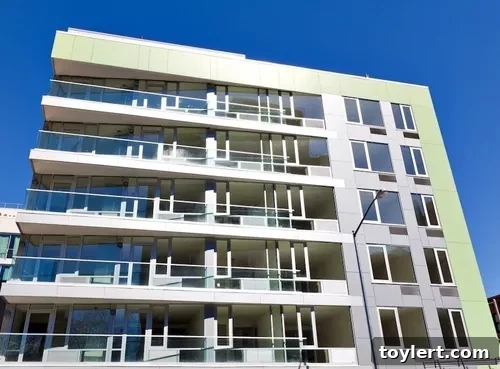
109 Gold Street: Unraveling the Troubled Saga of a Vinegar Hill Condo Development
The narrative surrounding 109 Gold Street, a condominium project nestled in Brooklyn’s charming Vinegar Hill neighborhood, has long been characterized by a distinct sense of “trouble.” From its contentious beginnings to its current offering as an entire building for sale, this development has navigated a challenging path through the dynamic New York City real estate landscape. What started as an ambitious vision for modern living in a historic enclave has evolved into a case study of the complex hurdles that can beset even the most promising urban projects.
This article delves into the intricate history of 109 Gold Street, exploring the missteps, market shifts, and strategic recalibrations that have defined its journey. We examine the initial controversies, the prolonged construction phases, the subdued marketing efforts, and the ultimate pivot from individual condo sales to a bulk offering. Understanding this trajectory provides valuable insights not only into the specifics of this particular property but also into the broader challenges and opportunities within the Brooklyn real estate market.
A Troubled Genesis: From Church to Controversy
The very foundation of 109 Gold Street was laid amidst significant controversy, signaling early on that this would be no ordinary development. The site was originally home to an old church, a structure that, despite its age and community value, was ultimately slated for demolition. However, this was not a straightforward process. Reports indicated an illegal demolition, an act that immediately drew criticism and cast a shadow over the nascent project. Such a transgression can severely damage a development’s public image and invite intense scrutiny from local residents and regulatory bodies. In a community-focused area like Vinegar Hill, where historical preservation is often deeply valued, the unauthorized razing of a religious institution sparked considerable outcry and set a challenging precedent for the development’s future.
Following this contentious start, the construction phase itself was plagued by unusually slow progress. What should have been a relatively streamlined process for a modern condo building stretched on for an extended period, leading to delays that frustrated potential buyers and raised questions about the project’s financial stability and management. Construction delays can be incredibly costly, not only in terms of increased labor and material expenses but also in lost sales opportunities and negative market perception. Each setback compounded the narrative of a “troubled” project, making it increasingly difficult for developers to regain momentum and public trust.
Navigating a Shifting Market: Marketing Woes and Strategic Pivots
Once construction eventually neared completion, the project faced its next major hurdle: an intensely competitive real estate market. The initial marketing effort for 109 Gold Street’s individual condo units was described as “subdued,” suggesting a lack of aggressive promotion or perhaps a misreading of market demand. This quiet approach, beginning approximately a year before the current bulk sale offering, failed to generate the necessary buzz and sales velocity required for a successful launch.
The initial individual unit prices ranged from an accessible $319,000 to a premium of $999,000, aiming to attract a diverse set of buyers to Vinegar Hill. Despite these varied price points, the market response was lackluster. This prompted significant strategic adjustments over the summer, including the replacement of the original brokerage responsible for marketing the building. A new brokerage was brought in, presumably to inject fresh energy and a different approach to sales. Concurrently, price cuts were implemented across various units in an attempt to stimulate interest and facilitate transactions. However, these efforts, while significant, ultimately proved insufficient to achieve the desired sales targets. The final indication of the project’s struggle in the individual sales market came yesterday when StreetEasy listings for the individual units were pulled, signaling a definitive end to the direct-to-consumer sales strategy.
Vinegar Hill: A Unique Brooklyn Enclave and its Real Estate Dynamics
To fully appreciate the context of 109 Gold Street’s struggles, it’s essential to understand its location: Vinegar Hill. This quaint and historic neighborhood in Brooklyn, tucked between Dumbo and the Brooklyn Navy Yard, is renowned for its cobblestone streets, charming 19th-century townhouses, and a distinct, almost village-like atmosphere that feels a world away from the bustling city. Its proximity to Manhattan, coupled with its unique character, makes it a highly desirable location for those seeking a tranquil urban lifestyle without sacrificing accessibility to city amenities.
The real estate market in Vinegar Hill, like much of Brooklyn, has seen significant appreciation and demand over the years. Buyers are often drawn to its historic charm, relatively quiet streets, and the promise of a close-knit community. However, this also means that new developments face high expectations in terms of quality, design, and seamless integration into the existing urban fabric. A project with a controversial past, such as 109 Gold Street, can find it particularly challenging to gain acceptance and achieve premium pricing in such a discerning market. The initial pricing strategy, while seemingly aligned with Brooklyn’s luxury condo market, might have overlooked the additional hurdles posed by the development’s controversial history and perceived construction delays.
The Pivot to a Bulk Sale: A New Chapter for 109 Gold Street
With the individual unit sales failing to materialize, the developers have executed a significant strategic pivot: offering the entire building for sale. This major shift is being handled by Massey Knakal (now part of Cushman & Wakefield, a prominent name in commercial real estate), renowned for their expertise in brokering large-scale property transactions. The price for the entire building remains undisclosed, a common tactic in commercial real estate to generate broad interest and encourage competitive bidding without setting an immediate anchor value.
This move signifies a recognition that the initial strategy was unsustainable. A bulk sale often appeals to a different class of investors – those looking to acquire an income-producing asset, a significant development opportunity, or a property for conversion to an alternative use. Potential buyers could include:
- Institutional Investors: Seeking to acquire the entire building for a long-term rental portfolio, capitalizing on Brooklyn’s strong rental market.
- Re-developers: Who might re-brand the condominiums, potentially undertaking additional cosmetic or structural improvements, and re-launching the individual units with a fresh marketing strategy.
- Specialty Buyers: Perhaps a single high-net-worth individual looking for an exclusive multi-unit residence, or even a corporate entity seeking a unique headquarters or employee housing solution in a desirable location.
The decision to sell the entire property, rather than continuing to struggle with individual unit sales, allows the original developers to mitigate further losses and exit a challenging project. For the buyer, it represents a substantial investment, but also an opportunity to acquire a finished, albeit troubled, building in a prime Brooklyn neighborhood at what could be a more attractive price point than if the individual units had sold quickly at their initial asking prices.
Implications and Future Outlook
The future of 109 Gold Street remains an open question, yet it holds significant implications for both the property itself and the broader Vinegar Hill community. For the neighborhood, the successful sale and eventual occupancy of the building would bring closure to a long-standing development saga. A well-managed and vibrant 109 Gold Street could contribute positively to the area’s residential fabric, adding to its appeal without disrupting its unique character. Conversely, prolonged vacancy or further developmental issues could cast a shadow, although Vinegar Hill’s inherent desirability suggests such a negative impact would likely be temporary.
For the Brooklyn real estate market, 109 Gold Street serves as a cautionary tale and a valuable lesson. It underscores the importance of transparent development practices, realistic market assessments, and agile marketing strategies, especially in historically sensitive areas. It also highlights the resilience of the market, where even “troubled” assets can find a path to resolution through strategic pivots like a bulk sale. The ultimate destiny of 109 Gold Street will depend heavily on the vision and financial prowess of its next owner. Whether it transforms into a successful rental building, a re-launched condo development, or something entirely new, its next chapter will undoubtedly add another intriguing layer to its already complex story within the vibrant tapestry of Brooklyn real estate.
Further Reading and Resources
- 109 Gold Street Listing [Massey Knakal]
- 109 Gold: Ready for Move-ins, but are Buyers Biting? [Brownstoner]
- GMAP: 109 Gold Street, Brooklyn
- 109 Gold Officially on the Market [Brownstoner]
- 109 Gold Listings Trickle In [Brownstoner]
- 109 Gold Fully Glassed [Brownstoner]
- 109 Gold Gets Windows [Brownstoner]
- Glacial Pace at 109 Gold [Brownstoner]