The Unfolding Story of 544 Union Avenue: A Brooklyn Development Saga
The landscape of Brooklyn real estate is perpetually in motion, a dynamic tapestry woven with ambitious proposals, significant investments, and the often-unpredictable pace of urban development. Among the myriad projects shaping New York City’s boroughs, 544 Union Avenue in the vibrant heart of Williamsburg has long captivated attention as a site promising substantial transformation. Once a modest plot, this address was slated to become a prominent fixture in one of Brooklyn’s most coveted neighborhoods. However, the journey from acquisition to a towering structure is frequently fraught with complexities, as illustrated by the prolonged dormancy observed at this particular location.
Our last in-depth look at 544 Union Avenue dates back to late 2010, a period that saw the 40,000-square-foot development site change hands in a noteworthy transaction valued at $13,600,000. This substantial investment underscored the burgeoning confidence in Williamsburg’s continued growth and its appeal as a prime location for residential expansion. At the time, the acquisition reflected a strategic move by developers eager to capitalize on the escalating demand for modern housing options in a district rapidly transitioning from its industrial roots to a sought-after residential and cultural hub. The sale price itself was indicative of the area’s increasing property values, a trend that had been steadily gaining momentum throughout the preceding decade.
Ambitious Plans for a Prime Location
The vision for 544 Union Avenue was anything but modest. Post-acquisition, plans were unveiled to erect a substantial structure, significantly expanding the site’s footprint to an impressive 112,000 square feet. This ambitious design was conceived to accommodate 95 distinct rental apartments, poised to cater to the diverse demographic drawn to Williamsburg’s unique blend of artistic vibrancy, culinary excellence, and convenient access to Manhattan. Such a development promised to deliver a significant injection of housing supply into a market consistently experiencing high demand, appealing to young professionals, families, and creatives alike.
Typically, a project of this scale would encompass a range of amenities designed to enhance the living experience for its future residents. Speculations at the time included modern finishes, state-of-the-art appliances, and communal spaces such as fitness centers, resident lounges, and perhaps even a rooftop terrace offering panoramic views of the Manhattan skyline and the surrounding Brooklyn panorama. The architectural design would likely have aimed to integrate seamlessly with the evolving aesthetic of Williamsburg, blending contemporary sensibilities with the neighborhood’s distinctive character. Developers often meticulously plan these elements to create not just living units, but a complete lifestyle package that resonates with the target demographic, thereby maximizing appeal and investment returns in the competitive NYC property development market.
The Plywood Fence and Persistent Delays
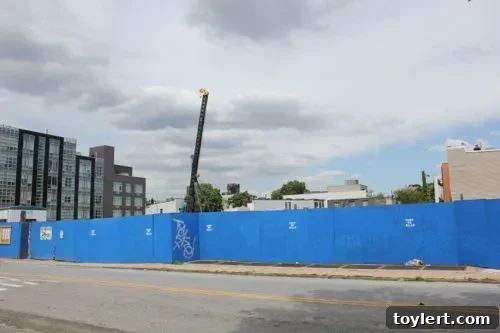
However, despite the grand plans and the significant initial investment, fast forward from that late 2010 transaction to a later point, and a notable discrepancy emerged between expectation and reality. The anticipated building, destined to reshape a prominent section of Union Avenue, remained elusive. Instead of a rising concrete and steel edifice, the site continued to be characterized by little more than a persistent plywood fence. This visible lack of progress sparked questions and underlined the often-complex nature of large-scale new construction Brooklyn projects.
Construction delays are a common phenomenon in urban development, particularly in a dense and highly regulated environment like New York City. Numerous factors can contribute to a project’s extended timeline, often pushing completion dates far beyond initial projections. One significant hurdle can be the intricate web of permitting and approval processes mandated by city agencies. Navigating zoning regulations, environmental impact reviews, building codes, and community board consultations can be a time-consuming and iterative process, sometimes requiring extensive revisions to architectural plans. Each step demands meticulous attention to detail and can lead to significant holdups if not managed perfectly.
Financing challenges also frequently play a critical role in stalling developments. The economic climate, lender confidence, and the developer’s ability to secure or maintain adequate funding can fluctuate over time. A global financial crisis, regional economic downturns, or even shifts in the local real estate market can make it difficult to secure construction loans or maintain existing lines of credit, leading to periods of inactivity on a site. Furthermore, unforeseen site conditions, such as archaeological finds, environmental contamination requiring remediation, or unexpected sub-surface geological issues, can necessitate costly investigations and revisions, pushing timelines and budgets beyond original estimates. Even logistics, like securing specialized labor or managing material supply chains in a congested city, can introduce unexpected delays.
The Impact of Dormancy on Urban Fabric
For the surrounding community, a prolonged development pause at a site like 544 Union Avenue can have several implications. A vacant lot or an inactive construction site, protected only by a plywood fence, can be perceived as an urban blight, detracting from the aesthetic appeal and vitality of the neighborhood. It can create dead zones, reduce pedestrian activity, and sometimes even become a magnet for unwanted graffiti or litter. For local businesses, the lack of new residents and the extended construction period can mean missed opportunities for increased patronage, impacting their bottom line. Moreover, potential renters or buyers keenly observing the Williamsburg apartments market might grow frustrated by the delay in new housing options becoming available, especially in an area known for its tight inventory.
From an investment perspective, delays translate directly into increased costs for developers. Holding costs, including property taxes, insurance, and interest on any existing loans, continue to accrue even when no construction is underway. The longer a project remains stalled, the higher these carrying costs become, eroding potential profits and adding financial pressure. Moreover, market conditions can shift during prolonged delays, potentially affecting the project’s viability or requiring a re-evaluation of pricing strategies for the rental units. This creates a delicate balance for developers, who must weigh the costs of delay against the potential benefits of waiting for more favorable conditions or redesigning elements to meet evolving market demands.
Williamsburg’s Enduring Appeal and Future Potential
Despite the temporary setback at specific sites like 544 Union Avenue, Williamsburg’s overarching narrative remains one of robust growth and enduring appeal. The neighborhood has consistently ranked among the most desirable places to live in New York City, driven by its unique blend of industrial heritage and modern innovation. Its convenient location, just a short subway ride from Manhattan, has always been a major draw. Beyond accessibility, Williamsburg offers a rich cultural tapestry, boasting an impressive array of independent boutiques, world-class restaurants, vibrant art galleries, and a thriving music scene. The transformation of its waterfront areas, with new parks and recreational spaces, further enhances its attractiveness, making it a prime location for residential development.
The demand for quality luxury apartments Williamsburg continues unabated, ensuring that projects, even those experiencing delays, are eventually likely to find success. The area’s demographics show a consistent influx of residents seeking modern amenities and a dynamic urban lifestyle. Property values and rental rates have shown remarkable resilience, solidifying Williamsburg’s status as a premier investment destination within the broader Brooklyn real estate market. The long-term outlook for developments like 544 Union Avenue, once they overcome their initial hurdles, remains positive, fueled by the neighborhood’s intrinsic value and continued desirability.
Ultimately, the story of 544 Union Avenue is a microcosm of the larger narrative of urban development in New York City: a tale of bold visions, significant financial commitments, and the inevitable challenges that arise when transforming ambitious plans into tangible structures. While the plywood fence once symbolized a frustrating pause, the enduring allure of Williamsburg ensures that such prime sites eventually contribute to the ongoing evolution of this dynamic Brooklyn neighborhood. The journey of every major investment property Brooklyn is a test of patience, adaptability, and unwavering belief in the city’s future.