John Thatcher & Sons: Architects of Brooklyn’s Golden Age
Brooklyn, a borough synonymous with architectural splendor and a rich historical tapestry, owes much of its iconic urban landscape to the visionary builders who shaped its growth during its most transformative years. Among these titans of construction, the firm of John Thatcher & Sons stands as a monumental force, responsible for an astonishing array of structures that continue to define Brooklyn’s character from the late 19th through the mid-20th century. Operating from their bustling offices at 60 Park Avenue, John Thatcher personally oversaw the realization of countless dreams in brick and mortar, leaving an indelible mark on the city he deeply cherished.
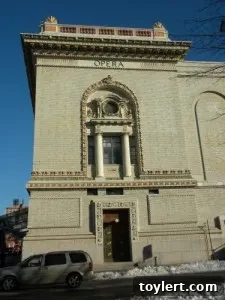
The sheer breadth of their portfolio is staggering, encompassing vital civic, cultural, educational, and residential landmarks. Consider the venerable Brooklyn Academy of Music (BAM), a cultural beacon known worldwide for its avant-garde performances; the elegant Riverside Apartments, offering sophisticated urban living; or the imposing Benjamin Moore Factory in DUMBO, a testament to Brooklyn’s industrial might turned into a modern creative hub. Their meticulous craftsmanship extended to the solemn receiving vault at Green-wood Cemetery, ensuring dignity in perpetuity, and vital educational institutions like PS 131, PS 134, PS 27, and the magnificent Erasmus Hall High School, which educated generations of Brooklynites. Other notable projects include the Polhemus Clinic, a beacon of healthcare, and the grand Dime Savings Bank, an architectural masterpiece that embodies the financial prosperity of the era. They also built the Hebrew Orphanage Asylum, facilities for Brooklyn Union Gas in Greenpoint, and the residential elegance of the Casino Apartments on Hicks Street. These structures, diverse in purpose and design, collectively narrate the story of a rapidly expanding Brooklyn, thoughtfully and skillfully constructed by John Thatcher & Sons.
A Visionary’s Commitment: Elevating Urban Living Standards
Beyond erecting grand public edifices and commercial facilities, John Thatcher held a profound and progressive interest in improving the quality of urban living, especially for the working class. This commitment to social welfare was deeply rooted in his association with pioneering housing reformers such as Alfred Tredway White and Charles Pratt. In the bustling, often overcrowded landscape of late 19th-century New York, tenement housing was notoriously substandard, characterized by poor ventilation, inadequate light, shared unsanitary facilities, and cramped living conditions that fostered disease and despair. Thatcher, influenced by White’s innovative “model tenements” and Pratt’s philanthropic approach, sought to challenge these grim realities and introduce a new paradigm for urban residential development.
Thatcher’s dedication to this cause culminated in the construction of an extraordinary and innovative tenement complex known as Franklin Court. Nestled in the vibrant neighborhood of Clinton Hill, near Our Lady of Mercy Convent, Franklin Court represented a revolutionary leap forward in urban housing design. Built in 1898, it predated the landmark New Tenement Law of 1901, yet already incorporated many of the progressive features that the law would later mandate, showcasing Thatcher’s forward-thinking approach. The complex comprised 96 apartments, each meticulously designed to prioritize the health and comfort of its residents. Unlike typical tenements, Franklin Court’s apartments were remarkably airy and well-lit, a stark contrast to the dark, stuffy rooms prevalent across the city. Each unit was equipped with its own toilet, a luxury unheard of in most working-class housing of the time, where shared outhouses or communal facilities were the norm. Furthermore, the building boasted hot running water, a sophisticated waste disposal system, and a dedicated shower room in the basement, providing residents with unprecedented levels of hygiene and convenience, all offered at a remarkably modest and affordable price point.
Franklin Court: A Lost Gem of Architectural and Social Innovation
Franklin Court was more than just a building; it was a beacon of social progress, demonstrating that dignified, healthy, and modern living was attainable for all, regardless of income. Its features, particularly the individual toilets and hot running water, were radical innovations for a tenement building of its era. The very existence of such a complex, built three years before the statewide mandate for improved tenement conditions, firmly established John Thatcher as a true pioneer in urban development and social reform. He wasn’t merely constructing buildings; he was constructing a better quality of life.
Tragically, despite its groundbreaking features and historical significance, Franklin Court, along with its advanced amenities, has been lost to time. Its memory faded long before the structure itself was eventually torn down, a sobering reminder of how easily significant architectural and social experiments can be forgotten in the relentless march of urban change. The loss of Franklin Court represents not just the physical absence of a building, but also the erasure of a tangible example of progressive design and humanitarian consideration in an era often characterized by industrial growth at the expense of human welfare. Its story, though often overlooked, underscores Thatcher’s commitment to building a more equitable and livable city.
Beyond Housing: Shaping Brooklyn’s Civic and Educational Infrastructure
While Thatcher’s passion for improved housing was a defining aspect of his work, John Thatcher & Sons was, at its core, one of Brooklyn’s most prolific and versatile building companies, concentrating on a vast array of larger, more complex projects that laid the groundwork for modern Brooklyn. Their extensive portfolio included schools, municipal buildings, expansive apartment complexes, and critical civic structures that formed the very backbone of the burgeoning borough. The company’s reach and ambition were evident in their competitive bids for monumental public works, even if not every endeavor resulted in a contract. For instance, while they ultimately lost the bid for the magnificent Brooklyn Museum, their participation speaks volumes about their standing as a major player in the city’s construction landscape.
The success of John Thatcher & Sons lay in their ability to handle a diverse range of projects with consistent quality and efficiency. Building schools like Erasmus Hall High School, for example, required not only architectural prowess but also an understanding of the long-term needs of a growing population and the importance of fostering educational environments. Constructing municipal buildings demanded a keen awareness of public utility and civic pride, while erecting large apartment buildings addressed the urgent demand for housing in a rapidly industrializing urban center. Their involvement in such critical infrastructure projects underscores their integral role in the physical and social development of Brooklyn, making them not just builders, but key architects of the borough’s future.
John Thatcher: A Standard Bearer of Integrity and Fairness
In an industry often characterized by cutthroat competition and occasional ethical ambiguities, John Thatcher stood out as a man of exceptional integrity and an unwavering commitment to fairness. His reputation was impeccable, a rarity then, and perhaps even rarer today. Thatcher earned widespread respect for his equitable treatment of workers, ensuring fair wages, reasonable working conditions, and a safe environment for the skilled laborers who brought his visions to life. This progressive approach fostered loyalty and dedication among his workforce, contributing to the high quality and longevity of his firm’s constructions.
Equally notable was Thatcher’s unimpeachable honesty with his clients, whether they were municipal authorities commissioning public works or private entities investing in commercial or residential developments. He conducted business with transparency, delivering on promises and maintaining open communication, which built immense trust. It is a testament to his character and ethical leadership that his name only surfaced once in recorded disagreements with suppliers or co-contractors – an astounding feat in an industry fraught with disputes and complex negotiations. This unwavering commitment to ethical practices not only secured his company’s stellar reputation but also ensured the enduring quality and structural integrity of every building they constructed. John Thatcher’s principled approach served as a gold standard, setting him apart as a true gentleman builder in an age of rapid and often unregulated expansion.
An Enduring Legacy Woven into Brooklyn’s Fabric
The narrative of John Thatcher & Sons is more than just a chronicle of construction projects; it is a story woven into the very fabric of Brooklyn itself. From cultural bastions to educational institutions, from industrial strongholds to innovative housing, Thatcher’s work spanned the full spectrum of urban needs. His personal integrity, combined with his firm’s dedication to quality and social progress, left an indelible mark on the borough, shaping its skyline and improving the lives of its residents.
Today, as we navigate the vibrant streets of Brooklyn, we walk amidst the enduring legacy of John Thatcher. The grandeur of BAM, the sturdy foundations of the Dime Savings Bank, the historic facades of Erasmus Hall – these are not merely old buildings; they are testaments to a builder who understood that architecture could be both functional and inspirational, profitable and socially conscious. While Franklin Court may be gone, the spirit of its progressive design lives on in the ongoing quest for equitable urban spaces. John Thatcher & Sons built more than structures; they built a significant portion of the Brooklyn we know and cherish, securing their place as unsung heroes in the city’s rich and captivating history.