Charles Lockwood: Architect of Urban Memory and the Enduring Legacy of “Bricks and Brownstone”
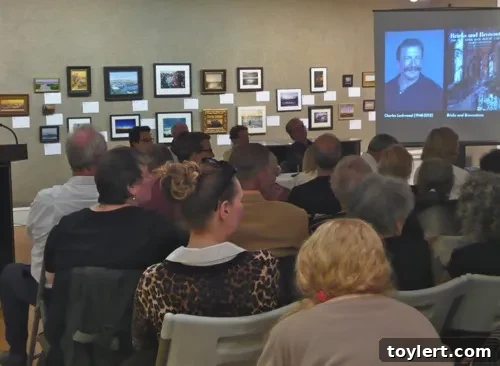
The name Charles Lockwood resonates deeply within the spheres of urban history, architectural preservation, and the passionate chronicling of New York City’s distinctive streetscapes. A visionary author and historian, Lockwood left an indelible mark with his seminal work, “Bricks and Brownstone: The New York Row House, 1783-1929,” a book widely regarded as the ultimate bible for enthusiasts and scholars of brownstone architecture. Recently, his profound influence was celebrated at a panel discussion held at Manhattan’s historic Salmagundi Club, moderated by Patrick Ciccone, a distinguished preservationist and a key collaborator on the most recent edition of Lockwood’s enduring masterpiece. Ciccone revealed a fascinating insight during the discussion: a substantial portion of the painstaking research for “Bricks and Brownstone” was conducted through immersive site visits, with a surprisingly large emphasis placed on the vibrant neighborhoods of Brooklyn.
Lockwood’s approach to documenting the urban fabric was anything but theoretical; it was rooted in boots-on-the-ground exploration. His meticulous dedication involved physically walking the streets, observing every architectural detail, and immersing himself in the very environments he sought to preserve and describe. This hands-on methodology not only lent unparalleled authenticity to his writings but also fostered a deep, personal connection with the subjects of his study—the elegant brownstones and row houses that define so much of New York City’s charm. Brooklyn, with its rich tapestry of diverse architectural styles and its treasure trove of well-preserved brownstone districts, naturally became a central focus of this exhaustive research, laying the foundation for what would become an indispensable guide to the city’s built heritage.
The Genesis of a Classic: “Bricks and Brownstone” and a Defining Moment
“Bricks and Brownstone” first emerged from Lockwood’s academic endeavors, initially conceived as his thesis. Its transformation into a published book when he was merely 24 years old speaks volumes about his precocious talent and unwavering commitment to urban history. The book’s impact was immediate and profound, quickly establishing itself as the authoritative text on the subject. It wasn’t just a catalogue of architectural styles; it was a socio-historical narrative that brought the brownstone to life, explaining its evolution, its inhabitants, and its significance in the broader context of New York’s development. This early success was a harbinger of a prolific career, during which Lockwood would author many other significant works, each contributing to our understanding of American cities.
One particular incident during the research phase for his thesis, which eventually became the first edition of “Bricks and Brownstone,” vividly illustrates Lockwood’s dedication and perhaps, a touch of accidental fame. In 1970, while Lockwood and his photographer were meticulously documenting the architectural landscape of Greenwich Village, an unforeseen and dramatic event unfolded just down the block. At 18 West 11th Street, a bomb accidentally detonated, planted by the radical Weather Underground group. In the ensuing chaos and aftermath, Lockwood found himself inadvertently positioned to capture a moment of profound urban disruption. Remarkably, as recounted by Patrick Ciccone, it was Lockwood who received credit for the now-famous photograph that appeared in the next day’s edition of The New York Times, forever linking his burgeoning career with a powerful image of a city grappling with turmoil.
This incident, though unrelated to architectural research, underscored the dynamic and often unpredictable nature of urban exploration. It was a stark reminder that the cities Lockwood studied were not static backdrops but living, breathing entities, subject to historical forces and dramatic events. While it was a moment of pure serendipity, it undoubtedly raised Lockwood’s profile, placing him, however briefly, at the nexus of journalism and urban documentation, showcasing his ability to be at the right place at the right time—a trait perhaps honed by years of traversing the city’s streets in search of architectural gems.
A Multifaceted Career: Beyond the Brownstones
Charles Lockwood’s intellectual curiosity and his dedication to documenting the built environment extended far beyond the brownstone. Following the success of his initial publication, he continued to delve into various facets of urban history, architectural heritage, and the broader social narratives embedded within city structures. While “Bricks and Brownstone” remains his most celebrated work, his bibliography encompasses a range of subjects, all characterized by rigorous research, engaging prose, and a deep affection for the urban landscape. His subsequent books often explored other architectural typologies, the development of distinct urban neighborhoods, and the economic and cultural forces that shaped American cities over centuries. He became a respected authority, capable of articulating complex historical processes in a way that was accessible to both academic audiences and the general public.
In the mid-1980s, Lockwood embarked on a new chapter in his professional life, relocating to California. This move marked a pivot in his career trajectory, as he transitioned into the fields of real estate consulting and publicity. While this might appear to be a departure from his historical pursuits, it was, in many ways, a logical extension of his expertise. His profound understanding of architectural history, urban development patterns, and the intrinsic value of historical properties provided him with a unique advantage in the real estate sector. He could offer invaluable insights into property valuation, historical preservation guidelines, and the marketing of historically significant buildings, leveraging his scholarly background to bridge the gap between academic research and practical application in the built environment. His work in consulting allowed him to actively participate in shaping urban development, influencing decisions that respected the historical context and architectural integrity of various projects.
His time in California was not merely a change of scenery but an evolution of his professional identity. He applied his analytical skills and historical perspective to contemporary challenges in urban planning and development, demonstrating the enduring relevance of his foundational work. Whether advising developers on sensitive renovations or helping to publicize projects that championed historical accuracy, Lockwood continued to champion the principles of thoughtful urban growth and the preservation of cultural heritage, albeit through a different lens. This diverse career path underscored his versatility and his unwavering commitment to the integrity and beauty of the urban landscape.
Honoring a Visionary: The Salmagundi Club Panel
The panel discussion at the Salmagundi Club served as a timely and poignant tribute to Charles Lockwood’s lasting impact. The Salmagundi Club itself, with its rich history as a professional and social club for artists, architects, and writers, provided a fitting backdrop for a conversation about a man who dedicated his life to documenting beauty and history. Moderated by Patrick Ciccone, whose own work in preservation and collaboration on the updated edition of “Bricks and Brownstone” made him uniquely qualified, the panel offered a nuanced exploration of Lockwood’s life and legacy.
Ciccone, along with other distinguished panelists (potentially including urban historians, architects, and community preservationists), delved into the various facets of Lockwood’s contributions. Discussions likely centered on the groundbreaking nature of “Bricks and Brownstone,” its meticulous documentation, and its role in sparking a broader interest in urban preservation. Panelists probably shared anecdotes about Lockwood’s dedication, his keen eye for detail, and his remarkable ability to weave historical facts into compelling narratives. The conversation would have explored how Lockwood’s work not only informed academic discourse but also empowered local communities and preservation groups to fight for the safeguarding of their architectural heritage.
Key themes emerging from such a panel would undoubtedly include Lockwood’s pioneering spirit in recognizing the value of vernacular architecture long before it became a mainstream concern. His work transformed how people perceived the common row house, elevating it from a mere dwelling to a significant historical artifact worthy of study and protection. The panel would have highlighted his influence on policy-making, contributing to zoning changes and preservation efforts across New York City and beyond. Furthermore, the discussion would emphasize the enduring relevance of “Bricks and Brownstone” in contemporary urban planning and conservation, serving as a constant reference for new generations of architects, developers, and city residents seeking to understand and protect their built environment. The event at the Salmagundi Club was not just a remembrance but a reaffirmation of the living legacy of a man whose vision continues to shape our appreciation of urban beauty.
Charles Lockwood’s Enduring Legacy: A Blueprint for Preservation
The life and work of Charles Lockwood present a compelling narrative of dedication, foresight, and a profound love for the built environment. His contributions extend far beyond the pages of his books; he helped to codify the appreciation of urban architecture, particularly the brownstone, at a time when many historical structures faced the threat of demolition or insensitive renovation. “Bricks and Brownstone” remains his magnum opus, an essential reference that has not only educated countless individuals but also inspired a movement towards the diligent preservation of urban architectural heritage.
Lockwood’s meticulous research methodology, characterized by exhaustive site visits and an unwavering commitment to detail, set a gold standard for urban historical documentation. His ability to connect architectural forms with social history provided a holistic understanding of how cities evolve and how their buildings tell stories of past lives and eras. This interdisciplinary approach made his work uniquely powerful and resonant, appealing to a broad audience from professional historians to everyday citizens walking the streets of Brooklyn or Manhattan.
Even his later career shift to real estate consulting and publicity in California can be seen as a testament to his adaptability and the practical application of his deep historical knowledge. He consistently sought to ensure that historical context and architectural integrity were considered in modern development, thus extending his influence into the realm of active urban shaping. Charles Lockwood’s legacy is not merely one of academic achievement but of tangible impact on the physical landscape of our cities. He provided a blueprint for understanding, appreciating, and ultimately preserving the architectural gems that define our urban memory, ensuring that the rich tapestry of our past continues to inform and enrich our present and future.