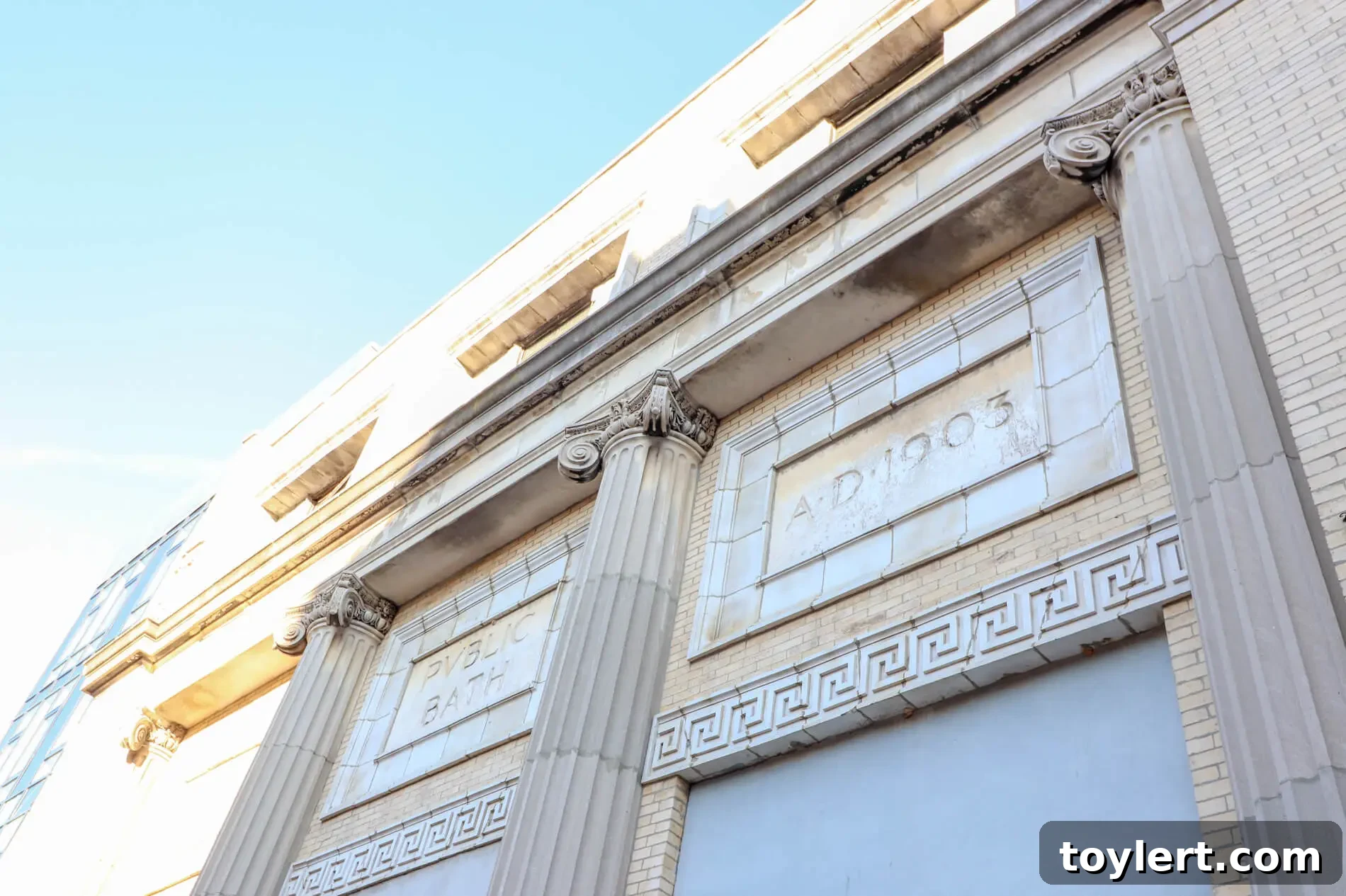
From Historic Public Bath to Modern Residences: The Transformation of 139 Huron Street in Greenpoint
Greenpoint, Brooklyn, a neighborhood renowned for its vibrant history and dynamic evolution, is witnessing another significant transformation. Nestled within its charming streets at 139 Huron Street stands a neo-Classical edifice that once served as a vital public bathhouse. This historic structure is now poised to embark on a new chapter, as building permits indicate its conversion into a four-story, nine-unit residential complex. This adaptive reuse project signifies not just the changing landscape of Greenpoint real estate, but also a thoughtful integration of the past with the demands of contemporary urban living.
A Glimpse into the Past: The Huron Street Public Bath’s Enduring Legacy
The story of 139 Huron Street begins in 1903, an era when public health initiatives were paramount in New York City. The Huron Street Public Bath was constructed as part of a city-wide effort to provide essential bathing facilities for residents, many of whom lived in tenements without private plumbing. Designed by the esteemed Brooklyn architect Louis H. Voss, whose portfolio also included the Pitkin Avenue and Montrose Avenue bathhouses, this facility quickly became a cornerstone of the Greenpoint community.
Architectural Grandeur and Social Impact
Louis H. Voss imbued the Huron Street Public Bath with a distinctive neo-Classical flair, a popular architectural style of the period known for its elegance, symmetry, and references to ancient Greek and Roman design. The building’s facade, with its classical proportions and robust detailing, reflected the civic pride and importance placed on public institutions at the turn of the 20th century. For decades, this architectural gem provided more than just a place for hygiene; it served as a bustling community hub, a testament to the city’s commitment to improving the quality of life for its citizens.
The bathhouse offered a crucial service, allowing countless Greenpoint families access to clean water and bathing facilities, fostering a healthier and more connected community. Its enduring operation, spanning an impressive 56 years, made it the longest-running public bath in New York City. From its opening day in 1903 until its closure in 1959, the Huron Street Public Bath remained a fixture in the lives of Greenpointers, witnessing profound social and economic changes in the neighborhood and the city at large.
The Post-Bathhouse Era: From Public Service to Private Enterprise
The mid-20th century brought significant shifts in urban living. With widespread improvements in plumbing technology and the increasing prevalence of private bathrooms in residential buildings, the need for public baths began to wane. Consequently, the Huron Street Public Bath closed its doors in 1959, marking the end of an important era for Greenpoint.
A New Purpose: Warehouse and Artisan Workshop
The building, however, was not destined to remain dormant. In 1964, it found a new lease on life when Arthur Jochnowitz acquired it at a city auction for $17,500. Jochnowitz recognized the structural integrity and generous space the former bathhouse offered, transforming it into a warehouse. This conversion preserved the building’s shell, albeit for a vastly different purpose, allowing its historical architecture to endure through changing times.
More recently, the building was home to Studio Wood Artesan Corp., renowned antique furniture restorers. This occupancy brought a unique synergy, where skilled artisans breathed new life into historical pieces within a historic setting. For years, the meticulous craft of furniture restoration thrived within the walls that once facilitated community hygiene, adding another rich layer to the building’s diverse narrative. This period further underscored the building’s adaptability and its capacity to house enterprises dedicated to quality and preservation, qualities that will hopefully inform its next transformation.
The Present and Future: A New Residential Chapter for Greenpoint
Today, 139 Huron Street stands on the precipice of its most significant transformation yet. The proposed conversion into a four-story, nine-unit residence represents a contemporary approach to urban development, focusing on adaptive reuse and the preservation of architectural heritage within a rapidly evolving urban landscape. While the original article snippet does not explicitly name the developer or architect for the new project, the URL slug from the source suggests involvement from a firm like Perkins Eastman, known for their expertise in blending modern design with historical contexts. Such a firm would undoubtedly bring a thoughtful approach to repurposing this unique structure.
Adaptive Reuse: Blending History with Modern Living
The concept of adaptive reuse—repurposing an old building for a new function—is particularly relevant in historic neighborhoods like Greenpoint. It offers a sustainable alternative to new construction, reducing waste and preserving the unique character that defines these areas. For 139 Huron Street, this means an opportunity to retain its neo-Classical grandeur while offering luxury apartments designed for contemporary lifestyles. The challenge and opportunity lie in integrating modern amenities and layouts within the existing structural framework, ensuring that the new residences respect and celebrate the building’s past.
Prospective residents of these new units will not only gain a home in a sought-after Greenpoint location but will also become part of a living history. Imagine living in a building where, over a century ago, Greenpoint residents gathered for their daily ablutions, where artisans meticulously restored antique furniture, and where the echoes of a vibrant community still resonate. This unique blend of history and modernity is a key selling point in Brooklyn’s competitive real estate market, appealing to those who seek character and narrative in their living spaces.
Greenpoint’s Evolution: A Tapestry of Old and New
Greenpoint itself has undergone a dramatic transformation in recent decades, evolving from an industrial hub to a highly desirable residential neighborhood. Its waterfront parks, burgeoning culinary scene, and close-knit community vibe attract a diverse population. The development at 139 Huron Street is a micro-reflection of this broader trend, showcasing how Greenpoint continues to honor its roots while embracing progress. The integration of historic buildings into new residential projects helps maintain the neighborhood’s authentic charm, preventing it from becoming a uniform landscape of new constructions.
The “Not Landmarked” Status: Implications for Development and Preservation
Crucially, the Huron Street Public Bath is not landmarked. This fact carries significant implications for its future. Landmarking status offers legal protection to historic buildings, regulating alterations and ensuring their preservation. The absence of this designation provides developers with greater flexibility in terms of design and renovation. While this can sometimes be a concern for preservationists, it also presents an opportunity for a developer to demonstrate how a historic structure can be sensitively adapted without the strictures of landmark regulations.
In the case of 139 Huron Street, the challenge is to achieve a balance: to modernize the interior for residential use while respecting the neo-Classical facade and the building’s historical presence in the streetscape. A responsible and thoughtful development approach, potentially guided by experienced architects like Perkins Eastman, would aim to retain the building’s exterior character, allowing it to continue contributing to Greenpoint’s rich architectural fabric for generations to come. The goal should be to create a harmonious blend where the past informs the present, without compromising the building’s intrinsic historical value.
Architect Louis H. Voss: A Lasting Impact on Brooklyn
The story of 139 Huron Street is incomplete without further acknowledging the contributions of its original architect, Louis H. Voss. Voss was a prominent figure in Brooklyn architecture during the late 19th and early 20th centuries. His work on public baths was part of a broader commitment to civic architecture, designing buildings that were both functional and aesthetically pleasing. Beyond the Huron Street, Pitkin Avenue, and Montrose Avenue bathhouses, Voss was responsible for numerous other significant structures across Brooklyn, including commercial buildings, residences, and other public facilities. His neo-Classical designs, characterized by their robust forms, elegant detailing, and imposing presence, left an indelible mark on Brooklyn’s urban landscape. The survival and current transformation of 139 Huron Street stand as a testament to the enduring quality and timeless appeal of Voss’s architectural vision, highlighting a legacy that continues to shape the visual identity of Greenpoint.
Conclusion: A Greenpoint Icon Reimagined
From a vital public health facility in the early 20th century to a warehouse, then an artisan workshop, and now on the cusp of becoming a contemporary residential building, 139 Huron Street has witnessed and adapted to over a century of Greenpoint’s evolution. This neo-Classical former bathhouse, designed by Louis H. Voss, is more than just a building; it’s a historical artifact, a silent observer of the neighborhood’s growth and change. Its impending transformation into a multi-unit residence is a prime example of adaptive reuse, promising to imbue modern living spaces with a profound sense of history and character.
As Greenpoint continues to flourish, projects like 139 Huron Street serve as important reminders of the neighborhood’s rich past and its vibrant future. The careful integration of historic structures into new residential developments ensures that Greenpoint retains its unique charm and identity, offering residents a truly distinctive living experience. The Huron Street Public Bath, a long-standing icon, is set to begin a new chapter, continuing its legacy as an integral part of the Greenpoint story for many years to come.