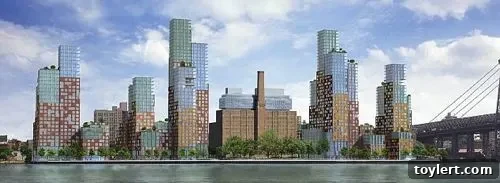
The Battle for Brooklyn’s Iconic Domino Sugar Factory: A Pivotal Real Estate Saga Unfolds
The acquisition of the sprawling Domino Sugar Factory site on the Williamsburg waterfront has long been one of New York City’s most anticipated and complex real estate sagas. A truly monumental piece of Brooklyn’s industrial past, this historic parcel represented a blank canvas for transformative urban redevelopment. The process of its sale and subsequent reimagining captured the intense scrutiny of developers, community boards, and urban planners alike, highlighting the inherent challenges and immense potential of large-scale waterfront projects in a dynamic city like New York.
For years, the future of the iconic Domino Sugar Refinery, a cornerstone of American industry for over a century, remained a subject of fervent discussion. The site, sprawling across 11 acres of prime Brooklyn real estate, offered unparalleled potential for a vibrant mixed-use community. Its dilapidated state, a relic of a bygone industrial era, presented both a significant undertaking and an extraordinary opportunity for revitalization. The vision for the Domino site was grand: to transform a derelict factory complex into a modern, sustainable neighborhood, complete with residential towers, commercial spaces, public parks, and a renewed connection to the East River. This ambitious goal naturally attracted the attention of the most prominent real estate developers, each eager to leave their mark on the Brooklyn skyline.
A Highly Contested Acquisition: Bidders Vie for a Prime Waterfront Gem
The pathway to redevelopment for the Domino Sugar Factory was fraught with intricate negotiations and competing interests. At the heart of a significant turning point in the site’s history was the joint venture between the Community Preservation Corporation (CPC) and the Katan Group, who had been stewards of the property with grand redevelopment ambitions. However, as often happens with projects of this magnitude, various factors can lead to shifts in strategy or ownership. In this particular instance, the joint venture found itself at a critical juncture, opening the door for external parties to express interest in outright acquisition.
According to reports from the Commercial Observer during a pivotal period in 2012, Two Trees Management, a highly respected and influential development firm known for its significant contributions to Brooklyn’s urban fabric, was certainly a frontrunner in the bidding process. Their offer of $165 million for the entire factory project underscored the substantial financial commitment required for such an endeavor. Yet, it became clear that Two Trees was far from the sole contender in this high-stakes competition. The sheer desirability of the Domino site, with its unparalleled location and immense development potential, ensured that numerous powerful players in the real estate world were keenly observing the situation.
Indeed, sources familiar with the CPC’s position at the time revealed that the company began receiving a flurry of unsolicited offers from various private developers. This surge of interest highlighted the intense market appetite for trophy assets, especially those with the unique characteristics and development potential of the Domino site. The unsolicited nature of these bids often indicates a developer’s strong conviction in a property’s value, signaling a willingness to aggressively pursue an opportunity even if it wasn’t formally on the market for an open bidding process. This dynamic transformed the sale from a straightforward transaction into a competitive arena, reflecting the site’s status as one of New York City’s most coveted development parcels.
Real Estate Titans Enter the Fray: Silverstein and Ross Show Their Hand
Among the formidable names reportedly interested in acquiring the Domino Sugar Factory site were two of the most recognizable and influential figures in American real estate: Larry Silverstein and Stephen Ross. The involvement of such titans underscored the extraordinary significance of the Domino project within the industry. Larry Silverstein, renowned for his monumental work in rebuilding the World Trade Center complex and his extensive portfolio of commercial properties across New York City, brings unparalleled experience in large-scale urban development. His interest alone was a testament to the transformative potential he saw in the Williamsburg waterfront parcel.
Similarly, Stephen Ross, the visionary founder and chairman of Related Companies, stands as another colossus in the real estate world. Related Companies is celebrated for developing some of the most ambitious and iconic mixed-use projects globally, including the Hudson Yards development in Manhattan. Ross’s reputation for creating entire new neighborhoods and his track record of successful, high-value developments made his interest in Domino particularly noteworthy. The presence of developers of this caliber in the bidding pool not only intensified the competition but also validated the Katan Group’s assertions about the site’s true market worth.
The engagement of Silverstein and Ross, alongside other unnamed private developers, transformed the Domino acquisition from a private negotiation into a highly visible battle among industry heavyweights. Each of these developers possessed the financial might, the development expertise, and the long-term vision necessary to tackle a project of Domino’s scale and complexity. Their participation signaled to the market that the site was indeed a unique opportunity, far exceeding the typical development parcel in terms of both challenge and reward.
The Valuation Discrepancy: A $35 Million Sticking Point
Despite the competitive landscape, Two Trees Management’s offer of $165 million was a substantial figure, reflecting the significant investment required to acquire and develop such a site. However, this figure became a major point of contention. The Katan Group, a key partner in the selling joint venture, vehemently opposed the Two Trees offer, arguing that the site’s actual market value was considerably higher, closer to $200 million. This $35 million disparity was not merely a difference in opinion; it represented a fundamental disagreement over the true potential and intrinsic value of one of Brooklyn’s most prized development sites.
Property valuation for a complex site like the Domino Sugar Factory involves numerous factors. These include the underlying land value, existing zoning entitlements, the potential for upzoning, prevailing market conditions for residential and commercial spaces, proximity to transit, waterfront access, and the overall development climate in New York City. The Katan Group’s insistence on a higher valuation likely stemmed from their comprehensive understanding of these factors, possibly factoring in future market appreciation, a more aggressive development program, or the strategic importance of the site within the booming Brooklyn real estate market. They perhaps saw greater unrealized value in the site’s development rights, envisioning a project that could command even higher returns than Two Trees initially projected in their offer.
Such valuation disputes are common in large-scale real estate transactions, especially when the property holds unique historical significance and development potential. The Katan Group’s position underscored the belief that the Domino site was not just another piece of land but a generational opportunity, capable of generating substantial returns far exceeding the proposed $165 million. Their resistance prolonged the negotiations and highlighted the intricate financial considerations involved in transferring ownership of such a monumental urban asset. The presence of other interested parties, particularly those of Silverstein’s and Ross’s stature, undoubtedly bolstered the Katan Group’s argument that the market would support a higher price point.
The Transformative Impact on the Brooklyn Waterfront and Beyond
The eventual sale and subsequent redevelopment of the Domino Sugar Factory site by Two Trees Management, despite the initial valuation dispute and intense competition, irrevocably altered the landscape of the Williamsburg waterfront. The project, now nearing completion, has delivered thousands of residential units, including a significant portion of affordable housing, alongside expansive public parks, commercial spaces, and a vibrant community hub. This transformation exemplifies the power of thoughtful urban planning and strategic development to breathe new life into post-industrial landscapes, creating dynamic, livable neighborhoods that enhance the quality of life for residents and visitors alike.
The saga of the Domino Sugar Factory’s sale serves as a critical case study in urban redevelopment, highlighting the complex interplay between historical preservation, community needs, market forces, and the visions of influential developers. The initial bidding war, the valuation debates, and the eventual triumph of a coherent development plan underscore the multi-faceted challenges inherent in revitalizing such an iconic site. This pivotal transaction not only reshaped the Brooklyn skyline but also set new precedents for waterfront development and historical adaptation in one of the world’s most competitive real estate markets. The legacy of the Domino Sugar Factory project continues to inspire and inform future development endeavors across New York City and beyond, demonstrating what is possible when vision meets perseverance on a grand scale. You can read more about the intricate details of this transformative transaction here.