Securing Futures: Long-Term Childcare Facility Proposed for Park Slope Amidst School Overcrowding Concerns
Exciting developments are on the horizon for Park Slope families, as the Department of Education (DOE) is currently engaged in crucial discussions with the St. Thomas Aquinas Diocese regarding a potential long-term lease for a much-needed early childcare facility. This significant update comes courtesy of Council Member Brad Lander, who shared these promising insights at a recent Community Board 6 meeting. The proposed initiative aims to strategically repurpose a space that has already played a vital role in the community, transforming it into a cornerstone for early childhood education and a proactive measure against the growing challenge of school overcrowding in the vibrant Brooklyn neighborhood.
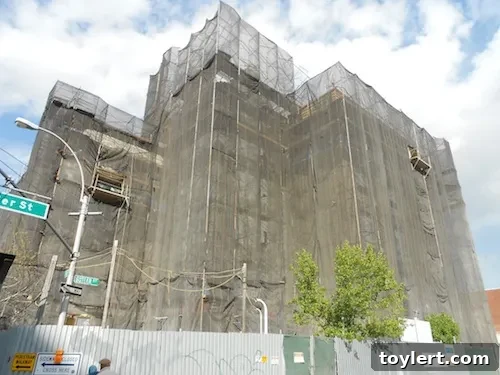
The site in question, located at 9th Street and 4th Avenue in the heart of Park Slope, is currently serving as a temporary home for students displaced by the extensive construction work at PS 133. This relocation became necessary following unforeseen delays in the school’s renovation project. Initially, it was projected that PS 133’s construction would conclude by September 2012, but circumstances led to an extension, pushing the reopening date to September 2013 – a full year beyond original expectations. Consequently, the St. Thomas Aquinas Diocese graciously extended its lease agreement to accommodate the displaced students for this additional school year, demonstrating a profound commitment to supporting local education.
However, once PS 133 reopens its doors and its students return to their newly renovated premises, the future of the Diocese space became a topic of considerable community interest and speculation. The crucial question lingered: would the DOE continue to utilize this valuable location, or would it revert to its previous status? Council Member Brad Lander’s recent announcement offers a beacon of hope, suggesting a path forward that not only ensures continued use of the space but also addresses a critical community need. Lander expressed profound optimism regarding the prospects of securing a long-term lease, specifically highlighting the intention to establish an early childcare center. This strategic move is envisioned as a proactive and sustainable solution to mitigate the pervasive issue of school overcrowding that has increasingly burdened Park Slope and other rapidly developing areas within New York City.
The Genesis of a Solution: Addressing PS 133’s Construction and Its Ripple Effects
The narrative of the proposed childcare facility is intrinsically linked to the history of PS 133’s construction. PS 133, a vital educational institution within the Park Slope community, underwent significant renovation and expansion to modernize its facilities and increase its capacity. While such projects are ultimately beneficial, they often come with temporary disruptions. The displacement of students during construction is a considerable logistical challenge for both the Department of Education and the affected families. The St. Thomas Aquinas Diocese stepped forward as a critical community partner, providing a stable and accessible temporary learning environment for these students. This period of displacement underscored the flexibility and adaptability required within urban educational planning.
The unexpected extension of the PS 133 construction timeline, pushing its reopening back a full year, created additional strain but also inadvertently opened an opportunity. The prolonged use of the Diocese space as a temporary school site demonstrated its suitability for educational purposes. As the end of the temporary arrangement approached, discussions naturally turned to how this well-situated and appropriately configured space could continue to serve the community’s educational needs beyond its temporary role. This set the stage for the current talks about a permanent early childcare solution.
Meeting the Demands of a Growing Community: The Urgent Need for Early Childcare in Park Slope
Park Slope, renowned for its historic brownstones, vibrant cultural scene, and family-friendly atmosphere, has experienced significant population growth in recent decades. This growth, while indicative of the neighborhood’s desirability, has placed immense pressure on its infrastructure, particularly its educational facilities. School overcrowding has become a pressing concern for parents and educators alike, leading to larger class sizes, reduced access to desired programs, and increased stress on existing school buildings.
Early childhood education plays a pivotal role in a child’s development, laying the foundation for future academic success and social-emotional well-being. Furthermore, accessible and affordable early childcare is a critical resource for working parents, enabling them to participate fully in the workforce while ensuring their children receive quality care and education. The establishment of a dedicated early childcare center at the St. Thomas Aquinas Diocese location would directly address these multifaceted needs. It would provide a high-quality learning environment for the youngest members of the community, ease the burden on elementary schools by offering an alternative for pre-kindergarten aged children, and support the economic vitality of families in Park Slope.
Council Member Brad Lander’s advocacy for this long-term lease highlights a deep understanding of these community dynamics. His optimism is rooted in the recognition that repurposing an existing, suitable space for early childcare is a pragmatic and efficient way to expand educational infrastructure without requiring new construction from the ground up, thereby accelerating the provision of these essential services.
A Collaborative Vision: The Roles of the DOE, Diocese, and Community Leadership
The successful realization of this early childcare facility hinges on a collaborative effort between several key stakeholders. The Department of Education, as the primary educational authority, is responsible for planning, funding, and overseeing public education in New York City. Their willingness to pursue a long-term lease signifies a commitment to innovative solutions for space challenges and a proactive approach to early childhood education.
The St. Thomas Aquinas Diocese plays an equally crucial role. Their initial willingness to house PS 133 students demonstrated a strong sense of community responsibility. Entering into a long-term lease for an early childcare center would further solidify their role as a vital community partner, contributing significantly to the educational landscape of Park Slope. This kind of inter-organizational cooperation is often the bedrock of successful community development projects.
Council Member Brad Lander’s involvement as a local elected official is instrumental. As a representative of the community, he acts as a liaison between residents, city agencies, and other stakeholders. His public endorsement and active participation in these discussions provide transparency and build confidence among constituents. His optimism is not just a sentiment but a reflection of sustained efforts and promising dialogue.
The Community Board 6 meeting, where Lander shared these updates, serves as another important piece of the puzzle. Community boards are essential forums for public input and local planning. Such meetings ensure that proposed developments are discussed openly, allowing residents to voice their perspectives and ensuring that projects align with the broader needs and aspirations of the neighborhood.
Beyond the Lease: The Broader Impact on Park Slope’s Educational Landscape
Securing a long-term lease for an early childcare facility at the St. Thomas Aquinas Diocese site would have far-reaching positive impacts on Park Slope. Firstly, it provides stability. A long-term agreement means the community can rely on this resource for years to come, allowing for better planning for families and continuity of care for children. This stability is invaluable in an urban environment where access to quality educational services can often feel transient.
Secondly, it represents a strategic investment in the earliest stages of education. High-quality early childcare programs have been shown to have lasting benefits, including improved academic performance, better social skills, and increased readiness for elementary school. By investing at this foundational level, the DOE and its partners are not just addressing overcrowding; they are contributing to the long-term success and well-being of Park Slope’s children.
Furthermore, this initiative could serve as a model for other neighborhoods facing similar challenges. The repurposing of existing community spaces, coupled with strong inter-organizational partnerships and dedicated local leadership, offers a template for addressing educational infrastructure needs in a cost-effective and community-centric manner. It underscores the importance of looking beyond traditional school buildings to find creative solutions for growing student populations.
The location itself, at 9th Street and 4th Avenue, is highly accessible for many Park Slope families, further enhancing its utility. Its central position within the neighborhood makes it a convenient option, reducing travel burdens for parents and ensuring that the facility is integrated into the daily rhythms of community life.
Looking Ahead: The Promise of a Brighter Educational Future
While the discussions are ongoing, Council Member Brad Lander’s “optimism” is a strong indicator of a positive outcome. The potential long-term lease for an early childcare center at the St. Thomas Aquinas Diocese represents a confluence of necessity, opportunity, and community collaboration. It signifies a forward-thinking approach to educational planning in Park Slope, addressing immediate needs while building a resilient framework for the future.
Families in Park Slope can look forward to the prospect of a new, high-quality early childhood education option that will not only foster the development of their youngest children but also play a crucial role in alleviating the pressures of school overcrowding throughout the neighborhood. This initiative stands as a testament to the power of community engagement, strategic partnerships, and dedicated leadership in shaping a brighter educational future for all.
Related News and Developments on PS 133 and Park Slope Education
- Development Watch: P.S. 133 Taking Shape [Brownstoner]
- PS 133 Not Opening Until September 2013 [Brownstoner]
- Development Watch: PS 133 Goes Vertical [Brownstoner]
- Development Watch: The Snowy PS 133 Site [Brownstoner]
- View on GMAP
- Onward and Upward at PS 133 [Brownstoner]
- Last Wall Comes Down at PS 133 [Brownstoner]
- Chipping Away at PS 133 [Brownstoner]
- PS 133: Memo on the Demo [Brownstoner]