Historic Charm Meets Modern Opportunity: The Townhouse at 29 Sutton Street, Greenpoint
Nestled within the vibrant and historically rich landscape of Greenpoint, Brooklyn, stands 29 Sutton Street, a distinguished two-story wood-frame townhouse. Dating back to the late 19th century, as suggested by historic urban mapping, this property represents a compelling opportunity for discerning buyers and investors. It’s a canvas awaiting a visionary transformation, promising to blend classic Brooklyn charm with contemporary luxury. Currently presenting in a rough condition, it beckons for a comprehensive renovation to restore its inherent grandeur and adapt it for modern living, offering an exciting prospect in one of New York City’s most coveted neighborhoods.
A Glimpse into Greenpoint’s Architectural Heritage
The late 19th century was a prolific period for urban development in Brooklyn, and Greenpoint, with its industrial roots and burgeoning residential districts, was no exception. Wood-frame townhouses like 29 Sutton Street were characteristic of the era, offering sturdy construction and elegant designs that have largely stood the test of time. These homes often feature unique architectural elements that speak to the craftsmanship and aesthetic sensibilities of their period, providing a tangible link to Brooklyn’s past. The property at 29 Sutton Street, specifically, showcases the enduring quality and potential for revival inherent in these historic structures. Its very existence is a testament to Greenpoint’s rich history, offering a rare chance to own a piece of it.
Understanding the historical context of such a property is key to appreciating its value. The late 1800s saw Greenpoint evolve from an industrial hub to a thriving residential area, with streets lined by homes that reflected various architectural styles, often incorporating intricate detailing. While some of these homes have been meticulously preserved, others, like 29 Sutton Street, await a thoughtful restoration that can honor their origins while infusing them with new life. This blend of old and new is precisely what makes historic Greenpoint homes so appealing to a wide range of buyers, from history enthusiasts to those seeking unique living spaces.
Unveiling Original Grandeur: Exquisite Architectural Details
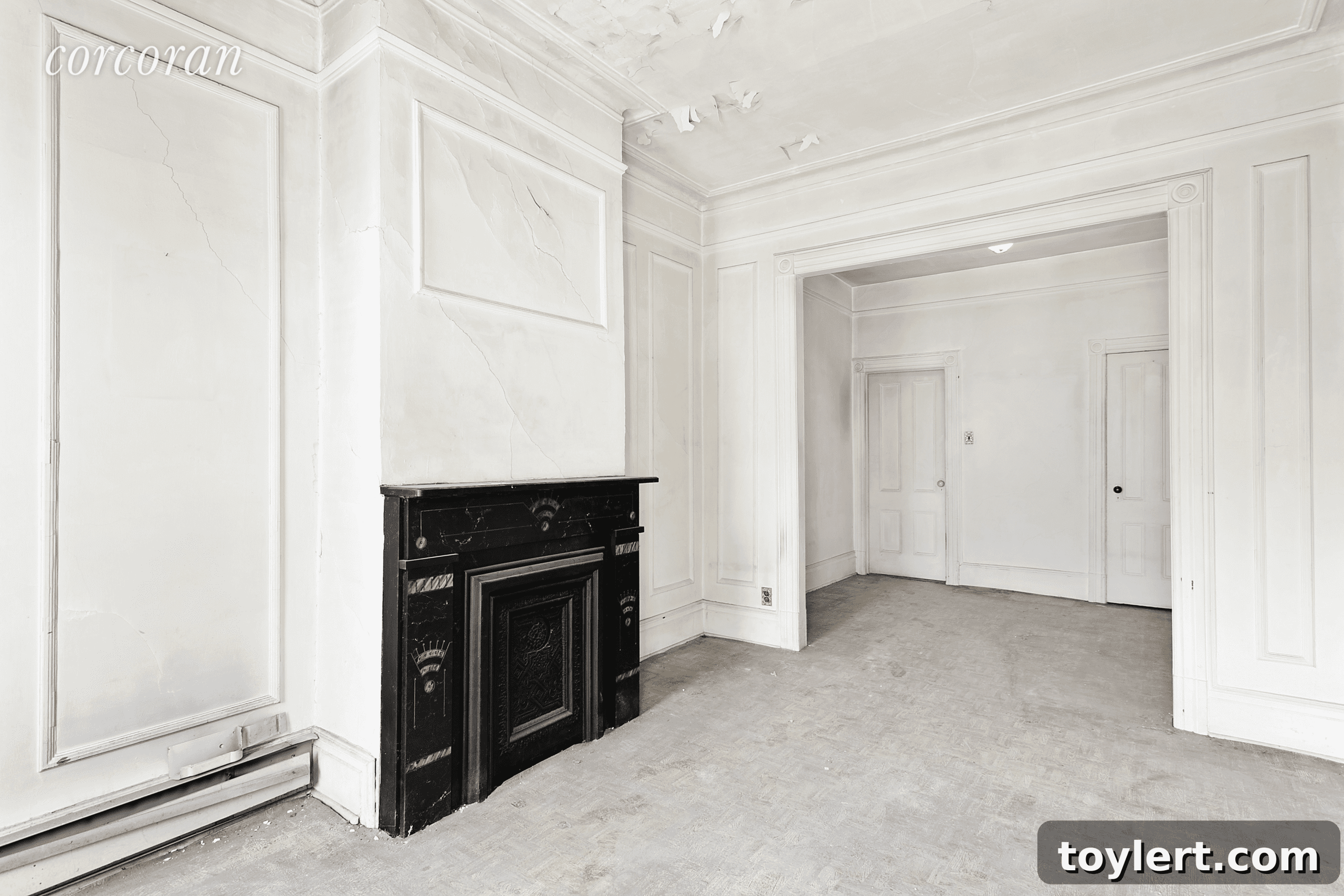
Despite its current state, 29 Sutton Street retains several remarkable original features that hint at its past elegance and offer an invaluable starting point for renovation. Among the most striking are the three lovely slate mantels, each a testament to the period’s interior design. Two of these mantels boast their original faux marbling, an intricate decorative technique popular in the 19th century that simulated the luxurious appearance of marble at a more accessible cost. These details are not merely decorative; they are artifacts, telling a story of craftsmanship and style from a bygone era.
Adding to their charm, two of the mantels also retain their original summer covers. These functional and decorative pieces were traditionally used to cover the fireplace opening during warmer months when fires were not needed, preventing drafts and maintaining a clean aesthetic. Furthermore, one mantel even features an original stove insert, providing another layer of historical authenticity and a unique element to preserve or adapt. Such details are increasingly rare in modern renovations and offer a distinctive character that cannot be replicated.
Beyond the fireplaces, the property’s photos reveal that the parlor and the entry area remain largely intact. This includes much of the original woodwork, moldings, and the main staircase. The staircase itself is a focal point, with beautifully stained newels, railings, and balusters that speak to the quality of materials and design prevalent in the late 19th century. Preserving these elements during a renovation would allow the future owner to retain the home’s historic soul, creating a living space that gracefully bridges centuries. These intact features are not just aesthetic assets; they are crucial components in maintaining the property’s historical integrity and appeal, significantly enhancing its value in the competitive Brooklyn real estate market.
The Canvas for Transformation: Renovation Potential
The description of 29 Sutton Street as being in “rough condition” signals a substantial undertaking for any prospective owner. However, for those with a vision and an appreciation for historic properties, this presents an unparalleled opportunity. A “full renovation” implies addressing structural integrity, updating mechanical systems, and modernizing interiors while ideally preserving and enhancing the charming original details. This could involve everything from electrical and plumbing upgrades to a complete overhaul of kitchens and bathrooms, bringing the home up to contemporary standards of comfort and efficiency.
The renovation process for a historic wood-frame townhouse in Greenpoint often involves a delicate balance: integrating modern amenities without sacrificing the architectural character that makes such homes unique. Imagine restoring the original flooring, revitalizing the intricate moldings, and meticulously repairing the historic mantels, all while installing state-of-the-art kitchen appliances, luxurious bathroom fixtures, and efficient heating and cooling systems. The result would be a truly bespoke home that offers the best of both worlds – the elegance of the past with the conveniences of the present.
Beyond the aesthetic appeal, a comprehensive renovation also presents an opportunity to implement sustainable building practices. Upgrading insulation, installing energy-efficient windows, and potentially adding solar panels can transform this historic property into an eco-friendly dwelling, significantly reducing long-term operating costs and enhancing its marketability. The challenges of renovation are matched only by the immense satisfaction of bringing a piece of Greenpoint’s history back to life, creating a dream home tailored to individual tastes and needs.
A Versatile Layout: Two-Family Living
Going by its layout, 29 Sutton Street appears to have been originally configured as a two-family residence. This traditional Brooklyn arrangement typically consists of a rental apartment occupying one floor, situated above an owner’s duplex. This setup offers significant flexibility and financial advantages. For an owner, it provides an immediate income stream from the rental unit, which can substantially offset mortgage payments or property taxes. Alternatively, it can serve as a multi-generational home, offering separate living spaces for extended family members while maintaining proximity.
The property is noted as a 17-foot-wide house, a common width for Brooklyn townhouses, offering a comfortable footprint for urban living. An interesting feature, or rather an absence, is that the house has no cellar. This implies that any basement-level space would likely be at garden level, which aligns with the observation that mechanicals are located in the kitchen at the rear of the garden level. This configuration means careful planning is essential for any renovation, particularly concerning storage solutions and the potential for additional living space. While a lack of a traditional cellar might seem unconventional, it can simplify certain aspects of foundation work and open up possibilities for a more integrated garden-level living experience.
The placement of mechanicals in the kitchen at the rear of the garden level is also a detail to consider. While not uncommon in older homes, a full renovation would likely involve evaluating and potentially reconfiguring these systems for optimal efficiency and aesthetics. This layout, however, solidifies its identity as a functional and adaptable two-family home, ready to accommodate various living arrangements and financial strategies for its future owner.
Greenpoint: A Coveted Brooklyn Enclave
The location of 29 Sutton Street in Greenpoint is arguably one of its most compelling attributes. Greenpoint has evolved into one of Brooklyn’s most sought-after neighborhoods, celebrated for its unique blend of historic charm, vibrant community, and modern amenities. Once an industrial waterfront, it has transformed into a residential haven known for its tree-lined streets, independent boutiques, critically acclaimed restaurants, and lively cultural scene.
Residents of Greenpoint enjoy unparalleled access to waterfront parks, including the popular Transmitter Park, offering stunning views of the Manhattan skyline and ample green space for recreation. The neighborhood maintains a strong sense of community, a rarity in a bustling city like New York, with local businesses and community events fostering a close-knit atmosphere. Excellent public transportation options, including the G train and various bus lines, provide convenient access to the rest of Brooklyn and Manhattan, making it an ideal location for commuters.
The real estate market in Greenpoint continues to demonstrate robust growth, driven by its desirability, ongoing development, and attractive lifestyle. Properties here, particularly historic townhouses, are seen as sound investments, offering both appreciation potential and a high quality of life. Owning a home in Greenpoint means being part of a dynamic neighborhood that perfectly encapsulates the allure of modern Brooklyn living, all while preserving its unique historical identity.
Navigating the Market: The Investment Perspective
The recent sale history of 29 Sutton Street provides critical insight into its market value and investment potential. The previous transaction, which saw the two-family building sold for $1.175 million to an LLC in November, underscores the strong demand for properties in Greenpoint, even those requiring significant investment in renovation. This sale followed a complex situation involving an estate where the trustee faced unpaid property taxes, leading to the issuance of a tax lien certificate the previous year.
For savvy investors and homeowners, understanding the intricacies of such sales is crucial. A tax lien certificate often indicates a motivated seller or a property acquired under specific circumstances, which can sometimes present unique opportunities. The acquisition by an LLC suggests a strategic investment, likely with plans for a comprehensive renovation and either resale or long-term rental income generation. This pattern is common in prime Brooklyn neighborhoods, where properties with substantial upside potential are quickly identified and invested in.
Given Greenpoint’s appreciating real estate market and the inherent value of a two-family historic townhouse, the $1.175 million acquisition represents a significant yet calculated investment. A well-executed renovation would undoubtedly enhance the property’s market value considerably, making it a lucrative venture for its future steward. This property is not just a home; it is an asset poised for significant appreciation in a consistently strong market.
A Future Reimagined at 29 Sutton Street
In conclusion, 29 Sutton Street stands as more than just a house; it is a profound opportunity. It offers a rare chance to own a piece of Greenpoint’s late 19th-century architectural legacy, to engage in a rewarding renovation project, and to create a magnificent home or a lucrative investment property in one of New York City’s most cherished neighborhoods. Its intact historic details provide a strong foundation for a renovation that respects its past while embracing the future. The two-family layout offers flexibility and financial advantages, making it an attractive proposition for a diverse range of buyers.
For those with an eye for history, a passion for design, and an understanding of the Brooklyn market, 29 Sutton Street represents an exceptional canvas. It promises to transform into a dwelling that not only offers comfortable, stylish living but also tells a compelling story, blending the charm of yesteryear with the sophistication of modern urban life. This Greenpoint townhouse is ready for its next chapter, waiting for a visionary owner to unlock its full, remarkable potential.