Brooklyn’s Historic Gems: A Year-End Real Estate Review of Iconic Properties
As the year draws to a close, we revisit the dynamic landscape of Brooklyn’s real estate market, focusing our attention on several iconic listings that capture the borough’s unique charm and architectural heritage. Our deep dive takes us back to mid-year to track the journey of these distinguished properties, offering a comprehensive overview of how they fared in a vibrant and often competitive market. From the stately brownstones of Bedford-Stuyvesant to the grand limestones of Crown Heights, these homes represent more than just real estate transactions; they are a testament to Brooklyn’s rich history and enduring appeal. Understanding their market performance provides invaluable insights into current trends, buyer preferences, and the ever-evolving value of historic preservation in one of New York City’s most sought-after boroughs.
The Enduring Charm of Bed-Stuy Brownstones: A Closer Look at 629 Putnam Avenue
Our first stop brings us to the heart of Stuyvesant Heights, a coveted sub-neighborhood within Bedford-Stuyvesant, where classic brownstones reign supreme. Nestled at 629 Putnam Avenue, we examine a magnificent brownstone that recently captivated buyers with its extraordinary preservation and wealth of period details. This particular residence, a former “House of the Day” feature, truly embodies the architectural grandeur for which Bed-Stuy is renowned. The neighborhood itself is celebrated for its tree-lined streets, harmonious blocks of well-preserved 19th-century row houses, and a strong sense of community. Its historical significance and vibrant cultural scene continue to attract a diverse array of residents, from artists and professionals to families seeking a slice of authentic Brooklyn life. The demand for these classic homes remains consistently high, driven by their unique character and the relatively spacious living they offer compared to other parts of the city.
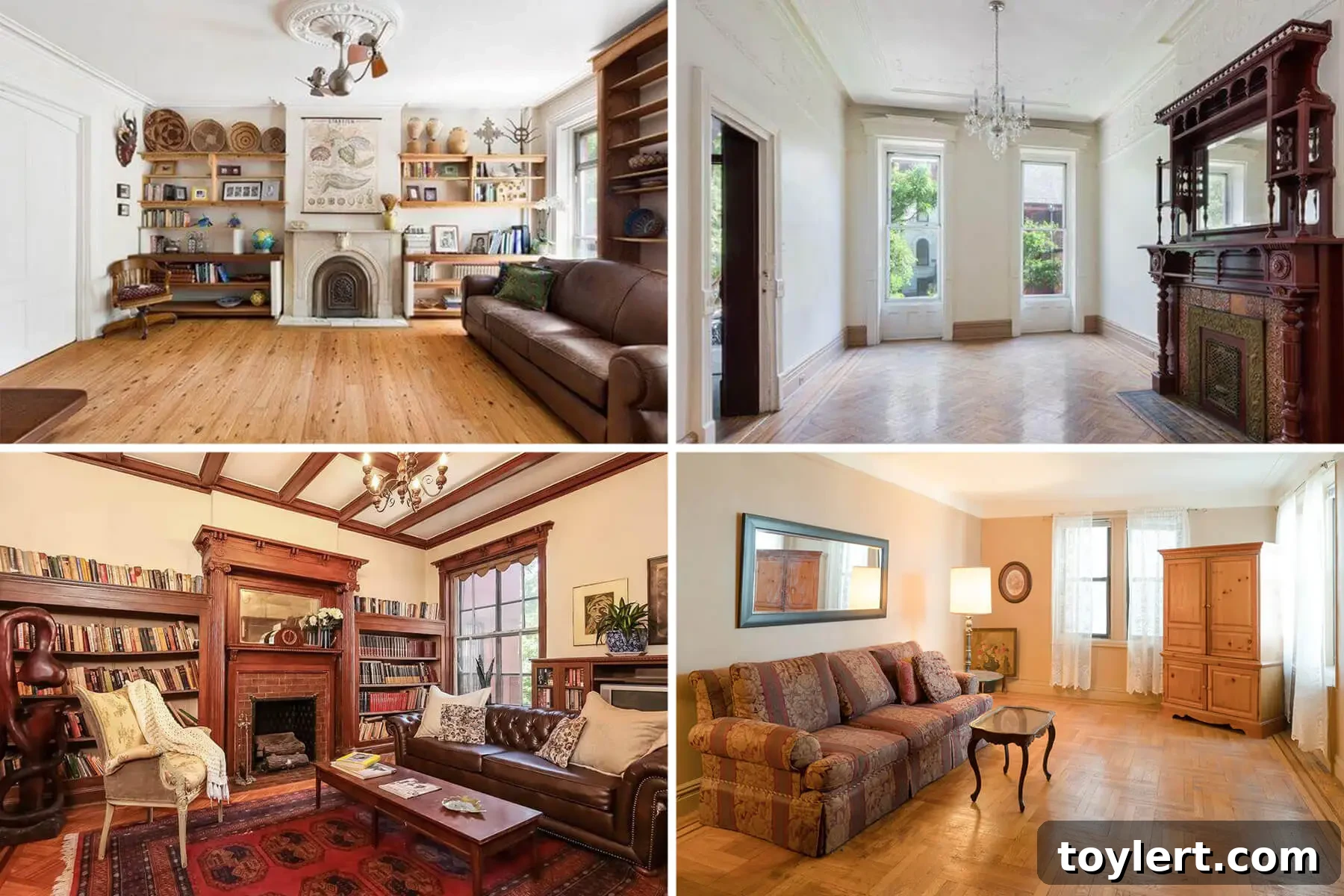
What truly set 629 Putnam Avenue apart was its remarkable collection of original features, most notably an impressive array of seven intricately designed mantels. These aren’t just fireplaces; they are works of art, each telling a story of a bygone era. Among them are exquisite Queen Anne-type mantels, characterized by their elaborate carvings, integrated mirrors, and decorative Minton-style tiles. The Queen Anne style, popular in the late 19th and early 20th centuries, is celebrated for its picturesque and eclectic ornamentation, often featuring turned spindles, stained glass, and a rich variety of textures and materials. Minton tiles, known for their vibrant glazes and intricate patterns, add another layer of historical authenticity and artistic value. Such details are not merely decorative; they are integral to the home’s identity, enhancing its historical integrity and significantly contributing to its market value. The meticulous upkeep of these features reflects a dedication to preservation that resonates deeply with discerning buyers in the historic Brooklyn market.
The journey of 629 Putnam Avenue culminated in a successful sale in December, closing at $1.685 million. This figure represents a slight adjustment of $5,000 below the initial asking price. In a market where many historic homes often sell at or above asking, this minor reduction could be attributed to various factors, including negotiation strategies, specific market timing, or minor contingencies. However, it largely signifies a robust transaction that acknowledges the property’s significant value. The sale underscores the continued strong demand for well-preserved brownstones in desirable Bed-Stuy locations. Buyers are increasingly seeking homes that offer both historical authenticity and modern functionality, and properties like 629 Putnam Avenue, which seamlessly blend these elements, consistently command impressive prices. This transaction serves as a benchmark, highlighting the enduring investment potential of architecturally significant homes in one of Brooklyn’s most cherished neighborhoods, where the charm of the past meets the conveniences of contemporary urban living.
Crown Heights Grandeur: Unpacking the Market Journey of 901 St. Marks Avenue
Our exploration continues to Crown Heights, a neighborhood rich in history and architectural splendor, particularly along its famed “Millionaire’s Row.” Here, at 901 St. Marks Avenue, stands a truly majestic Renaissance Revival limestone residence. This grand edifice is part of an exquisite row of six limestones, all constructed circa 1910 by the prolific and highly influential architect Axel S. Hedman. Hedman, known for his masterful designs and significant contributions to Brooklyn’s urban fabric, left an indelible mark on many of the borough’s most beautiful streets. His work often showcased a blend of classical elements with the emerging tastes of the early 20th century, creating homes that exuded elegance and gravitas. St. Marks Avenue, once the exclusive enclave of Brooklyn’s elite, still retains much of its opulent character, characterized by wide boulevards and impressive, large-scale residences that speak to a prosperous past.
The property at 901 St. Marks Avenue is proudly situated within the Crown Heights North Historic District, a designation that ensures its architectural integrity and historical significance are preserved for future generations. Historic districts are crucial for maintaining the unique character of Brooklyn’s neighborhoods, protecting properties from inappropriate alterations and ensuring that their heritage is respected. This particular home exemplifies the Renaissance Revival style, an architectural movement that drew inspiration from Italian Renaissance palaces and often featured rusticated stone bases, classical columns, elaborate cornices, and stately proportions. These elements contribute to a sense of timeless grandeur and sophisticated elegance. The sheer scale and meticulous detailing of Hedman’s work in this style make these properties highly coveted. Prospective buyers are often drawn not just to the size of these homes but also to the opportunity to own a piece of Brooklyn’s architectural legacy, complete with soaring ceilings, expansive rooms, and original craftsmanship.
Unlike the Bed-Stuy brownstone, 901 St. Marks Avenue remains on the market, currently listed at $2.1 million. This price reflects a significant reduction of $295,000 from its initial asking price. The journey of this listing offers a different perspective on the Brooklyn luxury market, particularly for grand historic homes. A substantial price adjustment often indicates a reassessment of market expectations, a strategic move to attract more interest, or perhaps a reflection of specific conditions, such as the need for extensive renovation or a limited pool of buyers for properties of this scale and price point. Despite its undeniable architectural merit and prime location within a historic district, even properties of this caliber can experience longer market times and price adjustments in response to broader economic shifts or localized market saturation. The extended market presence of 901 St. Marks Avenue underscores the nuances of selling high-end historic properties in Crown Heights, where buyers are often seeking specific features, modern updates, or a particular lifestyle that aligns with the grandeur of such a home. Nevertheless, its presence on the market presents a unique opportunity for a discerning buyer to acquire a truly magnificent piece of Brooklyn history, complete with a storied past and unparalleled architectural beauty.
Beyond the Listings: Broader Trends in Brooklyn’s Historic Real Estate Market
While 629 Putnam Avenue and 901 St. Marks Avenue offer compelling individual stories, they also serve as microcosms for broader trends shaping Brooklyn’s historic real estate market as the year concludes. The overarching narrative continues to be one of robust demand, particularly for homes that marry historical authenticity with modern functionality. Buyers are increasingly sophisticated, valuing architectural integrity, original details, and the unique character that only a historic home can provide. This appreciation for heritage extends beyond aesthetics; it’s also about investing in neighborhoods with established communities, rich cultural fabrics, and proven long-term value appreciation.
However, the market is not monolithic. We observe distinct dynamics at play. Well-preserved brownstones in highly desirable, family-friendly areas like Bed-Stuy continue to move quickly, often with competitive bidding, even with minor price adjustments. The scarcity of truly untouched or sensitively renovated properties ensures their premium status. In contrast, larger, more opulent residences, such as the limestones of Crown Heights’ Millionaire’s Row, sometimes require more strategic pricing and longer market exposure. This is often due to a smaller pool of potential buyers who can afford the higher price point and, crucially, possess the vision and resources for the potential maintenance or significant renovation that such grand homes might demand. The ongoing challenges of rising interest rates, inflationary pressures, and a sometimes-limited inventory contribute to a nuanced environment where precise valuation and targeted marketing are paramount for sellers.
Another significant factor is the increasing awareness and importance of historic district designations. Properties within these districts, while benefiting from the protection of their architectural character, also come with specific renovation guidelines. This can be both an advantage, ensuring neighborhood integrity, and a consideration for buyers who must navigate these regulations. The market for historic homes also reflects a broader trend towards sustainability and character. Many buyers are opting for existing structures with enduring quality over new constructions, seeing value in the craftsmanship and materials of earlier eras. This preference underpins the sustained demand for Brooklyn’s brownstones, limestones, and other period homes, making them not just residences, but tangible assets with cultural and historical significance.
Navigating Brooklyn’s Unique Property Landscape: Insights for Buyers and Sellers
For those contemplating entering or exiting Brooklyn’s unique historic property market, several insights emerge from the year’s trends. For buyers, the key is patience, informed decision-making, and often, a willingness to see beyond surface-level aesthetics. Properties with outstanding period details, like the mantels at 629 Putnam Avenue, represent excellent value because they offer inherent character that cannot be replicated. However, buyers of grander homes, such as 901 St. Marks Avenue, should factor in the potential for significant restoration costs and the importance of working with architects and contractors experienced in historic preservation. Understanding the local historic district guidelines is non-negotiable, as these regulations will influence any renovation plans. Engaging with real estate agents who specialize in historic Brooklyn homes is crucial; their expertise in architectural styles, neighborhood histories, and specific market nuances can make a substantial difference in securing the right property at the right price.
For sellers, strategic pricing and compelling presentation are paramount. Highlighting unique architectural features, a home’s history, and its location within a desirable and protected neighborhood can significantly enhance its appeal. Professional photography, virtual tours, and detailed descriptions that tell the story of the home are essential in attracting the right buyer. In a market where luxury properties might sit longer, a realistic initial pricing strategy, coupled with flexibility, can prevent the need for more substantial price reductions down the line. Furthermore, understanding the specific demographic interested in historic properties – often those who value craftsmanship, history, and a strong sense of place – allows for more targeted marketing efforts. The investment potential of historic Brooklyn homes remains strong, driven by their finite supply, architectural beauty, and the borough’s enduring appeal as a vibrant urban center. These properties are more than just houses; they are legacies, offering a unique blend of past grandeur and future potential.
As we close the chapter on another year, the stories of 629 Putnam Avenue and 901 St. Marks Avenue beautifully illustrate the rich tapestry of Brooklyn’s historic real estate market. They remind us that while market dynamics can shift, the intrinsic value of architectural heritage, community, and the timeless appeal of Brooklyn’s brownstones and limestones continues to resonate deeply. Looking ahead, these properties, and countless others like them, will undoubtedly continue to shape the narrative of one of New York City’s most beloved and historically significant boroughs.