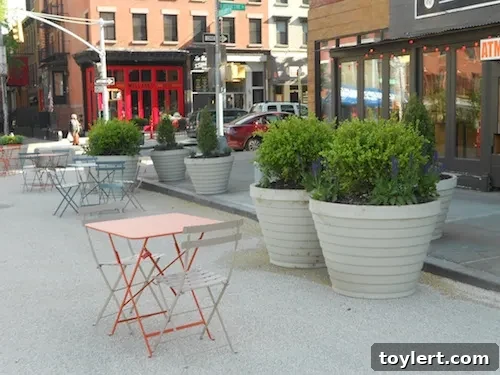
Fowler Plaza’s Permanent Transformation: A Victory for Fort Greene’s Public Space
The urban landscape of Fort Greene, Brooklyn, recently celebrated a significant milestone in community-driven urban development with the unanimous decision to make Fowler Square Plaza a permanent fixture. This transformation marks a triumph for public spaces, demonstrating the power of community advocacy, thoughtful urban planning, and the tangible benefits of reclaiming street real estate for pedestrian use. What began as a temporary installation has blossomed into an essential component of the neighborhood’s fabric, profoundly impacting the quality of life for residents and the vitality of local businesses.
From Temporary Initiative to Enduring Landmark
The journey of Fowler Square Plaza from a conceptual plan to an enduring public space began with a temporary installation spearheaded by the Department of Transportation (DOT). This initiative, part of a broader city-wide effort to create more accessible and vibrant public plazas, aimed to test the viability and community acceptance of converting a portion of South Elliott Place into a pedestrian-friendly zone. Initially, like many innovative urban projects, the proposal for Fowler Plaza met with some resistance and “heat” from segments of the community. Concerns often revolve around potential traffic disruption, parking availability, and the initial unfamiliarity with significant changes to familiar street layouts. However, the DOT, committed to data-driven decision-making, meticulously monitored the plaza’s impact and gathered crucial feedback.
The findings were overwhelmingly positive. Surveys and observations revealed that a substantial number of nearby residents regularly frequented the plaza, embracing it as a new communal hub. More importantly, residents expressed a strong belief that the space had demonstrably improved their quality of life, offering a much-needed respite and gathering place in the bustling urban environment. This sentiment was echoed by the local business community; an impressive twenty-six out of twenty-nine nearby establishments voiced their enthusiastic support for the plaza, recognizing its contribution to increased foot traffic and a more vibrant commercial atmosphere. Furthermore, the DOT’s traffic assessments concluded that closing off South Elliott Place had only a minimal impact on overall traffic flow, effectively debunking one of the primary initial concerns.
Unanimous Support: A Community Consensus
The culmination of these positive findings and widespread community endorsement led to a pivotal meeting of Brooklyn Community Board Two’s transportation committee. On Tuesday, December 19, 2012, as reported by Streetsblog, the committee voted an emphatic 7-0, with only one abstention, to support the permanent conversion of Fowler Square Plaza. This unanimous decision was not merely a procedural formality but a powerful affirmation of the plaza’s success and its integral role in the Fort Greene neighborhood. It underscored a collective vision for a more pedestrian-friendly, community-centric urban landscape, where public spaces are prioritized for their myriad social, economic, and environmental benefits.
The Profound Benefits of Urban Public Plazas
The story of Fowler Plaza is a microcosm of a larger urban trend: the growing recognition of the indispensable value of public plazas in modern cities. These spaces are far more than just aesthetic additions; they are vital urban infrastructure that fosters community, stimulates local economies, and enhances environmental sustainability. Let’s delve deeper into some of these critical benefits:
Fostering Community Cohesion and Interaction
Public plazas like Fowler Plaza serve as essential “third places” – spaces that are not home or work but where people can gather, relax, and interact informally. They provide opportunities for spontaneous social encounters, community events, and simply a place to sit and observe the rhythm of urban life. In dense urban areas, where private outdoor space is often limited, these plazas become crucial democratic spaces accessible to everyone, promoting a sense of shared ownership and collective identity.
Stimulating Local Economic Growth
The support from Fort Greene’s local businesses for Fowler Plaza is a clear indicator of its economic impact. Plazas increase pedestrian foot traffic, making surrounding businesses more visible and accessible. A vibrant public space can transform a previously underutilized area into a destination, attracting residents and visitors alike, leading to increased sales for cafes, restaurants, and retail shops. This ripple effect contributes to job creation and strengthens the local economy, proving that investment in public amenities can yield significant financial returns.
Enhancing Quality of Life and Well-being
The perception among residents that Fowler Plaza improved their quality of life is a testament to the direct impact of urban green spaces on mental and physical well-being. Plazas offer a reprieve from the concrete jungle, providing opportunities for relaxation, fresh air, and often, a connection with nature through planting and landscaping. They can reduce noise pollution, create safer environments by encouraging active surveillance, and offer children safe places to play. Such improvements are invaluable in creating happier, healthier urban populations.
Contributing to Sustainable Urban Development
Converting car-centric spaces into pedestrian plazas aligns perfectly with principles of sustainable urban development. By reducing reliance on private vehicles, plazas encourage walking, cycling, and the use of public transportation, thereby lowering carbon emissions and decreasing traffic congestion. They can also contribute to urban ecological health through permeable surfaces that manage stormwater, and by providing small pockets of green infrastructure that support biodiversity and mitigate the urban heat island effect.
The Future of Permanent Plazas: Design and Programming
While Streetsblog’s original report did not explicitly mention whether the DOT plans to alter the design of Fowler Plaza as it transitions to a permanent space, this phase typically opens up exciting possibilities. A temporary plaza, by its very nature, might feature simpler, more easily deployable elements. A permanent designation often paves the way for greater investment in durable materials, sophisticated landscaping, integrated public art, permanent seating, lighting, and amenities like water features or performance stages. This allows for a more robust and thoughtfully designed space that can accommodate a wider range of activities and withstand the rigors of long-term public use.
Beyond physical design, permanence also enables more consistent and ambitious programming. From farmers’ markets and outdoor concerts to fitness classes and seasonal celebrations, a permanent plaza can become a vibrant cultural and social anchor for the neighborhood. These activities further embed the plaza into the daily lives of residents, ensuring its continued relevance and success.
Fowler Plaza: A Blueprint for Urban Revitalization
The unanimous support for Fowler Plaza’s permanence in Fort Greene serves as an inspiring blueprint for other urban communities grappling with the challenge of creating more livable, human-centered environments. It underscores several crucial lessons: the importance of piloting new ideas, the necessity of engaging deeply with the community, the power of data to inform decisions, and ultimately, the immense value that well-designed and well-maintained public spaces bring to a city. As urban centers continue to evolve, the success of Fowler Plaza reinforces the idea that strategic urban planning focused on people, not just vehicles, is key to building resilient, vibrant, and equitable cities for the future.
The journey of Fowler Plaza from a contested temporary idea to a celebrated permanent fixture in Fort Greene is a powerful testament to the transformative potential of urban public spaces. It’s a reminder that when communities, local government, and businesses collaborate, they can create environments that genuinely enhance quality of life, stimulate economic growth, and forge stronger social bonds, proving that indeed, the plaza is here to stay, and for the better.
For further details on this significant development, you can read the original report:
Brooklyn Committee Unanimously Supports Permanent Fowler Plaza [Streetsblog]