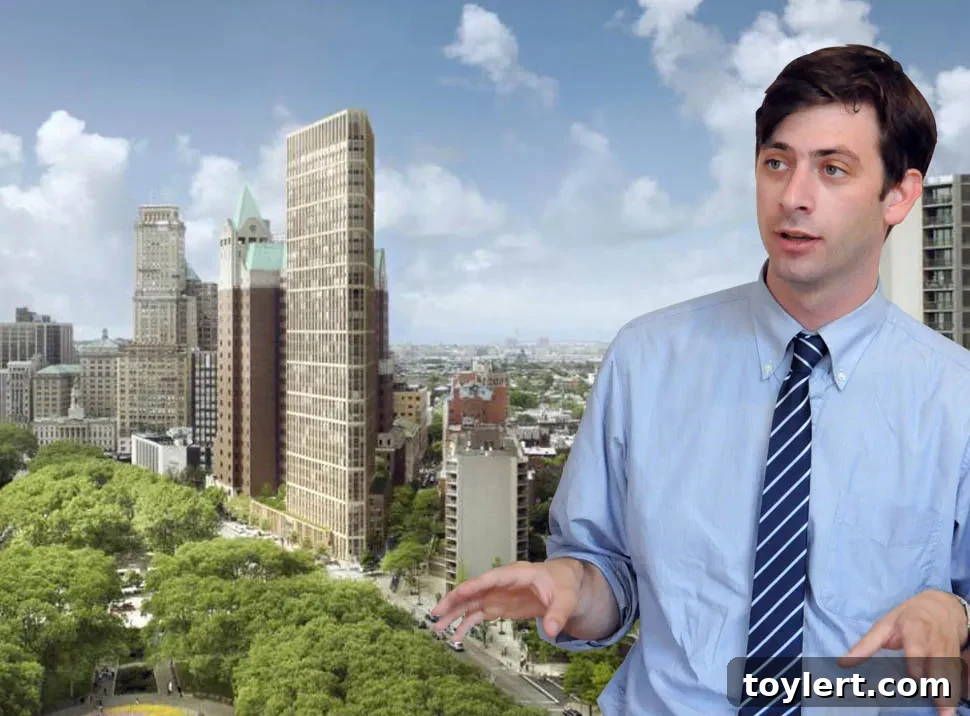
An Unexpected Turn: Council Member Steve Levin Backs Controversial Brooklyn Heights Library Redevelopment
In a stunning and highly significant development that has sent ripples through the Brooklyn Heights community, Council Member Steve Levin has officially declared his support for the long-debated proposal concerning the sale and redevelopment of the Brooklyn Heights Library branch site. This endorsement, coming just days before the final City Council vote, effectively clears the path for the project’s approval, concluding a protracted period of uncertainty and intense public debate.
For weeks, and indeed months, the fate of the Brooklyn Heights Library redevelopment hung precariously in the balance. Community groups, preservationists, and local residents had voiced strong opposition, leading many to believe that the City Council’s approval through the Uniform Land Use Review Procedure (ULURP) was far from guaranteed. Levin’s eleventh-hour decision marks a decisive shift in the political landscape, transforming what was once an uncertain outcome into an almost certain ratification by the City Council on Wednesday.
A Pivotal Moment for Brooklyn Heights Development
The announcement from Council Member Levin, representing the 33rd District which includes Brooklyn Heights, has been met with a mixture of relief from proponents and profound disappointment from opponents. This decision is not merely a formality; it represents the culmination of extensive negotiations, community engagement efforts, and political maneuvering surrounding one of Brooklyn’s most contentious real estate projects in recent memory. The approval of this proposal will pave the way for a mixed-use development that promises to reshape the iconic Brooklyn Heights skyline while also delivering a brand-new, modern library facility.
The project, championed by the Brooklyn Public Library (BPL) and developed by Hudson Companies, has been presented as a vital solution to the library system’s financial challenges, promising to inject much-needed capital into other branches across the borough. However, these purported benefits have always been weighed against significant community concerns about the sale of public land, the preservation of historical architecture, and the overall impact on neighborhood character. Levin’s endorsement is particularly impactful because, as the local council member, his vote traditionally carries immense weight in ULURP matters, often signaling the broader council’s direction.
Unpacking the Controversy: The Brooklyn Heights Library Proposal
The proposal at the heart of this controversy involves the sale of the existing Brooklyn Heights Library building at 280 Cadman Plaza West to Hudson Companies for $52 million. In its place, a luxury residential tower would rise, incorporating a brand-new, smaller Brooklyn Heights Library branch on its ground floor and basement levels. The existing mid-century modern library, designed by Francis Keally and built in 1962, has long been a fixture of the neighborhood, and its proposed demolition sparked an outcry.
The Core of the Development Plan
The vision presented by Hudson Companies includes a 36-story tower with approximately 134 residential condominium units. Crucially, the plan also includes an affordable housing component, with 114 units designated as affordable housing in a separate, off-site building in Clinton Hill, another neighborhood within Levin’s district. This affordable housing element became a key bargaining chip and a central focus of negotiations with the Council Member.
For the Brooklyn Public Library, the sale was framed as an essential financial strategy. The $52 million proceeds from the sale were earmarked not only for the construction of the new Brooklyn Heights branch but also to fund capital improvements and repairs at other dilapidated library branches throughout Brooklyn, an argument that resonated with some city officials and advocates for a stronger, better-funded library system citywide.
Voices of Opposition: Community Concerns and Activism
Despite the touted benefits, the project faced fierce opposition from a coalition of local residents, community groups, and preservationists, including the “Save the Brooklyn Heights Library” campaign. Their concerns were multifaceted:
- Loss of Public Space: Opponents argued that selling a public asset like the library to a private developer for a luxury tower represented a privatization of essential community infrastructure.
- Historic Preservation: While not a designated landmark, the mid-century modern architecture of the existing library held sentimental and architectural value for many, who lamented its planned demolition.
- Adequacy of the New Library: Critics pointed out that the new library branch would be significantly smaller (around 26,620 square feet compared to the existing 60,000 square feet) and questioned whether it could adequately serve the community’s needs, particularly without a dedicated children’s library entrance.
- Transparency Issues: Many community members felt the process lacked transparency, accusing the BPL of not sufficiently exploring alternatives to the sale.
- Affordable Housing Location: While the affordable housing component was welcomed, its off-site location in Clinton Hill was criticized for not directly benefiting the Brooklyn Heights community affected by the library’s sale.
These concerns fueled numerous protests, public hearings, and intense lobbying efforts aimed at swaying city officials, including Council Member Levin.
Arguments for the Redevelopment
Proponents, primarily the Brooklyn Public Library and the developer, countered these arguments by emphasizing the dilapidated state of the existing branch, the high cost of its maintenance, and the pressing need for capital across the entire library system. They argued that the new library, though smaller, would be modern, efficient, and technologically advanced, better serving the contemporary needs of library users. The creation of affordable housing, even if off-site, was also highlighted as a significant public benefit in a city grappling with a severe housing crisis.
Council Member Levin’s Crucial Endorsement
Council Member Steve Levin’s decision to support the development marks a critical juncture. For much of the debate, Levin had maintained a cautious stance, acknowledging both the community’s strong opposition and the city’s need for updated infrastructure and affordable housing. His “unexpected” support suggests that behind-the-scenes negotiations and concessions played a pivotal role.
Reports indicate that Levin’s endorsement was secured through a package of significant concessions from the developer and the city. These concessions reportedly include an increase in the number of affordable housing units, potentially making the off-site building fully affordable, along with a commitment to build a dedicated science, technology, engineering, arts, and mathematics (STEAM) lab for young people within the new library. Furthermore, there were promises for improvements to other public facilities in the district, demonstrating the power of a local council member to extract community benefits during the ULURP process.
Levin’s move is a classic example of “member deference” in the City Council, where the council typically follows the lead of the local council member on land use issues affecting their district. His decision effectively solidifies the path to approval, as his colleagues are now highly likely to vote in favor, respecting his negotiation efforts and the community benefits package he secured.
The Path to Approval: The ULURP Process
The Uniform Land Use Review Procedure (ULURP) is a standardized public review process in New York City for proposed land use changes. It involves multiple stages, including community board review, borough president review, City Planning Commission review, and finally, City Council review. Each stage offers opportunities for public input and recommendations.
The Brooklyn Heights Library project had already navigated several of these stages, facing strong recommendations against the proposal from Community Board 2, followed by a qualified recommendation from the Borough President. The City Planning Commission ultimately approved the project, sending it to the City Council for the final vote. It is at this final City Council stage that the local council member’s position holds the most sway.
With Council Member Levin’s support, the City Council’s vote on Wednesday is now largely seen as a formality. While there will undoubtedly be passionate speeches from both sides, the outcome is now all but predetermined. This moment underscores the immense power vested in individual council members to shape the development landscape of their districts.
Looking Ahead: The Future of the Brooklyn Heights Library Site
Upon final approval, the Brooklyn Heights Library site will undergo a transformative change, marking the end of an era for the existing structure and the beginning of a new chapter for the community.
Project Specifics Post-Approval
The new development will feature a sleek residential tower, with the new Brooklyn Heights Library occupying approximately 26,620 square feet spread across the ground floor and lower level. The new library is designed to be a modern, accessible, and technologically advanced space, offering a wide array of services including expanded computer access, dedicated programming areas, and an improved layout for its collection. While smaller in physical footprint, the BPL maintains it will be more efficient and better equipped to meet contemporary user needs.
The off-site affordable housing building in Clinton Hill will provide much-needed housing units, addressing a critical citywide need. These units are expected to cater to a range of income levels, contributing to the diversity and affordability of housing options in Brooklyn. Additionally, the funds generated from the sale will continue to benefit the broader Brooklyn Public Library system, allowing for critical repairs and upgrades at other branches that have long suffered from deferred maintenance.
Lingering Debates and the Precedent Set
While the project’s approval will bring an end to the ULURP process, it is unlikely to quell the broader debate about public assets and private development in New York City. The Brooklyn Heights Library case has become a touchstone for discussions on how the city balances the need for updated infrastructure, affordable housing, and revenue generation with the imperative to preserve historic buildings, protect public spaces, and respond to community desires.
The outcome of this controversy will undoubtedly set a precedent for future development projects involving public land and institutions. It highlights the complex interplay between local politics, community advocacy, developer interests, and the city’s overarching development goals. For residents of Brooklyn Heights, this decision marks a significant moment in the ongoing evolution of their beloved neighborhood.
Conclusion
Council Member Steve Levin’s unexpected but decisive endorsement of the Brooklyn Heights Library redevelopment proposal has brought a swift resolution to a long and often bitter public debate. While celebrated by proponents as a pragmatic solution to funding challenges and a step towards modernizing public infrastructure, it leaves many community members feeling disenfranchised. As the City Council prepares for its final vote, the path is clear for a project that will dramatically reshape a prominent part of Brooklyn Heights, underscoring the enduring tension between progress, preservation, and the power of local governance in New York City’s ever-changing landscape.