New York City Council Passes Landmark Legislation to Confront Slavery’s Enduring Legacy and Advance Racial Justice
By Gabriele Holtermann, Brooklyn Paper
In a momentous vote that reverberated across the five boroughs and beyond, the New York City Council on Thursday passed a comprehensive package of bills designed to meticulously address the profound and lasting legacy of slavery within the city. This historic legislative action aims to forge a path toward advancing racial justice and equity for the millions of New Yorkers of African descent, whose ancestors were foundational to the city’s very existence, often under brutal conditions.
The passage of these bills marks a significant turning point, acknowledging centuries of systemic injustice and embarking on a journey towards reparative justice. The initiatives underscore a renewed commitment to confronting historical truths, fostering reconciliation, and implementing concrete measures to dismantle the systemic disparities that continue to affect communities of color.
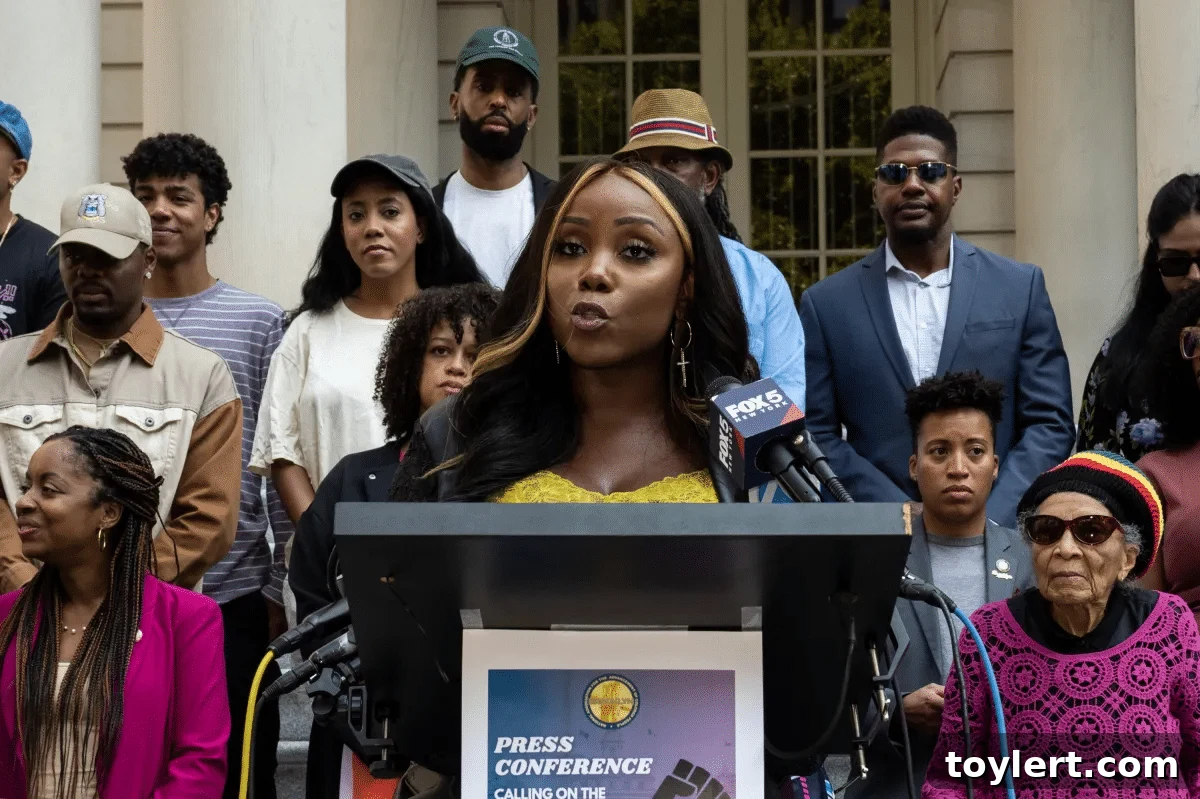
Leading up to this pivotal vote, a powerful coalition of elected officials, impassioned community leaders, and dedicated advocates converged on the majestic steps of City Hall. The location itself bore profound symbolism, as City Hall was famously constructed by enslaved Africans, a stark reminder of the unacknowledged labor and sacrifices that built the city’s iconic structures. At this gathering, speakers eloquently outlined the intricate details and immense significance of the legislation, emphasizing its potential to reshape New York City’s future by reconciling with its past. The full details of the legislative package can be explored further via the NYC Council’s official press release.
The Deep Roots of Slavery in New York City: A Forgotten History
While often overshadowed by the narratives of the Southern states, New York City boasts a complex and deeply entrenched history with slavery. From the early 17th century, when the Dutch West India Company first brought enslaved Africans to New Amsterdam, to its eventual abolition in 1827, slavery was an integral part of the city’s economic engine and social fabric. Enslaved people were crucial in clearing land, constructing infrastructure, building fortifications, and serving in various domestic and skilled trades. Their forced labor laid much of the foundation for what would become one of the world’s most prominent cities.
During the British colonial period, New York City became a central hub for the transatlantic slave trade, solidifying its position as one of the largest slaveholding cities in the North. Public auctions of enslaved individuals were commonplace, and their labor was vital to shipping, agriculture, and the burgeoning merchant class. This historical reality directly contributed to the accumulation of wealth for many prominent New York families and institutions, creating a legacy of economic disparity and racial oppression that continues to manifest in various forms today, from wealth gaps to health inequities and housing segregation.
Acknowledging this obscured history is the first crucial step toward genuine racial justice. The City Council’s legislation seeks to unearth, document, and disseminate this truth, ensuring that future generations of New Yorkers understand the full scope of their city’s past and the enduring impact it has on contemporary society. This includes recognizing the systemic racism that was woven into the city’s development and understanding how these historical injustices continue to affect communities of African descent.
A Pivotal Legislative Package: What the Bills Entail
The newly passed legislative package represents a multi-faceted approach to addressing the legacy of slavery, moving beyond mere acknowledgment to concrete action. While specific details of each bill are extensive, the general scope encompasses several key areas:
-
Historical Research and Documentation Initiatives:
Bills will likely mandate and fund comprehensive historical research into New York City’s role in slavery and its aftermath. This includes identifying sites of enslavement, creating detailed registries of enslaved individuals where possible, and establishing commissions dedicated to truth-telling. The goal is to uncover untold stories, preserve historical records, and ensure a more accurate and complete understanding of the past.
-
Educational Programs and Curriculum Development:
A central tenet of the legislation focuses on educating current and future generations. This could involve developing new K-12 curricula that comprehensively cover New York’s history of slavery, funding public awareness campaigns, and supporting educational initiatives in museums, libraries, and community centers. The aim is to foster a deeper understanding of racial injustice and its historical roots among all New Yorkers.
-
Memorialization and Commemoration:
The package is expected to include provisions for the creation of new memorials, monuments, and historical markers throughout the city to honor enslaved Africans and their descendants. This could also involve the renaming of public spaces or institutions that have problematic historical ties to slavery or slaveholders, ensuring that the contributions and suffering of enslaved people are visibly and respectfully remembered.
-
Economic Empowerment and Development Programs:
Addressing the intergenerational wealth gap, a direct consequence of slavery and subsequent discriminatory practices, is a critical component. These bills may establish programs aimed at fostering economic development in historically marginalized communities, supporting Black-owned businesses, increasing access to capital, and promoting equitable housing opportunities. The intent is to counteract systemic disadvantages and build pathways to economic prosperity.
-
Health Equity Initiatives:
Recognizing that historical injustices contribute to ongoing health disparities, the legislation may also address health inequities faced by communities of African descent. This could involve funding programs that improve access to quality healthcare, address environmental racism, and conduct research into the long-term health impacts of systemic discrimination.
Collectively, these initiatives are designed to create a framework for systemic change, acknowledging that the legacy of slavery is not merely historical but an active force shaping contemporary urban life.
The Significance of the City Hall Gathering: A Unified Front for Justice
The gathering on the steps of City Hall, just hours before the Council’s vote, was more than a mere press conference; it was a potent act of symbolic reclamation and collective empowerment. The building, a grand edifice of neoclassical architecture, stands as a monument not only to civic governance but also to the uncredited labor of enslaved people whose hands literally shaped its foundations. For advocates and community leaders, standing there to demand justice for those very ancestors was an exceptionally powerful moment.
This assembly showcased a remarkable unity across diverse sectors. Elected officials, representing the legislative arm of the city, stood shoulder to shoulder with veteran community activists who have fought for decades for racial equity. The presence of these varied voices underscored the broad consensus and persistent demand for action on the legacy of slavery. Speakers passionately articulated the historical context, the need for reparative justice, and the tangible impact these bills are expected to have on the lives of millions of New Yorkers. It was a clear message that the time for dialogue alone had passed, and the era of decisive legislative action had arrived.
Voices for Justice: Community and Official Perspectives
Throughout the advocacy process, the voices of community leaders and elected officials have been instrumental. Advocates have long emphasized that addressing the legacy of slavery is not about blaming current generations, but about acknowledging historical wrongs and their ongoing consequences. “For too long, the contributions and suffering of enslaved Africans in New York have been minimized or ignored,” stated one community leader. “These bills are a critical step in a truth-telling process that is long overdue, and they represent a commitment to true equity.”
City Council members, in turn, have expressed a deep sense of responsibility to rectify past injustices and to build a more equitable future. “This is a moral imperative,” remarked a Council member. “We cannot claim to be a city of progress and opportunity if we do not confront the foundational injustices upon which much of our prosperity was built. These bills are not just about history; they are about charting a new course for racial justice in New York City and ensuring that the promise of equity is extended to all our residents, especially those of African descent.” The consensus among these diverse voices highlights a collective determination to move from acknowledgment to tangible, impactful change.
Charting a Path Forward: Implementation and Long-Term Impact
The passage of these bills is a monumental achievement, but it also marks the beginning of a complex and challenging journey: implementation. The successful execution of this legislative package will require sustained political will, significant financial investment, and continuous community engagement. Establishing commissions, developing educational programs, creating memorials, and rolling out economic empowerment initiatives will demand careful planning, dedicated resources, and collaborative efforts across city agencies, academic institutions, and community organizations.
The long-term impact, however, promises to be transformative. By confronting its past, New York City aims to close systemic racial wealth gaps, foster a deeper sense of belonging and inclusion for all its residents, and heal the intergenerational trauma caused by slavery and its enduring aftermath. This legislative effort has the potential to serve as a powerful model for other cities and states grappling with their own legacies of slavery, demonstrating that meaningful reparative justice is not only possible but essential for true societal progress and reconciliation. It’s a commitment to building a more just, equitable, and historically informed New York for future generations.
New York City’s Role in a National Dialogue
New York City’s historic vote also places it at the forefront of a burgeoning national dialogue about reparations and racial reckoning in the United States. As calls for federal and local reparations gain momentum across the country, New York’s proactive approach signals a serious commitment to addressing systemic injustice at the municipal level. The city, with its unique historical context and diverse population, is well-positioned to demonstrate how localized efforts can effectively acknowledge and redress the harms caused by slavery and subsequent discriminatory practices.
This action by the NYC Council can inspire other jurisdictions to examine their own histories and consider similar legislative packages. It reinforces the idea that true racial justice requires more than symbolic gestures; it demands comprehensive, tangible, and sustained initiatives that directly address the historical roots of contemporary disparities. New York’s leadership in this area could significantly contribute to shaping the national conversation and furthering the cause of reparative justice across the nation.
The New York City Council’s vote represents a landmark moment in the city’s history. It is a powerful affirmation that the legacy of slavery is not merely a chapter in old textbooks, but a living force that continues to shape the present. By passing these bills, the Council has taken a decisive step towards confronting uncomfortable truths, acknowledging historical injustices, and committing to concrete actions that promise to advance racial justice for all New Yorkers, particularly those of African descent. This is not the end of the journey, but a profound and necessary beginning toward a more equitable and historically conscious city.