Reimagining Urban Context: Abruzzo Bodziak Architects’ Visionary Transformation of a Wood-Frame House
In the vibrant, ever-evolving landscape of urban architecture, the conventional wisdom often dictates that design must seamlessly integrate with its surroundings. However, as acclaimed architect Emily Abruzzo, co-founder of the Brooklyn- and Connecticut-based firm Abruzzo Bodziak Architects (ABA) alongside Gerald Bodziak, discovered, context isn’t always the paramount factor. In a significant project undertaken by their firm, celebrating over a decade of innovative design, ABA was tasked with a comprehensive interior and exterior reimagining of an old-school wood-frame house located on an exceptionally diverse urban block.
The particular street presented a unique conundrum for the architects. Abruzzo recounts the architectural tapestry of the block as remarkably eclectic, stating, “That block has almost every architectural style.” From an imposing neo-Classical bathhouse to utilitarian brick apartment buildings, from homes clad in faux stone to those featuring traditional wood siding, the street lacked a cohesive visual identity. This architectural mélange posed a formidable challenge: “We couldn’t figure out the character of the street. It was clearly not a moment to make something contextual, which was both an opportunity and a challenge.” This realization became the cornerstone of their design philosophy for this particular project, paving the way for a truly original architectural statement.
Navigating Architectural Anarchy: The Challenge of a Non-Contextual Site
For many architectural endeavors, the immediate surroundings provide a rich source of inspiration and constraint. Designing a new structure or renovating an existing one often involves a delicate dance with the existing urban fabric, ensuring harmony and respect for historical or stylistic precedents. Yet, what happens when the context itself is a collage of disparate elements, a street where no singular style dominates, and where history is told in fragmented whispers rather than a clear narrative?
This was precisely the scenario faced by Abruzzo Bodziak Architects. The sheer diversity of architectural styles on the block meant that any attempt to mimic a single style would feel arbitrary and forced. A neo-Classical revival next to a mid-century brick building, across from a Victorian wood-frame, creates a visual cacophony rather than a symphony. For Emily Abruzzo and Gerald Bodziak, this was not a hindrance but a liberation. It allowed them to detach from the pressure of strict contextual adherence and instead focus on creating a structure that, while unique, would still resonate with a broader sense of urban dwelling.
The “opportunity” lay in the freedom to innovate, to develop a design that stood on its own merits without needing to blend into a non-existent unified street character. The “challenge,” however, was to create something distinctively original without appearing alien or disrespectful to the individual charm of the neighboring properties. ABA had to strike a delicate balance, forging a new identity for the wood-frame house that would contribute positively to the block’s overall character, even in its non-conformity.
Abruzzo Bodziak Architects: A Legacy of Thoughtful Design
Since its inception 12 years ago, Abruzzo Bodziak Architects has built a reputation for its thoughtful, client-centric, and often innovative approach to design. With offices spanning Brooklyn and Connecticut, the firm has cultivated a diverse portfolio ranging from residential transformations to commercial and institutional projects. Emily Abruzzo and Gerald Bodziak are known for their ability to distill complex client briefs and site challenges into elegant, functional, and aesthetically compelling solutions. Their philosophy often involves a deep understanding of materials, light, and space, coupled with a commitment to crafting environments that enhance the lives of their occupants.
This particular project offered a perfect canvas for ABA’s strengths. The firm’s experience in navigating varied architectural landscapes and their willingness to challenge conventional design paradigms made them uniquely suited to tackle a house that demanded a fresh perspective. Their collaborative approach, integrating client aspirations with architectural ingenuity, proved essential in shaping the final outcome of this remarkable renovation.
Shuffling the Deck: Crafting a New Vernacular Identity
Rather than seeking an external contextual influence, ABA turned inward, examining the very elements that define local urban vernacular, albeit in a fragmented manner across the block. They embraced a sophisticated design strategy that involved “shuffling elements of local vernacular,” reinterpreting familiar materials and forms in a fresh, contemporary way. This approach allowed the house to resonate with a sense of place, even without direct mimicry of its immediate neighbors.
Key among these reinterpreted elements were wood cladding, masonry, and double-hung windows. While wood cladding is a ubiquitous feature in many traditional American homes, particularly wood-frame structures, ABA likely explored its application with a modern sensibility—perhaps through vertical orientation, varied textures, or a contemporary color palette. Masonry, such as brick, offers durability and a classic urban aesthetic. By combining wood and brick, the architects could create a facade that felt both grounded and dynamic, blending warmth with robust elegance. Double-hung windows, a staple of historic architecture, were likely chosen for their timeless appeal and functionality, but perhaps scaled or arranged in a way that introduced a modern rhythm to the facade.
This intelligent reassembly of traditional components meant that the house, while undeniably original, didn’t appear as an anomaly. Instead, it spoke a language familiar to the urban fabric, but with a unique dialect. It demonstrated that innovation doesn’t always mean a complete departure from the past; sometimes, it means re-editing and re-presenting existing narratives in an entirely new light. This carefully considered blend of materials and forms allowed the house to establish its own distinctive character while subtly acknowledging the broader architectural heritage of the city.
Client Vision Meets Architectural Expertise: The Divided-Light Window Mandate
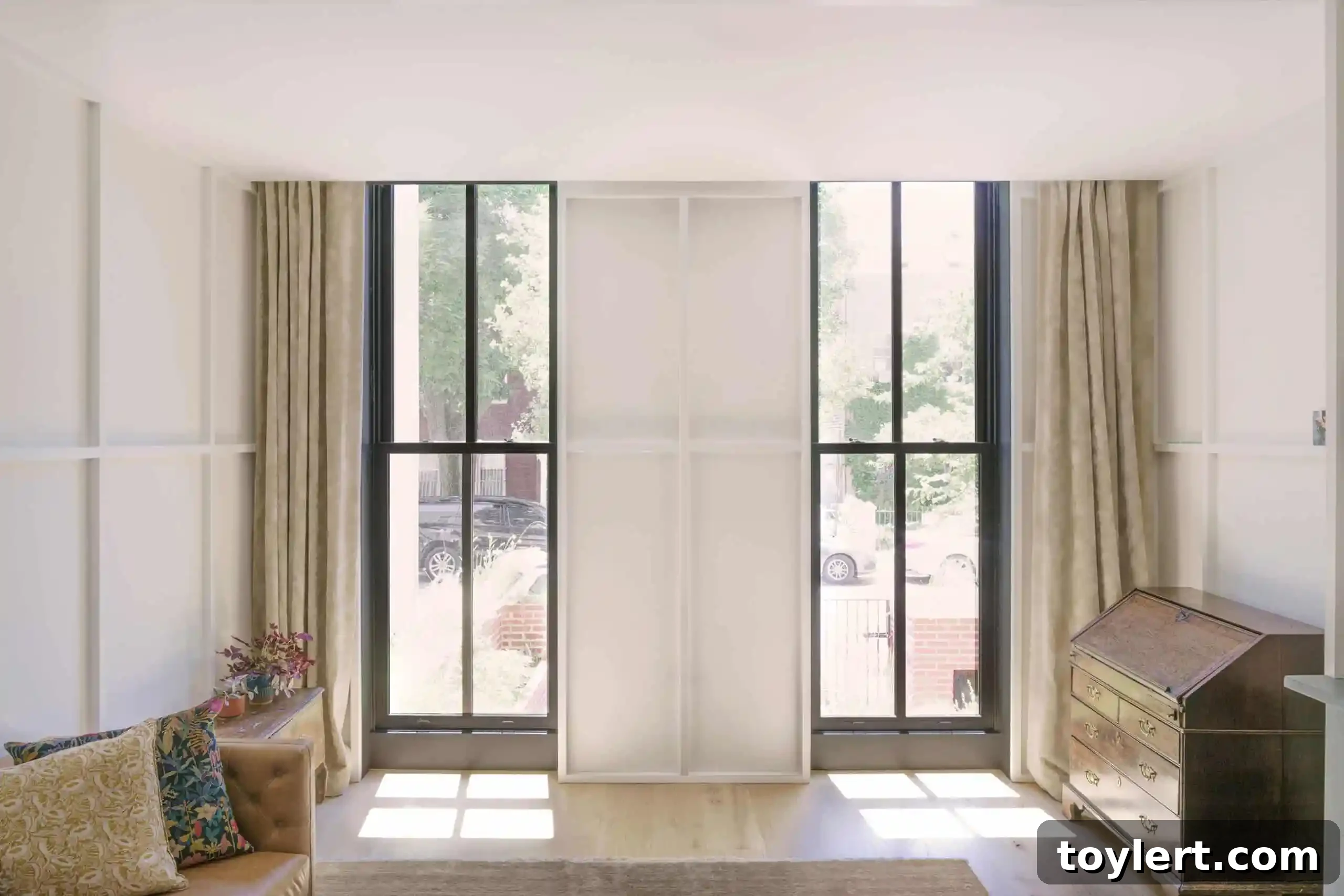
A crucial aspect of any successful architectural project is the harmonious collaboration between the architects and their clients. In this instance, the vision of the British couple commissioning the renovation played a significant role in shaping specific design details. Their request for divided-light windows was not merely an aesthetic preference; it stemmed from a desire to evoke the “feeling of an historic townhouse.” This specific mandate presented an interesting challenge for Abruzzo Bodziak Architects.
Divided-light windows, characterized by multiple smaller panes separated by muntins, are indeed a hallmark of historic architecture, particularly in traditional townhouses. They impart a sense of scale, craftsmanship, and classic elegance. For the clients, these windows were a pathway to imbuing their new home with a sense of heritage and permanence, reminiscent of the grand townhouses found in London or other historic European cities. ABA’s task was to integrate this traditional element seamlessly into a design that was otherwise deliberately non-contextual and highly original. This required a thoughtful approach, ensuring that the divided-light windows complemented, rather than clashed with, the contemporary reinterpretation of the facade and interior spaces.
By carefully selecting the proportion, material, and grid pattern of these windows, ABA could honor the clients’ desire for a historic feel without compromising the modern sensibilities of the overall design. This collaboration underscores the firm’s dedication to creating bespoke homes that are deeply personal and reflective of their inhabitants’ dreams, proving that even a specific, historically inspired request can be beautifully woven into a forward-thinking architectural vision.
Architectural Features: Light, Space, and Connection to Nature
The culmination of ABA’s innovative approach and the clients’ vision resulted in a truly remarkable residence. The house, measuring a compact yet thoughtfully designed 22 by 40 feet, emerged as a striking wood and brick row house. The strategic use of materials not only provides a compelling exterior aesthetic but also contributes to the home’s durability and character, blending the warmth of wood with the classic urbanity of brick.
Internally, the transformation is equally profound. ABA conceived “open interior spaces,” a hallmark of modern design that prioritizes flexibility, fluidity, and a sense of expansiveness within an urban footprint. This open-plan living facilitates easier movement, encourages social interaction, and allows the residents to adapt their space to evolving needs, departing from the compartmentalized layouts typical of older wood-frame houses. These open spaces are further enhanced by an abundance of natural light, a critical element in urban living.
The architects achieved this generous illumination through the installation of “10-foot-tall windows.” These impressively scaled windows are not just architectural features; they are portals that flood the interiors with daylight, transforming the atmosphere and reducing the reliance on artificial lighting during the day. Tall windows also serve to visually connect the inhabitants with the outside world, offering expansive views and minimizing the feeling of being enclosed. This deliberate emphasis on natural light has a profound impact on the mood and well-being of the occupants, creating bright, airy, and invigorating living environments.
Finally, the design thoughtfully incorporates “abundant greenery” to surround the home. In a dense urban setting, the integration of nature is invaluable. Whether through carefully designed front gardens, lush backyards, internal courtyards, or even rooftop plantings, the presence of greenery softens the urban hardscape, improves air quality, and provides serene visual relief. This connection to nature further enhances the quality of life within the residence, offering a private oasis amidst the bustling city. The combination of open interiors, generous light, and integrated greenery establishes this renovated wood-frame house as a beacon of modern, liveable urban design.
A Distinctive Urban Gem: The Outcome of Bold Design
The transformed wood-frame house by Abruzzo Bodziak Architects stands as a powerful testament to the firm’s ability to innovate and redefine architectural norms. Far from being lost on its architecturally diverse block, the 22 by 40 foot wood and brick row house has achieved a remarkable feat: it is both “highly original” and deeply harmonious. It doesn’t scream for attention through jarring contrast; instead, it commands respect through its intelligent design, thoughtful material palette, and inherent elegance.
The project successfully demonstrates that when traditional contextual constraints are relaxed, a new kind of architectural freedom emerges—one that allows for creative reinterpretation of vernacular elements, resulting in a fresh and contemporary aesthetic. The open interior spaces, bathed in the natural light streaming through the 10-foot-tall windows, create an inviting and dynamic living environment perfectly suited for modern urban life. The integration of abundant greenery further enriches the residential experience, fostering a profound connection to nature within the city.
Ultimately, this project by Abruzzo Bodziak Architects is a masterclass in challenging preconceived notions of urban design. It showcases how a deep understanding of materials, light, and client aspirations, coupled with a willingness to step beyond conventional boundaries, can lead to the creation of truly unique and profoundly liveable homes. It serves as an inspiring example for future urban renovation projects, proving that even on the most varied of blocks, architectural innovation can flourish and contribute to a richer, more diverse urban tapestry.
Got a project to propose for The Insider? Contact Cara at caramia447 [at] gmail [dot] com